
Tinsley became the first woman to be appointed as Professor of Astronomy at Yale University in the United States
Month Calendar View
Historic NZ events in July
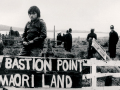
1988
The government announced that it had agreed to the Waitangi Tribunal’s recommendation that Takaparawhā (Bastion Point) on the southern shore of Auckland’s Waitematā Harbour be returned to local iwi Ngāti Whātua.
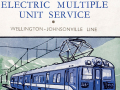
1938
On 2 July 1938, Minister of Railways Dan Sullivan and Wellington Mayor Thomas Hislop officially opened the electrified rail line between central Wellington and the northern suburb of Johnsonville.
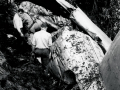
1963
The 1963 crash of a National Airways Corporation DC3, with the loss of all 23 people on board, remains the worst air accident within New Zealand.
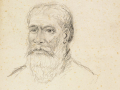
1868
Te Kooti Arikirangi Te Tūruki of Rongowhakaata was arrested near Gisborne in 1865 after allegedly helping a ‘rebel’ Pai Mārire force. He became one of hundreds exiled to the remote Chatham Islands.
1902
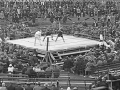
The New Zealand Boxing Association was formed to promote and foster amateur boxing in this country. After drawing up its rules and obtaining parliamentary sanction, the association staged its first New Zealand championships in Christchurch later in 1902.
1881
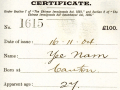
Parliament passed the Chinese Immigrants Act, which introduced a ‘poll tax’ of £10 (equivalent to nearly $1700 today) on Chinese migrants and restricted the number allowed to land from each ship arriving in New Zealand.
1923
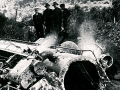
The Auckland−Wellington express ploughed into a huge slip that had slumped across the tracks at Ōngarue, north of Taumarunui in King Country.
1916
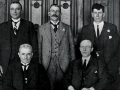
What is now New Zealand’s oldest political party emerged from a joint conference in Wellington of the United Federation of Labour, the Social Democratic Party (SDP) and local Labour Representation Committees (LRCs).

1924
The character in the Academy Award-winning film Chariots of fire (1981) was based on Arthur Porritt, who won a bronze medal for New Zealand in the 100 m at the 1924 Paris Olympics.
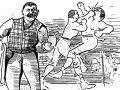
1862
The boxing bout was fought in an improvised ring on the banks of the Waimakariri River near Kaiapoi after police were ejected from the scene. London prizefighter Harry Jones defeated labourer George Barton over 30 bloody bare-knuckle rounds for a purse of £100.
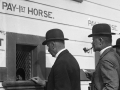
1893
The New Zealand Racing Conference was formed to control the thoroughbred horse-racing industry in the colony.
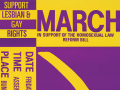
1986
Wellington Central MP Fran Wilde’s private member’s bill, which removed criminal sanctions against consensual male homosexual practices, was passed by 49 votes to 44.
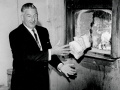
1967
Pounds, shillings and pence were replaced by dollars and cents − 27 million new banknotes and 165 million new coins.
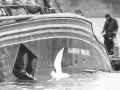
1985
A crew member died when French secret agents mined the Greenpeace vessel Rainbow Warrior in Waitematā Harbour, Auckland.
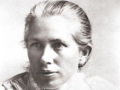
1877
Kate Edger became the first woman in New Zealand to gain a university degree and the first woman in the British Empire to earn a Bachelor of Arts (BA).
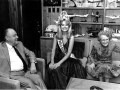
1983
Lorraine Downes became a household name overnight and spent the next 12 months travelling the world accompanied by a chaperone, carrying out the duties of Miss Universe
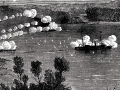
1863
British troops invaded Waikato by crossing the Mangatāwhiri Stream, which the Kīngitanga (Māori King movement) had declared an aukati (a line not to be crossed).
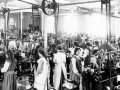
1889
The first women’s trade union in New Zealand emerged in the late 19th century in response to poor working conditions in the clothing industry.
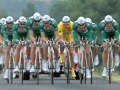
2001
The first stage win by a New Zealander in the Tour de France came in a team time trial. Although Chris Jenner didn't finish with the core of his Credit Agricole team, he shared in the stage win and got to stand on the podium.
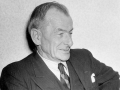
1916
Following the establishment of the New Zealand Flying School at Ōrākei on Auckland’s Waitematā Harbour, Vivian Walsh became the first pilot to obtain an aviator’s certificate in New Zealand (several New Zealanders had earlier qualified as pilots in England).
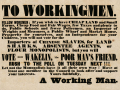
1853
For such a symbolic moment, the events of 14 July offered little drama – the first member of New Zealand’s inaugural Parliament, Hugh Carleton, was elected unopposed at Russell in the Bay of Islands.
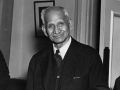
1950
Ngata had contributed hugely to the revival of the Māori people in the early 20th century. His intelligence, tact, persistence and political skill helped him promote Māori culture and identity.
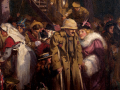
1915
The first large group of Gallipoli wounded to return to New Zealand arrived in Wellington on the troopship Willochra as part of a draft of around 300 men.
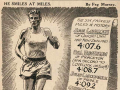
1933
Jack Lovelock's run at Princeton University broke Jules Ladoumegue’s record for the mile by 1.6 seconds. The race was dubbed the 'greatest mile of all time' by Time Magazine.
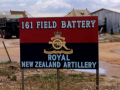
1965
Gunners of 161 Field Battery fired New Zealand’s first shots of the Vietnam War from their base at Bien Hoa, near Saigon.
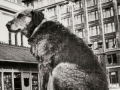
1939
Paddy, a ginger and brown Airedale terrier, became a national celebrity because of his exploits on the Wellington waterfront and beyond during the 1930s.
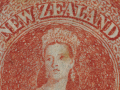
1855
These adhesive, non-perforated stamps for prepaid postage were the famous ‘Chalon Head’ design, showing Queen Victoria in her coronation robes.
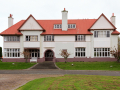
1924
The governor-general, Viscount Jellicoe, officially opened Flock House station, near Bulls. This training farm was established using surplus profits from wool sales during the First World War.
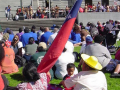
1982
When the Privy Council granted New Zealand citizenship to Western Samoans born since 1924, the government did not accept this decision.
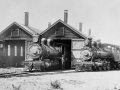
1892
The Wellington and Manawatu Railway (WMR) Company’s locomotive No. 10 established a world speed record for the narrow 3 foot 6 inch (1067 mm) gauge, averaging 68 km per hour on a two-hour run and hitting a top speed of 103 kph.
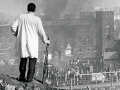
1965
The disturbance followed a botched escape attempt and lasted into the next day. Prisoners took several warders hostage and fire gutted part of the prison.

2023
The Football Ferns’ 1–0 victory over Norway at Eden Park, Auckland was the first win by a senior New Zealand team at a World Cup finals tournament.
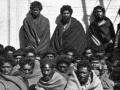
1865
Governor George Grey led a small force that captured a Pai Mārire (Hauhau) pā at Weraroa, near Waitōtara. The pā had long lost its strategic significance, and its small garrison had seemed willing to surrender.
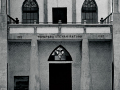
1925
Founded in 1918 by Tahupōtiki Wiremu Rātana (1873–1939), the religious movement that bore his name gave hope to many dispossessed Māori and later became a political force.

1987
Outlets opened to long queues, with a first division prize in the inaugural draw of $360,000 (equivalent to more than $760,000 today).
1851
Twenty-six lives were lost when the barque Maria was wrecked near Cape Terawhiti. This provided more ammunition for Wellington settlers who were trying to convince the government of the need for a lighthouse.
1952
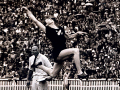
Yvette Williams (later Corlett) won the long jump to become New Zealand’s first female Olympic medallist.
2000
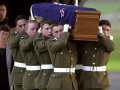
Private Leonard Manning was the first New Zealander killed in combat since the Vietnam War.
1981
Anti-tour demonstrators invaded Hamilton’s Rugby Park, forcing the abandonment of the Springboks–Waikato match.
1863
Approximately 25 gold miners died on the Arrow diggings, north-east of Queenstown, in a series of flash floods and slips caused by 24 hours of heavy rain.
1865
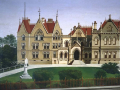
The capital moved from Auckland to more centrally located Wellington on the recommendation of an Australian commission. The former Wellington Provincial Council chamber became the new home for Parliament.
1928
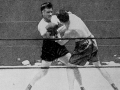
In the midst of boxing's golden age, Gisborne-born Tom Heeney took on Gene Tunney in front of 46,000 spectators at Yankee Stadium, New York. Although he was defeated, his title bid had aroused tremendous interest in both New Zealand and the USA.
1984
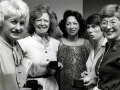
Ann Hercus became New Zealand’s first Minister of Women’s Affairs following the election of the fourth Labour government.
1953
After lengthy negotiations, representatives of North Korea and the United Nations signed an armistice on the ceasefire line between North and South Korea.
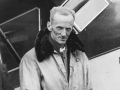
1963
Bolt was an outstanding figure in the development of commercial aviation in this country. Among his many achievements were taking New Zealand's first aerial photographs in 1912 and delivering its first official airmail in 1919
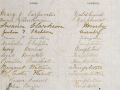
1893
The monster suffrage petition contained the signatures of more than 25,000 women. A dozen other, smaller petitions were also submitted around the same time.
1897
On the afternoon of 28 July, the Huddart-Parker steamer Tasmania left Auckland for Dunedin via Napier, Wellington and Lyttelton. At around 11 p.m. the following night, with a strong south-east gale blowing, the ship struck rocks off Table Cape, Māhia Peninsula.
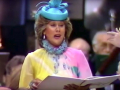
1981
For six minutes New Zealand opera star Kiri Te Kanawa took centre stage at the highly anticipated wedding of Prince Charles to Lady Diana Spencer at St Paul’s Cathedral, London
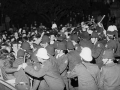
1981
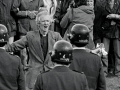
Up to 2000 anti-Springbok tour protesters were confronted by police who used batons to stop them marching up Molesworth St to the home of South Africa's Consul to New Zealand

2003
Twenty-nine-year-old Moana Mackey entered the House of Representatives as a Labour Party list MP. She joined her mother, Janet Mackey, who had been a Labour MP since 1993. They were the first mother and daughter to serve together in New Zealand’s Parliament.
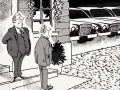
1979
Carless days for motor vehicles were introduced to combat the second ‘oil shock’ (petrol shortage) of the 1970s. They did little to reduce consumption and were scrapped in May 1980.
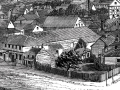
1843
Laying the foundation stone for the Royal Victoria Theatre on Manners St, Wellington, Alderman William Lyon welcomed the new amenity – ‘a theatre [was] a necessary concomitant of an advanced state of civilization.’
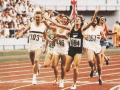
1976
Following in the footsteps of Jack Lovelock and Peter Snell, Walker won gold in the Olympic 1500 m. Black African nations boycotted the Games in protest at the All Blacks' tour of South Africa