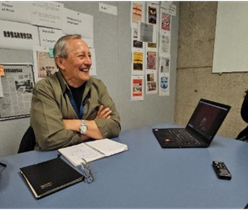
A Vietnam veteran and former police officer, Matua Bobby reflects on his experiences during the Dawn Raids: as a Māori constable, as the husband of a Tongan woman, Gemma, and as a father and grandfather. Based in Tāmaki Makaurau, he is an active member of St Mary’s in Avondale.
To kōrero about the Dawn Raids, as Matua Bobby acknowledges, is not an easy process. When invited to speak, he reflected:
There is so much to answer, but I’m going to tell you straight. Many times, I don’t like talking about it and I sometimes get upset and emotional about the things I’ve been part of in my life.
The following excerpts draw on a longer kōrero between Matua Bobby and Lagi-Maama Academy & Consultancy, a cultural organisation led by Toluma’anave Barbara Makuati-Afitu Kolokesa Uafā Māhina-Tuai. This piece has been edited for length and clarity.
Pepeha
Ko Tarake e te mauga
Ko Hokianga e te moana
Ko Maui e te hapu
Haratete e te marae.
E te Rangatira e te Mitimiti
Te Arawa e te iwi.
Nau mai, Haere mai, Tēnā koutou, tēnā koutou.
Why I joined the Police
After serving in Vietnam, coming home was difficult. We weren’t accepted by the government of our own country, the same government that had sent us all the way there. It was hard to get back into society. I remember joining the police when Gemma was in hospital expecting our first child. I wanted to join because I wanted to do the traffic patrol. I wanted to be on motorcycles.
I joined in 1973 at a time when things were unstable, not so much Police-wise, but country-wise. The direction the government was taking [after 1975] under Robert Muldoon was that police were going to be tough on crime and ‘clean up the streets.’ We were in an era of protests. I wear those scars—and some of them are not pretty. The Dawn Raids are not pretty ones.
Then came Bastion Point in 1978 and the Bok Tour in 1981. By then, the scars had built up, and I moved to Kaitaia. I needed to go to the country to hibernate. Being a police officer up there, often on your own with your closest support two hours away in Kaikohe, I worked closely with Māori wardens, and I had my family around me.
I eventually left the police in the 1990s and went back to university, completing a degree in Māori Studies and Anthropology.
When you first asked me to be part of this kōrero, I was rather reluctant. I thought it might be better to speak with my Samoan or Tongan colleagues of the time, as they will have their own views. There were practices that I saw as racist. I pray we are not going back there today, it’s dangerous. I remember the red squad and the blue squad and how Pacific officers were put in front of those. Our own people were being hurt.
We are all out of the police now, and despite everything, I want to say that I am proud to have served my country—both in the army and in the police. I have long service and good conduct medals from the Police, and I wear them proudly alongside my RSA medals for serving overseas.
What the Dawn Raids looked like
I would turn up to work and be told which squad I was in, how many per unit (usually about four) and which areas of town we would be allocated. You had to prove your appointments first. We’d line up and show them our handcuffs, batons, helmets, our shields, everything ready to go. Then, we’d get into the wagon and head out, either to a pub or to a raid somewhere in Auckland and afterwards go back to normal patrolling duties.
We had a Commander, Tait, who was very direct in his instructions. We were to ‘clean up the town’ and ‘pick up anybody who doesn’t look like a Kiwi or New Zealander’. Now what did a New Zealander not look like? Basically, if they were copper, black, or brown, then they needed to be dealt with. Māori were drawn into this too, and we were advising Māori—our own people—to carry their passports because if they got caught up without them, they would be dragged into the net, and we would have to bring them all in.
We would go to a house, knock on the door, then push it in. Kids are screaming. We’re asking people for their papers and telling them to get out of their own homes! There was a Sergeant, Pat Wihongi, he would always say, ‘Treat them with respect.’ When Pat was on duty, he’d go in first and say ‘Excuse me, we have to do this, I need to see your passports—where are they?’ People would invite us in, sit us in the lounge, and even bring us a cup of tea.
There were major differences in approach, differences between men. Some officers would say ‘if they don’t answer the door, we’re going to kick it down.’ Others treat people properly. When I think about it now, I think—blimey if someone was to come and push my door in, you’d have a good fight on your hands. To be honest, I expected a lot more resistance. But there was still this internal respect for the law and the government policy.
I still think about those families standing out on the street, with their kids crying.
On the weekends, there were no immigration officers around, so we had to hold people for a couple of days until we could get the right documents or access to immigration records. Some would tell us their passports were being held by someone else, and that was part of the conditions of them coming here. They’d get jobs, but employers would hold onto their passports for a fee. So, people were arrested while their passports were held by other people. It was complicated. Those kinds of things just went on and on and on.
Ponsonby was the main area I was stationed in. When I went back to normal weekday patrols, the effects of what had happened a couple of nights before were still there. I would be pointed out: ‘Oh the pigs are here again.’ I loved working in Ponsonby; it felt like home. But I was given the ‘oink oink’ so many times I can’t recall.
One of our own in the blue had it so bad she couldn’t even go back into her own community. A few years after the taskforce, I was part of the recruitment process, going back to those same places to try and get the young ones to join the police.
It's not a good term, ‘Dawn Raids’, because they weren’t just done at dawn. It was a whole regime; it was ongoing. It wasn’t just that period too, and it didn’t simply stop.
Why this still matters now
Our elders are going.
Some weeks ago we farewelled Makalita (Taupaū Makalita Edwards) and just a few days ago Falaniko (Tagaloa Falaniko Leilua). They were Samoan leaders at our church. Makalita was 84 and Falaniko was 86.
We learned that Makalita was one of the ones whose fale (house) was raided. Earlier this year she led a march down Ponsonby Road with her whānau and supporters for the Dawn Raids. She said, ‘Before I die I am going to do this march’, and she did. [1]
Makalita had shared memories of being pulled out of her bed with her children screaming, being dragged outside. At her funeral, I apologised on behalf of our people for my part in that, and asked Makalita to take that apology with her to heaven, to God.
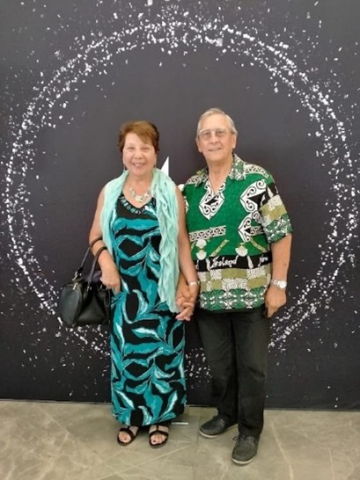
My wife Gemma is Tongan, and it was not uncommon for me to go around to her parents’ place and find people hiding in their garage because they had nowhere to go. These people were brought out here to do our labour, and later families came too, but they had issues with their documents. We had an immigration system that penalised them rather than helped them.
Gemma’s father worked in the freezing works. He was a leader in the Tongan Society and the church at that time.
This was my community.
What needs to happen next
I want to see an apology clearly spoken and clearly outlined.
I was brought up in a system of tika and aroha. Many say we are lucky with what we got after the Dawn Raids apology. But we say that’s not tika, not aroha, and that’s not pono, because you’re not being true. You say you’re sorry, but is it genuine?
I believe Jacinda Arden was sincere. They did the ifoga, and she apologised for the Dawn Raids. but it’s still not cleaned up. I want the government to create legislative change.
We must, through education, get out of that victimization role and build the society that we want.
For me, the key is education. Force is not the answer. You can build the strongest police force you like, but that’s not the answer. Pacific people came here to Aotearoa to fill a labour shortage. Māori moved to the cities for the same reason. Then it became, ‘we don’t want you anymore’. You can’t do that to people.
I married one of those ‘people’. My boys, our children, they are beautiful. They’re proud to be Tongan and Māori, proud to be New Zealanders. I think they are the ones who will be the answer.
I truly believe it’s education. I sometimes go and watch graduations and capping ceremonies, and it fills you with hope.
What I would say to my grandchildren about Dawn Raids is to read about it and make up your own mind. I’m adding my experience here, so this information is available.
As a country, we didn’t do it right. If we want to move on (if Pacific and Māori are people to move on), we need to be told the truth.
Footnote
[1] ‘Don’t let the truth die with you’: Dawn Raids era survivor (NZ Herald)
By Lagi Maama Academy and Consulting
Further reading
For further reading on Matua Bobby’s life and work, Auckland War Memorial Museum published a profile by Madison Pine in 2021 (updated 2025):
Bobby Newson (Auckland War Memorial Museum)
This interview is part of an ongoing effort to record, and share lived experiences of the Dawn Raids era. Community stories are vital in ensuring this history is remembered, understood, and passed on.
If you would like to share a story on our platform, please get in touch at [email protected]