This blog brings together Cherie Tautolo’s response after listening to her father, To‘alepai Lui Tautolo, share some of his life story in Aotearoa, highlighting an intergenerational exchange of memory, experience, and understanding.
This text draws from a longer talanoa in April 2025 between Cherie and Lagi-Maama Academy & Consultancy, a cultural organisation led by Toluma‘anave Barbara Makuati-Afitu Kolokesa Uafā Māhina-Tuai. Excerpts have been edited for length and clarity.
Ko wai ahau?
Tenā koutou katoa, Talofa lava, kia orana katoatoa. My name is Cherie Tautolo. I am the daughter of To‘alepai Lui Tautolo from the villages of Tanugamanono and Luatuanu’u in Sāmoa. I am also the daughter of Tapairu Toka from Tongareva in the Northern Cook Islands, Palmerston, Rarotonga and Aitutaki in the Southern Cook Islands, and Maio in French Polynesia.
I am the older sister of El-Shadan and Ereni. I was born in Auckland, the child of two migrants who left their homelands to seek a better life. That migrant experience sets the backdrop to my father’s story.
Citizenship and safety
My maternal Cook Islands grandparents raised me for the first eight years of my life in Onehunga, Auckland. The Cook Islands was a British protectorate until 1901, when Britain ceded administrative control to New Zealand. Cook Islanders became British subjects, and the Cook Islands became a realm country of New Zealand.
In the early 1970s, I was too young and to know about the Dawn Raids. I don’t recall my grandparents speaking about them, though that’s not to say they were unaffected. What I do know is that as Cook Islanders, they held the rights of New Zealand citizens and were therefore exempt from deportation.
My Samoan father, by contrast, faced racial targeting by authorities. His story of racism describes one traumatic encounter.
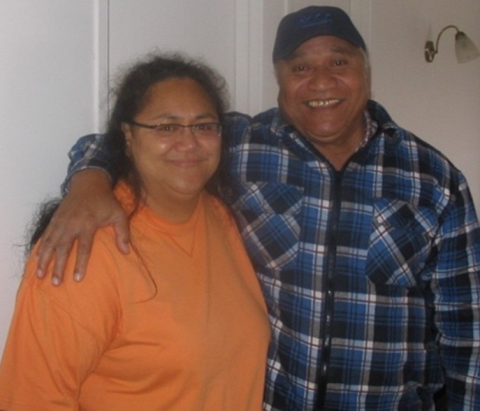
Following the Citizenship (Western Samoa) Act 1982, which recognised some Samoans as New Zealand citizens, I attended my father’s New Zealand citizenship ceremony at the Onehunga Borough Council building. I vividly recall Dad’s pride and emotion—finally feeling like a ‘real’ New Zealander at last. He spoke of citizenship as an honour. Now that I understand more about his experiences of racism, I also recognise the relief that citizenship must have brought for many: safety from deportation, and the hope of living in Aotearoa without scrutiny or fear of police brutality.
‘Needing a passport to have a beer’
While growing up, Dad never spoke about being beaten and arrested. I first heard the story when I asked whether he would like to be part of this project. When he shared the details, I felt shocked, then outraged, and then deeply sad that he had endured such hatred.
My father is a proud Sāmoan, and to imagine the personal attack on him, the insult to his mana, while he was quietly spending an afternoon with friends still angers me.
When I asked why he had never told us what happened, Dad simply replied that we had never asked. That response speaks to his desire not to dwell on the experience. I suspect that shame, trauma, and the demoralising effects of victimisation were also part of his silence. As a young man, he wanted to put that memory behind him, learning instead to be wary and conscious of how to engage with Pālagi authority figures.
Whenever I see archival footage of the Dawn Raids, I feel overwhelmed. The fear on the faces of those being inhumanely ‘hunted’ by the police with dogs, and the degrading conduct of state authorities towards Polynesians and Māori, is devastating. The idea that Dad needed ‘a passport to have a beer,’ captures the everyday discrimination used by the state to assert control and uphold racist regimes.
The violence also unfolded within a wider and political context. The occupations at Takaparawhau (Bastion Point) and Raglan, the activism of Ngā Tamatoa and the Polynesia Panthers, and the broader struggle for Māori land, Te Tiriti o Waitangi, te reo Māori, Tino Rangatira, and Mana Motuhake. The Polynesian Panthers stood alongside Māori, protested the Dawn Raids, and advocated fiercely for Pacific peoples’ rights.
A life of service
Dad worked long hours, and our home on Pukaki Road in Māngere was close to the airport, so we often saw planes fly overhead. It was normal for Dad to spend a lot of time away from home. When Dad and Fa‘afua married, community commitments increased further, as both were heavily involved in supporting sporting and cultural projects.
I am really proud of Dad’s service to community, though it came at a cost to our immediate family. My father later apologised to me for his disciplinarian parenting style, particularly towards me. It was tough, but I try not to dwell on it. Instead, I focus on the positive parenting outcomes for which I am grateful.
Dad greatly influenced my value system: the importance of learning and education, and independence. When I moved from my grandparents’ home to live with my parents, he insisted that school come first. Once I reached high school, I was not allowed to play sport or join extra-curricular activities. At the time, it felt like an extreme measure, but I later understood his reasoning. He wanted me equipped to succeed in the Palagi world, and he knew education had to be prioritised.
Through caregiving responsibilities for my younger siblings, I also learned independence and self-reliance. If we wanted something, we worked for it. I grew up believing that perseverance and application could achieve anything. As a result, I am fiercely independent and seek self-fulfilment through my work.
Through my father’s example, I learned the value of service, of giving your time and yourself to help others. I told Dad recently that education gave us, his children, financial independence—an enormous blessing. For me, however, the most rewarding outcome has been the ability to support others to achieve their goals and fulfil their dreams. That work continues and remains deeply important.
This blog forms part of an ongoing effort to record, and share lived experiences of the Dawn Raids era. Community stories are vital in ensuring this history is remembered, understood, and passed on.
If you would like to share a story on our platform, please get in touch at [email protected]