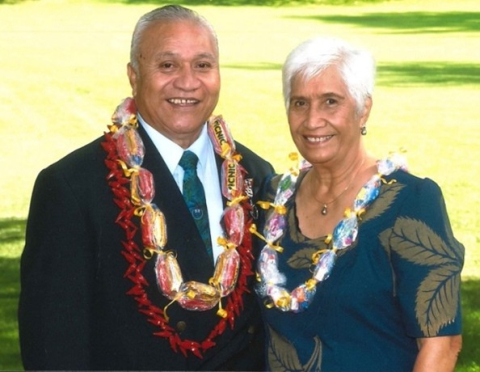
To‘alepai Lui Tautolo was born in the village of Toamua, the centre of Faleata, Sāmoa. He traces his geneology across Tanugamanono, Fasitoo‘uta and Luatuanu‘u. He is married to Fa‘afua Leavasa from the village of Vaiala, and together they have nine children. Well-known across Tāmaki Makaurau for his lifelong community service, he was awarded a Queen’s Service Medal in 2015. In this blog, To‘alepai reflects on experiences of racism and on more than four decades in the airline industry, revealing how mobility between the village and diaspora has been central to sustaining Pacific relationships and community life.
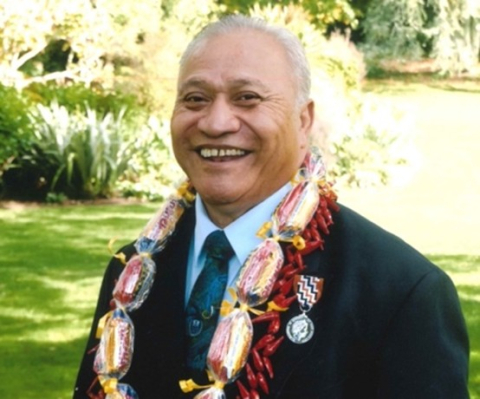
The following excerpts draw on a longer talanoa held in April 2025 between To’alepai and Lagi-Maama Academy & Consultancy, a cultural organisation led by Toluma’anave Barbara Makuati-Afitu Kolokesa Uafā Māhina-Tuai.
For the purposes of this blog, the talanoa has been edited for length and clarity.
Migration to New Zealand
I first came to New Zealand in 1949, when I was five years old. My aunt Moa (Fairbairn) brought me to Wellington, where I began school. Later my father, Tupuola Sepelini, joined us; he was part of Wellington’s first Pacific band, The South Sea Islands Serenaders. When he became seriously ill, the doctor asked us, ‘Who is Kamila? He keeps calling her name.’ Kamila was my mother, still in Sāmoa. The doctor suggested she be brought to New Zealand, and she arrived during Christmas 1955. Unfortunately, her rheumatism worsened, and eventually we had to return her home. I was brought up in Moamoa, a beautiful Samoan village where Catholicism is prominent and home to a theological college and Seminary. I attended Marist Brother School in Lotopā and later Sāmoa College; I walked from Moamoa to Vaivase every day. After school certificate, I enrolled at St Joseph’s College where my duties included looking after the Priests, translating sermons into Samoan, and even scolding matai at times for disregarding their duties.
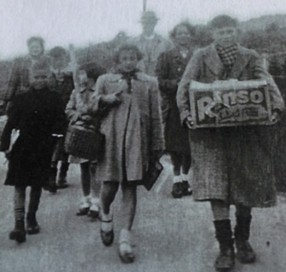
In 1964, at the age of 20, I came back to New Zealand for good. Work prospects in Sāmoa were limited, and my mother encouraged me to depart Sāmoa, even though it meant leaving her behind to care for my younger siblings.
My first job was at Westfield Freezing Works in Auckland. You could earn good money working there in those days. There was plenty of seasonal work, with mostly Māori and Pacific Islands staff, and we worked hard. Later, I worked as a clerk at Arthur Yates Seeds (Yates NZ), based at the bottom of Albert Street opposite one of the central-city hotels. That job moved me off the factory floor and into office work.
Experiences of racism and discrimination
After work, I would sometimes catch the Farmers free bus to get into town before pubs closed at 6pm. One evening, I went to a pub called the Rising Sun. There had been a fight elsewhere involving Black Power, and when police arrived, they singled me out. I was asked where my passport was. I replied that I didn’t know you needed a passport to have a beer. That response angered them. I was arrested, shoved into a police van, and taken to the Ponsonby Police Station, at the corner of Ponsonby Road and Newton Road.
At the station, I was beaten. The officers avoided my face, punching my ribs and stomach instead. Later, my lawyer told me they were careful because injuries to the face would show clear evidence of assault. His advice was to ‘let it go, it’s your word against theirs’.
That was the moment I lost trust in New Zealand law and order.
Fa‘aaloalo—respect, dignity, courtesy—is a core Sāmoan value. That experience stripped away my respect for the police. I hadn’t committed a crime. I was simply a Pacific man in a public place.
My awareness of racism in Aotearoa started early. As a child in 1949, I saw my father buying beer for his Māori friends because liquor laws prevented Māori from purchasing alcohol themselves. My father was Sāmoan, classified at the time as a British subject, and was allowed to buy alcohol. Māori men born in New Zealand were not. That contradiction stayed with me. I remember thinking: why do Indigenous people here have fewer rights than migrants?
On Samoan citizenship
In 1982, the case of Falema‘i Lesā exposed the New Zealand government’s racist attitudes and laws. What is less known about this history is that my late sister Moana and her husband, my late brother-in-law, Solomona (Leota) were a huge support to Falema‘i Lesā when she needed help in Wellington. As detailed in an 2024 E-tangata article, they offered her a home, helped her find work as a cook, and sheltered her from immigration officers when they came looking for her. Later, when she was arrested and ordered to be deported, my sister and brother-in-law helped her find legal support.
With George Rosenberg and George Barton QC as her lawyers, Falema‘i took her case to the Privy Council and won. I remain deeply proud of my family’s role in helping her resist unjust laws.
Reflecting on 45 years in the airline industry
I began at Air New Zealand in 1968 as a Disbursements Officer, working in accounts payable. At a time when very few Pacific people were employed in corporate or administrative roles, that position mattered. It provided stability, but it also revealed how distant large institutions could be from the communities they served. I spent 45 years in the airline industry—28 years with Air New Zealand and 17 years with Polynesian Airlines.
As Pacific migration increased, airlines became one of the most important pieces of community infrastructure. Flights weren’t just booked for holidays or business—they were for funerals, fa‘alavelave (cultural responsibilities), church conferences, youth exchanges, sporting teams, and emergency family travel. How airlines responded to Pacific needs had real effects on people’s lives.
That understanding shaped my later work when I became Manager of Pacific Island Affairs for Air New Zealand, responsible for relationships across Sāmoa, Tonga and the Cook Islands. This role was not symbolic. It involved constant advocacy—explaining Pacific obligations to corporate decision‑makers, negotiating compassionate fares, and ensuring staff understood why flexibility mattered. In this space, cultural knowledge was as important as commercial knowledge.
Later, I was headhunted to become General Manager, New Zealand, for Polynesian Airlines, with my office based at Maota Sāmoa on Karangahape Road. Polynesian Airlines played a different role from larger carriers. It was closely aligned with Pacific governments and communities, and its success depended on trust. People knew the airline, knew who worked there, and expected to be treated with dignity.
Through discounted fares, sponsored tickets, and direct partnerships, airlines supported church travel, fundraising efforts, village obligations and reconnection with home. The work required balance—between profit and people, policy and compassion. Mobility itself was a form of care. Being able to travel back to Sāmoa, or bring family to Aotearoa, sustained language, faith and collective responsibility.
My airline career is inseparable from Pacific community history in New Zealand. Aviation was not just about movement between cities or islands; it was about maintaining relationships, and ensuring our people were not cut off from one another at a time when migration, racism and state control placed heavy limits on Pacific lives.
Beyond the Dawn Raids
The Dawn Raids were traumatic, but they do not define my entire life. I have been involved in community activities for many years. From contributions to churches, sports, Malaeola Community Centre and Maota Samoa. I am grateful for the opportunity and what the good Lord has blessed me with to serve the community and my family.
The racism and discrimination I experienced strengthened my determination that my children, and our people, would not be left feeling insignificant or powerless. I didn’t want them responding to injustice with anger or physical confrontation. Education was the path I chose for them. I wanted them to understand systems, to be confident, and to challenge discrimination through political and social means.
Some of my proudest moments were seeing my children graduate from university and establish professional careers. Their achievements represent resilience, not just survival.
Our communities are more than the harm inflicted on us. We are also defined by how we supported one another, built institutions, moved between islands and cities, and created lives marked by service, faith and dignity.
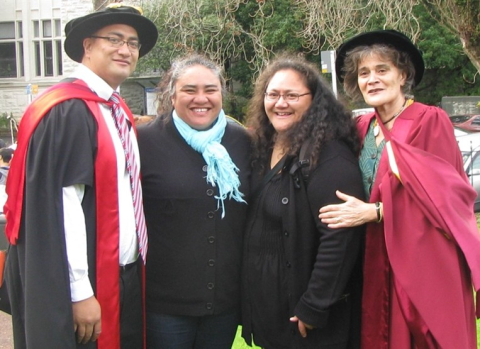
To‘alepai’s daughter, Cherie Tautolo, was present during this talanoa and agreed to share her reflections on her father’s story. Her contribution also features in our Talanoa section and can be read alongside this account.
This blog is part of an ongoing effort to record, and share lived experiences of the Dawn Raids era. Community stories are vital in ensuring this history is remembered, understood, and passed on.
If you would like to share a story on our platform, please get in touch at [email protected]