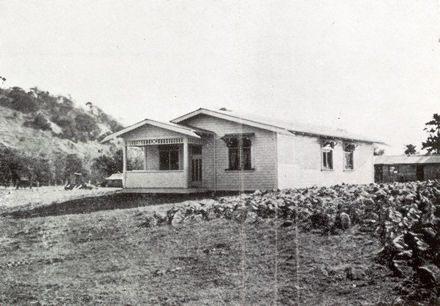
A house built for a Māori farmer in Reureu (Whanganui District), financed from a state loan advanced for Maori land development in the 1930s
Rural
Articles
State housing

New Zealand's first state house was formally opened on 18 September 1937. But the government has provided rental housing for New Zealanders for more than a century. Explore the history of this country's various state housing schemes and their contribution to the New Zealand way of life. Read the full article
Page 8 - Outside the mainstream
Many of us associate the beginning of state housing with the hipped-roof cottages built by the first Labour government of the 1930s and '40s. But the origin of state housing has
Viceregal visiting

'To be invisible is to be forgotten,' constitutional theorist Walter Bagehot (1826–77) warned. For the King or Queen's New Zealand representative, the governor-general, that meant hitting the road Read the full article
Page 3 - Organising a small-town do
Empire may have shrunk in the 1950s, but no one wanted to be
Women Together
Rural
Rural women have belonged to many organisations, but very few of these have been rural women's organisations Read the full Women Together Theme
New Zealand Federation of Country Girls' Clubs

The intentions of CGC's founders—that it should train young women for citizenship, homemaking and community responsibility within the farming sector—were eventually defeated by a shrinking rural economy and the migration of young women to the cities. Read the full Women Together Essay
New Zealand Federation of Women's Institutes

The Federation of Country Women's Institutes had one of the largest membership of any women's organisation until the 1990s. Read the full Women Together Essay
Women in Agriculture
Women in Agriculture began as a loose coalition of individuals, groups and networks focusing on the role of women in the agricultural sector. Read the full Women Together Essay