
Phil Stewart remembers his aunt, Dawn Matthews.
Dawn Matthews died on Erebus, aged 60. At the time of her death, she was working as a seed pathologist at the Ministry of Agriculture and Fisheries (MAF) seed testing station in Palmerston North where she had been for 30 years. She lived at Aokautere, near Palmerston North, in a house she’d had built in the early 1960s.
She was the twin sister of my mother, June Stewart. Dawn never married or had a partner. She was an integral part of our family, and in many ways like an auxiliary parent when I was growing up [1]. Christmas wasn’t Christmas if she wasn’t there. For all of her adult life, she never lived more than an hour or so from our farm, so we were lucky enough to see her often.
To me, Dawn’s upbringing sounded idyllic, although her family often did it tough, especially during the Depression years when she and my mother were in their teens.
Her father, Marmaduke Matthews, had several careers. He emigrated to New Zealand from Oxfordshire in 1904 with his parents and siblings after a brief stop in Canada. Initially he farmed around Auckland with his family before settling in the then-rural Favona Road, Mangere, where he built a house in the arts and crafts style and started raising his young family on a small farm.
Marmaduke was married to Betty Vickers, who was from Inglewood, Taranaki. Betty was one of six children raised on a small farm virtually single-handedly by her mother Frances Vickers – a fiercely intelligent, and compassionate woman who cast a long shadow over her extended family. ‘Granny Vickers’ cared deeply for her many grandchildren and Dawn often stayed with her as a child. We still have many of the letters exchanged between Dawn and Frances.
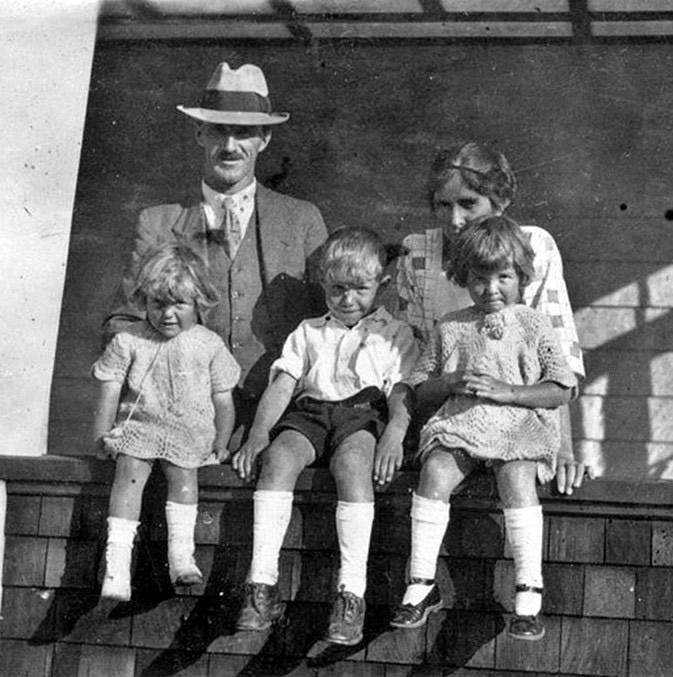
Marmaduke and Betty had three children while they were at Favona Road: Philip (Pip) born in 1917 and the twins June and Dawn, born in 1919. June and Dawn were fraternal twins and not much alike: Dawn was small, quiet, somewhat shy and studious. She had an impish sense of humour and could be reduced to fits of giggles with a good joke. She rarely got cross, but when she did, she would stamp her foot like an angry sheep – a habit I suspect she’d had since childhood. June by contrast was taller, vivacious and outgoing socially. But both were blessed with a steely determination and both idolised their handsome and talented older brother.

Marmaduke had trained as a flying instructor during the First World War and worked at the Walsh brothers’ flying school at Kohimarama, where he was one of the first aviators to get a certificate of efficiency. He flew Curtiss flying boats and was proud to have instructed George Bolt, who went on to become one of New Zealand’s foremost aviators in the early 20th century.
He was skilled at anything he turned his hand to, and by the end of the First World War had established himself as a successful commercial artist – a career he maintained for the rest of his life.
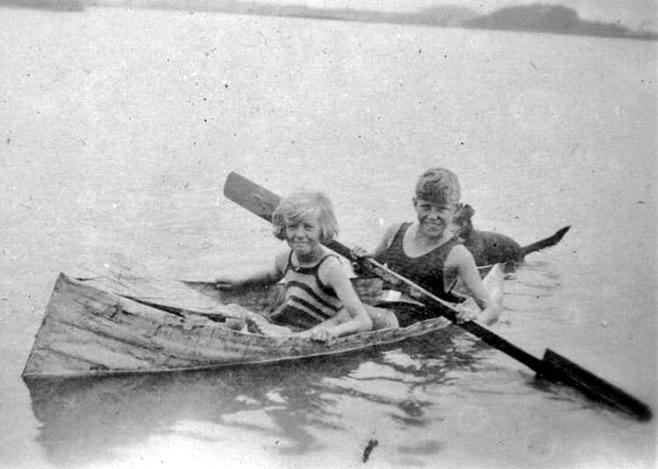
Their letters and photos from throughout the 1920s when they lived at Favona Road are full of the delights of a rural existence close to the beach. Both my mother and Dawn recalled a very happy childhood there.
In 1929 the family moved to Seatoun, Wellington, where Marmaduke furthered his career, making commissioned illustration work as well as developing his skills in etching, creating a large series of pictures of some of New Zealand’s best-known schools and universities as well as landscape scenes. Betty was his sales representative, pounding the streets selling Marmaduke’s etchings and cards. He was a friend of C.F. Goldie and family legend has it that Marmaduke had one of Goldie’s paintings, which he decided not to keep and sold for the princely sum of £10. If only...
Pip, June and Dawn thrived in Wellington. They all attended Seatoun School where both Dawn and Pip were dux, before going to secondary school at the then Wellington Technical College (now Wellington High School).
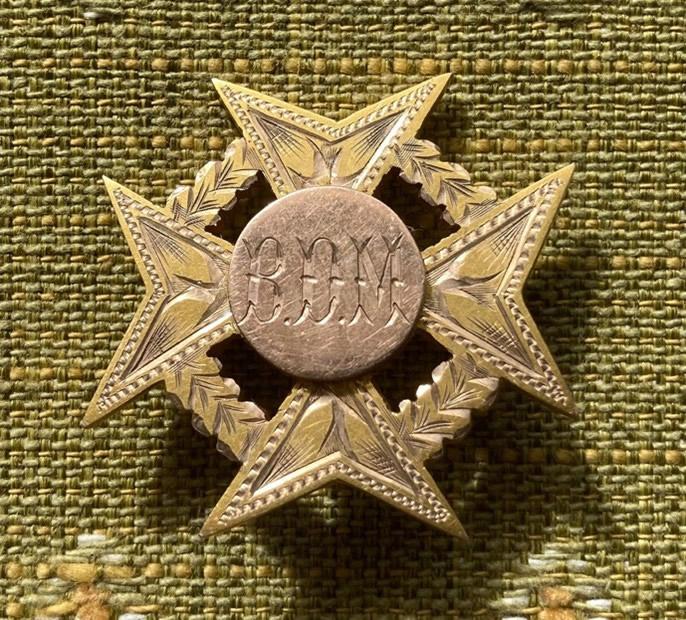
Pip had inherited his father’s artistic skills, which were nurtured at secondary school and he went on to start a career as a commercial artist. June was also a skilled illustrator and pursued painting throughout her adult life. Dawn was the academic one and June stuck close to her sister throughout secondary school so she could quietly crib Dawn’s work. Her own artistic leanings were expressed through beautiful embroideries and cross stitching, some of which we still have.

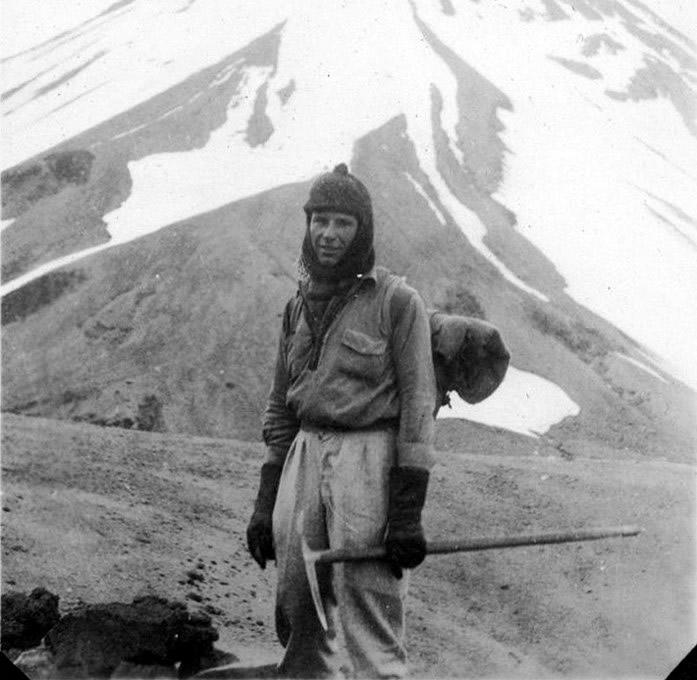
On 18 January 1937, the family’s world was shattered when Pip, aged just 19, was killed during a solo climb on Mount Taranaki (then Egmont). He’d climbed to the summit alone to camp for the night and capture a photo of the sunrise.
The culture around grieving was very different then. June and Dawn were not taken to Pip’s funeral because it was felt it would be too upsetting for them (they were 17 at the time). In hindsight, this may have contributed to years of unresolved grief for the sisters. Indeed, a letter from Dawn to her grandmother Frances, written less than a week after the accident puts up a remarkably brave face:
June and I have been having a lovely time up here and have been kept busy. It does keep my mind off Pip although it does come over me in spasms. The mountain is pretty well covered in snow today. Mostly I have been able to keep my eyes off the mountain because when I do see it, [it] brings it back with a rush so much. I hope Mum and Dad are keeping cheerful and well.
The letter continues with chatter about school and university plans, and news of her cousins. Betty and Marmaduke never really got over the loss of their son, which haunted them for the rest of their lives.
Dawn could at least plunge into her studies and completed a Bachelor of Science at Victoria University, Wellington. There wasn’t an academic tradition in her immediate family and it was her grandmother Frances Vickers who mentored her through the challenges of study. (Frances had studied at university in Britain before emigrating to New Zealand, although she never graduated.)

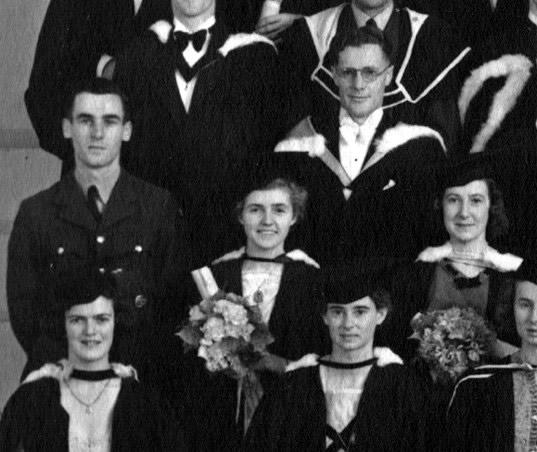

Dawn graduated in about 1940 and eventually moved to Palmerston North where she initially worked at the Dairy Research Institute. It was here that she met lifelong friend Joyce Moss. Long before the term ‘OE’ was coined, Dawn and Joyce embarked on a remarkable trip together in the early 1950s – remarkable because such extensive travel for young Kiwis only a few years after the Second World War, was still relatively rare.


The pair travelled through the UK, Belgium, France, Germany and Switzerland and were struck by how fresh the scars of war were in many places. Young Kiwis were somewhat less worldly in the 1950s and Dawn, in one of her many letters home to June, remarked on the intriguing ‘crescent-shaped buns’ they ate in France, and how the coffee was drunk from bowl-sized cups. (Dawn brought her love of café latte home with her and always made coffee with milk heated on the stove.)
Her letters were also filled with excitement about the upcoming coronation of Queen Elizabeth II. And while in the UK, Dawn took the opportunity to connect with her English relatives – her father had been born in England, as had her maternal grandmother. These connections often blossomed into lifelong friendships. Although Dawn was on the face of it rather shy and quiet, she was also strongly devoted to friends and family, and was often the ‘glue’ that connected different branches of her family from both her parents’ sides. The number of letters of condolence that flowed from overseas after Dawn’s death were testament to that.
As she had travelled to the UK, Dawn returned by sea. Their initial journey had taken them across the Pacific and through the Panama Canal and Caribbean, while they returned via the Mediterranean, Port Said, Suez Canal, Aden, Sri Lanka, Perth and Melbourne.
The trip instilled a strong love of travel in Dawn, not only internationally but also throughout New Zealand. Her career took her to several overseas conferences, including in Sweden and Indonesia and she also took the time to visit another branch of the Matthews family who had emigrated to Canada. This wanderlust almost certainly drove her interest in yet another adventure – a flight over Antarctica.
While she didn’t blow her own trumpet to her own family – she was primarily an aunt to me and my brother, not a scientist – it became clearer to us after her death that she was internationally a widely respected seed pathologist. After she died, her boss at the seed testing station in Palmerston North, then Don Scott, kindly sent us copies of some of the many papers she had had published in international journals. That was quite a revelation. And June also received letters from Dawn’s professional peers around the world after her death. This was a side to her we had never fully appreciated.
Visiting her at the seed testing station was always slightly intimidating for me as a child – I mainly recall strong chemical smells, tiled walls, bright fluorescent lighting and white coated staff murmuring quietly. But it was also a fascinating place and Dawn would always take the time to show us what she was working on in the lab.

(And just to illustrate how deeply the Erebus disaster penetrated New Zealand’s social fabric, one of Dawn’s MAF colleagues from Palmerston North, Shirley MacDonald, was also killed in the crash.)
When I was a child, Dawn was the caring aunt who came to comfort me when I was in Dannevirke hospital with a broken leg, and who took me on rambles in the countryside around her home sharing her huge love of nature. Dawn was a wonderful gardener, a passion that fitted well with her professional skills and was nurtured by her Taranaki relatives.

As a child, this had its downside for me. Dawn liked to take bags of sheep poo back to her garden whenever she visited us on our farm near Woodville. Because I was small enough to squeeze under the woolshed, it was always my job to crawl under with sack and coal shovel and collect the black gold. In retrospect it was a small price to pay.
Dawn had a good life in Palmerston North. Her auntie Midge lived there and she had a wide circle of colleagues and friends. She enjoyed classical music, bridge and golf (my father would tease her mercilessly about her high handicap), and although she lived alone, she always kept pets – a series of budgerigars named Bertie and a series of cats named Katie. And being a practical woman who grew up in times of self-sufficiency, she also kept chickens and a large vege garden. Aokautere was a small and close-knit community in the 1960s and 1970s and suited her perfectly. After Dawn’s memorial service in Palmerston North in 1979, some of her extended family came back to her house for a last look around. Many of them helped themselves to cuttings from Dawn’s garden before they left – something that surprised me at the time but I later realised was a way to keep a living memento of Dawn. It was nice to think that flowers from her garden would start blooming around the motu.
I boarded with Dawn for two months in the early 1970s when I was a student teacher. Looking back, I’m amazed at how relaxed she was having a noisy and inconsiderate nephew invading her quiet space, blithely smoking and playing David Bowie records too loudly on her old stereo. How she put up with it I’ll never know – but I also never stopped appreciating her love and tolerance.
Our family, like all Erebus families, was hit hard by the tragedy. While we all come to know grief through our lives, losing someone in such a brutally fast, violent and unexpected way leaves especially deep scars, which never entirely heal.
My Auckland-based brother John, a TV reporter at the time, had taken Dawn to the airport for the flight. He had started hearing news of the missing plane filtering into the newsroom that afternoon, and had the difficult task of telling our parents.
I was unaware of what was going on until late that evening (I was at my girlfriend’s place and no-one knew how to reach me in those pre-cellphone days). It was only when I caught a late TV news bulletin that I heard the chilling news and called home.
For my mother especially, this was devastating. She had lost her brother in a similarly traumatic way, 42 years earlier and both of her parents had died relatively young (late 50s and early 60s) in tragic circumstances. For my father too, helping June navigate this morass of grief over an extended period also took its toll.
Our family gathered in Palmerston North in the days following and floundered through the practical and emotional minefield. What to do first? How do you just deconstruct the physical manifestations of someone’s life, their possessions, their precious things? How do you do this respectfully, sensitively? It was new territory for all of us.
We organised a memorial service in Palmerston North in the following days. Friends and family of Dawn’s colleague also joined us to remember Shirley MacDonald. That gathering was the first step in a long road and having her wider family around was a big help to my mother June especially.
The stress was repeated a month or so later after Dawn’s body had been identified in Auckland and a ‘proper’ funeral followed. This also provided an opportunity for the many Matthews relatives from around the North to pay their respects. But it was hard on my mother.
In the months and years that followed there were constant reminders as the enquiry and its aftermath played out. Then a few years ago, the grossly insensitive Air New Zealand Antarctica-themed flight safety video reopened old wounds for Erebus families, including ours.
And there has been the ongoing struggle to establish a national memorial to Erebus victims, an important milestone that will help families properly honour their loved ones.
As I write this, I’m the only close relative of Dawn who is still here to remember her. That’s why it’s important to me that her story is told and shared, even just a brief outline such as this. While direct memories of Dawn will inevitably fade, I’m comforted that I see flashes of her personality and values in my own adult children.
Haere ra, Dawn. You’ll always be loved.
[1] My mother June married farmer Ron Stewart after they met during the Second World War, when June was in the Women's Land Army. They had two boys: my older brother John Stewart (now deceased) born in 1945 and me, born in 1952.
The memory on this page is in the writer's own words and does not necessarily reflect the views of Manatū Taonga.
Images and text not to be reused without permission.
Read more memories like this: Reflections on Erebus series.
See also, passengers and crew from Flight TE901 (Manatū Taonga)
Private collection
