
Remembering Frank Christmas
Frank Christmas from New Plymouth was one of 257 people killed when Air New Zealand Flight TE901 crashed on the slopes of Mt Erebus, Antarctica, in November 1979. Frank and his wife Eileen had four children, Raewyn, Denise, Pauline, and Brett. Like many families who lost loved ones that day, the impact of the accident has been lifelong. Brett Christmas was thirteen-years old when his father was killed. These are some of his personal reflections on post-Erebus trauma and how it affected Erebus families, with reference to what he believes were expected standards of care in 1979.

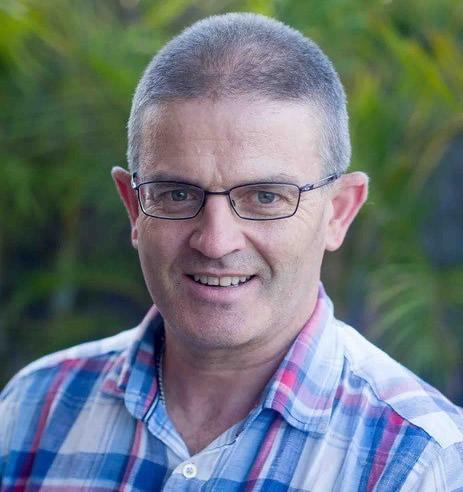
This photo of dad was taken at the time of Erebus. He was an enthusiastic amateur photographer, and the presence of his camera reminds me of why he wanted to see the ice.
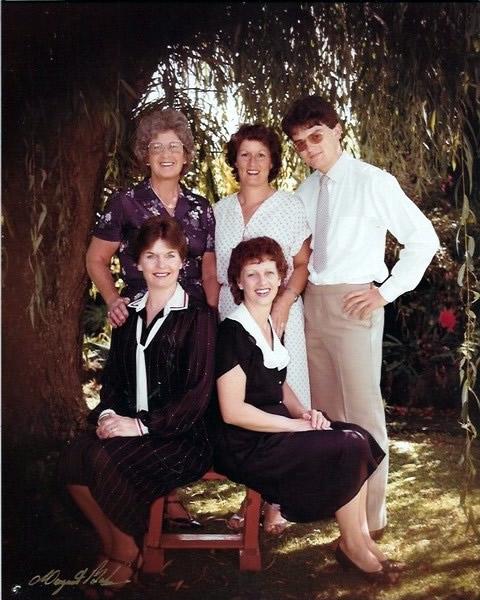
This family photo was taken a year or so after Erebus. The smiles are there for the camera and cover the truth underneath. My mum, Eileen is at the top left of the photo. Moving clockwise are Denise (Roper), me, Pauline (Thorburn) and Raewyn (Staunton)
Reflections on post-Erebus trauma
Learning to stand in someone else’s shoes, to see through their eyes, that’s how peace begins. And it’s up to you to make that happen. Empathy is a quality of character that can change the world.
– Barack Obama.
28 November 2023 marked 44 years since the Erebus disaster. It was a time of reflection, remembrance, honour, respect, and a search for the spiritual meaning behind the tragedy and subsequent trauma suffered by many. By 2023 we had accumulated much wisdom and research surrounding bereavement and post-traumatic stress disorder (PTSD). We are much more sophisticated in diagnosis and management of these conditions. We care for people better. We understand the very human need to gather, find the truth, offer support, and adjust to the new ‘normal’. A 2023 view of 1979 standards of care has the potential to erroneously condemn them unless a broader understanding of New Zealand’s historical response to tragedy is understood.
I note with interest the new standards the Public Service Commission has formulated to care for survivors post disaster. We can be grateful that this occurred because of parliamentary submissions by family members of those lost at Pike River. There are three laudable principles that stand out and are fundamental to working with survivors and their families:
- The immediate aftermath, when the focus is on the necessities of life, reuniting
with loved ones and connecting with support networks who may not be local. - The adjustment to the new normal, when the focus is on getting day-to-day life
back on track. - The search for truth and justice, when the focus is on getting to the bottom of what happened, learning from the catastrophic event and healing.
When one reflects on the 44 years that have passed since Erebus, it is ironic that it has taken further human tragedies for minimum standards to materialise. There is nothing within these principles that were not held as virtues at the time of Erebus and indeed there is evidence in New Zealand history prior to 1979 that these sentiments were in play.
Rehabilitation of returned service personnel after the Second World War
In the early 1940s, the Fraser government set up a rehabilitation programme for New Zealand’s ex-service people. One of the criticisms of similar schemes introduced after the First World War included the lack of care for psychological casualties and so some planning for this was undertaken for those returning after service during the Second World War. It was estimated that only a small number of ‘war neurosis’ casualties would require institutional care. Hospital resources were prepared. The conventional treatment of the time for ‘the average’ neurosis case was to get him back to normal life, to work, to his home and his friends so that he would ‘settle down’. The Rehabilitation Act of October 1941 embraced this, and it set in motion, among other things, vocational rehabilitation. My father and uncles were part of this retraining process. (1) Prominent figures in the Erebus story benefited from these schemes. Robert Muldoon, Prime Minister at the time of the Erebus accident became New Zealand’s first cost accountant and Justice Peter Mahon, who led the Royal Commission of Inquiry into the accident, furthered his legal studies.
James King in his memoir, Green Kiwi vs German Eagle, devotes a chapter to this demobilising process. He speaks of the concerned and friendly medical officer responsible for his welfare and future life as a civilian.
Families bore the brunt of emotional support and care for returned service people. In many ways, families were the silent victims of the war. My paternal grandmother referred to a very practical book published in 1945 outlining helpful tips on easing the return of her son to civilian life. The book in question was the work of Maurice Bevan-Brown, a Christchurch psychiatrist and psychotherapist who believed little interest was being shown in dealing with the victims of ‘war neurosis.’ Among other things, it talked about, ‘maintaining a calm and peaceful atmosphere’ at home. It advised against ‘conflict and warned of the effects of loud noises. A slamming door would result in my father jumping up and adopting an aggressive posture.
It is therefore clear that New Zealand in 1945 had a basic grasp of post traumatic emotional issues and actively planned to address the needs of returning service people. Some might argue that the horrors of the Monte Cassino campaign were far removed from the the Erebus accident and that the emotional fallout cannot be regarded as the same. Modern understanding of brain circuitry has proven that the human response is the same irrespective of the stressful triggering event. (2)
The Tangiwai rail disaster, 24 December 1953
New Zealand demonstrated its higher self in the immediate aftermath of the Tangiwai disaster. Soldiers from Waiouru, police and locals scoured for the living and the dead while the military hospital tended to the wet, silted, oil covered, and feeble survivors.
It was summer and no refrigeration facilities were available. The local police inspector Willis Brown prepared the bodies for mass identification and warned the families of what to expect. He arranged clergy to support and comfort the bereaved. A subsequent Royal Commission found a lahar from Ruapehu’s crater lake was responsible. A memorial was built in Karori Cemetery for the missing and unidentified. Every year on Christmas eve an express train slows as it approaches the new bridge and flowers are tossed into the Whangaehu River along with a card that reads, ‘In memory of all who died at Tangiwai on Christmas Eve 1953.’
The Wahine disaster, 10 April 1968
The sinking of the Lyttelton–Wellington ferry Wahine on 10 April 1968 at the entrance to Wellington harbour, was New Zealand’s worst modern maritime disaster. There were 734 passengers and crew aboard. Fifty-one people lost their lives that day, another died several weeks later and a 53rd victim died in 1990 from injuries sustained in the wreck.
Accounts of this disaster highlight the many acts of individual and collective bravery conducted on this day. These efforts ensured the death toll was not considerably higher. Flotillas of official and private vessels assisted in survivor recovery. It was New Zealand’s Dunkirk. The city and the nation were mobilised. All local hospitals were on standby and executed their care with precision. Military barracks at nearby Fort Dorset prepared food and supplies. The East Harbour RSA was transformed into an aid station. Photos attest to the resuscitation of babies, the wrapping of people in blankets, and the lighting of fires on beaches. Ordinary people opened their homes. The ever-present and helpful Salvation Army offered physical and emotional support.
Four prominent memorial sites to the Wahine exist in Wellington. They include mastheads, anchors, and propellers from the ship. At Frank Kitts Park a plaque near the mainmast was placed on behalf of the survivors. It reads, ‘Hundreds survived due to the efforts of a large rescue mission. This plaque is dedicated to all those who assisted in the rescue mission. You saved us from disaster and took us to a safe place.’
The Erebus aftermath as experienced by one family
My family hails from Taranaki. There has always been a sense of provincial isolation from the political engine room in Wellington. That isolation was keenly felt for many years after Erebus. Immediately after the DC10 was pronounced as missing, family members were ushered by Air New Zealand employees into a private room at Auckland Airport to receive the news. My mother was offered a brandy. She made her own way home to New Plymouth. Several days later she received a bunch of flowers and a condolence card from Morrie Davis, Air New Zealand’s Chief Executive. All communication with the company ceased at that point. There was never any communication established with the government in Wellington. This left us feeling like our own country had abandoned us.
The media was the only source of any information. The legitimacy of that information appeared questionable due to sensationalism and multiple conflicting opinions. At home, large boxes were filled with newspaper cuttings. I think this was an attempt by Mum to gather some certainty and answers when we felt as a family we had neither. Occasionally, scraps of factual information were relayed via the family lawyer. A fierce storm of litigation, claim, counter claim, and public hostility by the main parties (government, Air New Zealand, Chief Inspector of Air Accidents, the Royal Commissioner, and the various legal representatives of each one) held everybody in a state of heightened anxiety and fear. Any opportunity for bereavement evaporated. We were forced to join a consortium and become litigants in an insurance claim which further detracted from grief work. Eventually books and reports were published. The technical information was beyond many, but a careful reader had the opportunity to finally gather facts and form a personal conclusion over causality and culpability. There are many potential references one could insert here. I would highlight the findings of the Mahon Report (Report of the Royal Commission of Inquiry into the Crash on Mount Erebus Antarctica of a DC 10 Aircraft Operated by Air New Zealand Limited) and Gordon Vette and John Macdonald’s book, Impact Erebus. I found both very helpful.
Close friends offered kindness in an awkward sort of way. They were dealing with their own loss and were weighed down by the gravity of the situation. There was no experience of any formalised practical help. We were the Wahine, cast adrift and smashed upon Barrett Reef. We had nobody to support us and comfort us in bereavement. We were not saved from this disaster and not taken to a safe place.
A broad view of post-Erebus trauma.
Governing bodies were preoccupied with legal machinations of the accident in the early 1980s. Their legal advisors overlooked an established principle of, ‘care without prejudice’, a concept that has its origins in English law in the 16th century. This was based on a legal principle that allows protection for parties involved in a dispute to communicate with candour and explore options for settlement without fear that any admissions will be subject to scrutiny if a case goes to court. Regarding Erebus, a gesture of support by the government (which may have included discretionary funds for physical and emotional help) could have been offered on a ‘without prejudice’ basis until there was absolute clarity about causality. There is evidence of this in New Zealand case law prior to 1979. Erebus families were simply collateral damage. We were the sacrificial lambs offered on the altar of political expediency.
Government apologists of the time may argue that this level of care was not the stuff of government business. The polemic view states that an airline in full government ownership must take full responsibility for the consequences of all its actions. Others pointed to the Accident Compensation Corporation (ACC) scheme which was established here in 1974 as providing sufficient support. It administered the country's no-fault accidental injury compensation scheme and provided financial compensation and support to citizens, residents, and temporary visitors who have suffered personal injuries.
The psychological community had formalised the diagnosis of PTSD in 1980. In fact, New Zealand’s leading psychologists A.J.W (Tony) Taylor and Alan Frazer, interviewed and counselled returning personnel from the Ice Phase of Operation Overdue. They published on this issue and advised ongoing care and support for those involved. This evidence highlights that knowledge of PTSD was being applied in a practical way in New Zealand post-1979. If this was rolled out to families at the same time, health outcomes undoubtedly would have improved.
The study of bereavement had been spearheaded by Elizabeth Kubler-Ross, a Swiss-American psychiatrist, in 1969, well before Erebus. Her research mainly focused on the palliative care population and not necessarily the bereaved, but it provided an initial framework. Her research has now been superseded. It is common knowledge that the international academic community has always been well connected. Professor Taylor was a great advocate for academic collaboration. Deficiencies in knowledge about rolling out a support programme for Erebus families may have been enhanced by the very international collaboration that he championed. This is one of those, ‘what if’ situations that exist in the Erebus story where we may well have designed a world-class trauma response programme for Erebus families.
Instead of helping the bereaved, the major players in the Erebus accident spent their time running for cover and blame shifting. Dead pilots can’t defend themselves and were held responsible despite overwhelming evidence that they were not to blame. Nobody thought about the continued suffering of the bereaved. After careful and considered reflection, I believe that those in office were highly remiss in not supporting bereaved families.
As I have outlined, New Zealand history attests to substantial precedents from past events in the treatment of the bereaved and survivors of significant tragic events. That care should have been both broad, and specific to each person’s needs. Truth, justice, and reconciliation are three broad principles to healing from major disasters. More specifically, the emotional needs of a 13-year-old require different approaches to that of an elderly spouse. These specifics require ongoing professional assistance. This care was available post-Erebus but was not instituted.
I have observed family disintegration, mental health issues, and physical health consequences of poorly resolved trauma and bereavement among some members of the broader Erebus family group. These outcomes were not inevitable. They are a shameful reminder of the great omissions by those in power at the time. This is neither well known nor understood by students of New Zealand history. Erebus families needed more support. Modern research on emotional trauma, adverse childhood experiences, and complex bereavement support this.
Many Erebus families share a common gratitude over the formal apologies issued by Government and Air New Zealand in 2019. These stand in contrast to the egregious behaviour and disparaging remarks by government, airline, and various officials in 1979 and the early 1980’s. It is beyond belief that New Zealand has not memorialised this great aviation tragedy 44 years after the event. Is Erebus just too hard, too ugly, and too embarrassing to achieve this?
The health consequences for those left out in the cold are ongoing. A just society accepts mistakes, rectifies them, supports the fallen, and acts to prevent future such accidents. We have the opportunity to memorialise this event, and to thoroughly educate future generations about the dark aspects of the nation’s history.
In other respects, there are many positives that have come out of Erebus including the huge advances in aviation safety. The Police response to tragedy throughout the 20th century is worthy of the highest praise. The late Greg Gilpin (retired inspector) featured prominently in the rescues from Wahine, and body recovery on Erebus. He was responsible for establishing a grid system to assist in clearing bodies from the crash site. The Police and Ice Phase personnel are held as heroes by Erebus family members.
The late Justice Peter Mahon, who led the Royal Commission of Inquiry into the accident, is another hero who spoke truth to power and established the concept of systematic error in air accident investigation despite his detractors. There is a myriad of other heroes which include drivers, embalmers, and pathologists. There is solidarity and comfort to be had from the wider Erebus family group. This is a rich source of ongoing support. On a personal level, I have become a more compassionate, kind, and empathic human being since Erebus. We need to celebrate these positives!
In summary, there is empirical historical evidence that New Zealand had demonstrated the capacity to care and support survivors of national tragedies prior to the Erebus accident in 1979. There is evidence of emerging knowledge surrounding psychological trauma and rehabilitation at the time of Erebus. We understood truth telling and support for the bereaved. New Zealand had shown it could be brave and go beyond itself to assist vulnerable citizens. It had the comprehension, the means, and the ability to care better in 1979. It chose not to. Theories abound as to why but many point to government and airline balefulness and incompetence. By the standards established prior to 1979, we are therefore justified in condemning the lack of care available to Erebus families.
Dr Brett Christmas
MBChB (Otago), Dip RACOG, FRACGP, MMed (Skin Cancer) UQ, Dip Skin Cancer Surgery, MSCCA
Other references.
- Jenks T, Wanhalla A, Psychological Casualties: War Neurosis, Rehabilitation, and the
Family in Post -World War Two New Zealand. Health and History, 2020 Vol 22 No 2
(2020) pp 1-25 - Van der Kolk, Bessel. “The Body keeps the Score.” Penguin Books 2015. Chapter 3,
Looking into the brain: The Neuroscience Revolution. - Langbein, JH, The Historical Origins of Privilege against self-incrimination at Common
Law, Michigan Law Review 1992 1047 pp1993-1994 - Wigmore, JH Evidence in Trials at Common Law2297 rev 1961 Care without prejudice
- McFarlane, Alexander C; The Long-Term Costs of Traumatic Stress: Intertwined Physical
and psychological consequences. World Psychiatry 2010 Feb 9(1) 3-10
The memory on this page is in the writer's own words and does not necessarily reflect the views of Manatū Taonga.
Images and text cannot be reused without permission.
Read more memories like this: Reflections on Erebus series.
See also, Operation overdue and passengers and crew from Flight TE901 (Manatū Taonga)
Private collection
