Changing titles
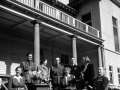
Captain William Hobson (served 1840–2) arrived in New Zealand early in 1840. He served intially as lieutenant-governor under Sir George Gipps, who as governor of New South Wales was also governor-in-chief of New Zealand. In 1841 New Zealand became a separate Crown colony, with Hobson as governor.
In 1917, partway through the term of Lord Liverpool (1912–20), the title of governor was upgraded to governor-general. In those days this role also represented the British government in New Zealand, a function that since 1939 has been carried out by the British high commissioner. The governor-general represents the monarch, who is New Zealand's head of state.
The modern governor-general
The outgoing governor-general's 'Notes for My Successor' have had their day. New Zealanders already know the country and have no need to pack up their household goods for a journey around the world.
After cabinet has made its decision, the governor-general designate meets the outgoing governor-general and the staff of Government House. She or he is briefed by officials and visits London to receive the commission from the King or Queen.
Biographies of governors and governors-general
These biographies are available on the Dictionary of New Zealand Biography website:
- Bledisloe, Charles Bathurst (1867–1958)
- Bowen, George Ferguson (1821–99)
- Browne, Thomas Robert Gore (1807–87)
- Cobham, Charles John Lyttelton (1909–77)
- FitzRoy, Robert (1805–65)
- Freyberg, Bernard Cyril (1889–1963)
- Gordon, Arthur Hamilton (1829–1912)
- Grey, George (1812–98)
- Hobson, William (1792–1842)
- Holyoake, Keith Jacka (1904–83)
- Jellicoe, John Henry Rushworth (1859–1935)
- Jervois, William Francis Drummond (1821–97)
- Onslow, William Hillier (1853–1911)
- Porritt, Arthur Espie (1900–94)
A full list of New Zealand governors and governors-general, with the years in which they held office, is available on the Governor-general's website.
The governors and governors-general to 2006 are featured in the book, The governors.