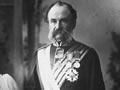
In the days of the empire, the British government appointed New Zealand's governors and governors-general. New Zealand had no say. The governors and governors-general reported to a British cabinet minister, the secretary of state for the colonies (later secretary of state for the dominions). The occupants of Government House were political appointees, although once in the job they were expected to be impartial.
Even after New Zealand politicians were granted the right to govern themselves, in 1856, they still had no say about who would be governor. After the governors Lords Onslow and Glasgow declined to accept the Liberal government's nominations to the Legislative Council (the upper house) in the early 1890s, however, Premier Richard Seddon and his ministers asked to be consulted about future appointments to the office.
Britain made concessions. From the 1900s, the British prime minister prepared a shortlist of candidates which he sent to the monarch for approval or amendment. London then cabled the list to Wellington for the prime minister to make his choice.
He did not always get his man. The New Zealand government paid very poorly, and since governors were expected to subsidise the job, the preferred candidate sometimes pulled out, obliging the prime minister to approach the next man on the list.
Matters should have changed after the 1926 Imperial Conference let dominions choose their own governors-general, but for the next 20–30 years New Zealand politicians refused to exercise this right, preferring to wait for London's list.
In 1945 Prime Minister Peter Fraser put forward the name of wartime leader Sir Bernard Freyberg, and by the 1950s the government was taking a more active role in selecting the governor-general. The British prime minister dropped out of the process a few years later, leaving Wellington to advise the Queen.
Since 1972 all governors-general have been New Zealand residents. Nowadays, about a year before the serving governor-general's term comes to an end, cabinet selects their successor. After sounding out its pick, the prime minister advises the monarch. If he is happy, the leader of the opposition is consulted and the recruitment process is concluded.
Governors-general usually serve a term of five years.