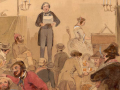
The British-born tenor Charles Thatcher gave his first New Zealand performance at Shadrach Jones's Commercial Hotel in Dunedin.
Month Calendar View
Historic NZ events in March
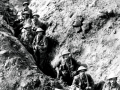
1916
After the evacuation from Gallipoli in December 1915, New Zealand troops returned to Egypt to recover and regroup. In February 1916, it was decided that Australian and New Zealand infantry divisions would be sent to the Western Front. On 1 March, the New Zealand Division was formed.
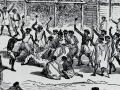
1865
Local Māori adherents of a new religion, Pai Mārire, hanged the Church Missionary Society (Anglican) missionary Carl Völkner from a willow tree near his church at Ōpōtiki.
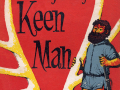
1960
One of the most-read books in New Zealand publishing history, A good keen man established Barry Crump’s reputation as an iconic ‘Kiwi bloke’.
1855
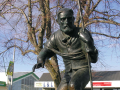
In March 1855, shepherds searching for 1000 missing sheep in the upper reaches of the Waitaki Valley apprehended suspected rustler James Mackenzie, one of New Zealand’s first and most enduring folk heroes.
2013
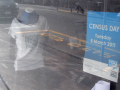
New Zealand’s five-yearly census had been scheduled for 8 March 2011. But after Canterbury’s devastating February earthquake, Government Statistician Geoff Bascand and Statistics Minister Maurice Williamson announced that it would not go ahead.
1830
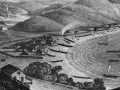
The so-called ‘Girls‘ War’ was fought between northern and southern Ngāpuhi hapū at Kororāreka (later Russell). Up to 100 people were killed or wounded in the fighting, after which the northern alliance took control of the important settlement.
1947
Classical music lovers packed Wellington’s Town Hall for the debut performance by New Zealand’s first national orchestra.

1966
For over fifty years Country calendar has introduced half an hour of rural information presented in a way that was accessible to ‘townies’
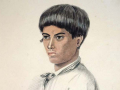
1842
17-year-old Maketū Wharetōtara was hanged in public, at the corner of Queen and Victoria streets in Auckland, for the 1841 murder of Elizabeth Roberton, her two children, and two other adults.
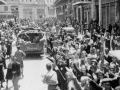
1941
When the Germans attacked Greece on 6 April they quickly outflanked the Allied defenders, who were forced into a hurried retreat down the peninsula.

1988
Cyclone Bola, one of the most damaging cyclones to hit New Zealand, struck Hawke’s Bay and Gisborne–East Cape in March 1988
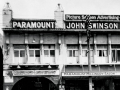
1929
Moviegoers flocked to Wellington’s Paramount Theatre to see Frank Borzage’s Street angel, a silent picture with a recorded musical soundtrack.
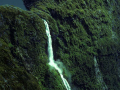
1890
Young surveyor William Quill needed only basic climbing equipment, including a billhook and an alpenstock, to scale the side of the ‘great Sutherland waterfall’, which cascades down for 580 m near Milford Sound.
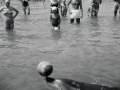
1956
‘Opononi George’ or ‘Opo’ was a young female bottlenose dolphin which warmed the hearts of thousands of people at Opononi in Hokianga Harbour between June 1955 and March 1956.
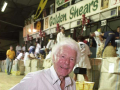
1961
First held at the Masterton War Memorial Stadium in 1961, the Golden Shears competition has become the iconic event for the shearing and wool-handling industry in New Zealand.
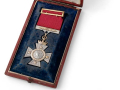
1869
This medal was created because members of New Zealand's colonial armed forces were not eligible for the Victoria Cross. Only 23 were awarded, making it one of the world‘s rarest military honours.

1995
The Auckland Warriors played their first match in the New South Wales Rugby League’s expanded Winfield Cup competition.
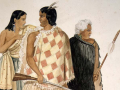
1845
After hundreds of Ngāpuhi fighters led by Kawiti and Hōne Heke attacked Kororāreka (Russell), most of its inhabitants were evacuated by sea. The flagstaff on nearby Maiki Hill was cut down for the fourth and last time.
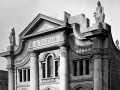
1884
Forty delegates from six regional associations met in Dunedin to adopt a constitution and elect the first officeholders in the new organisation.
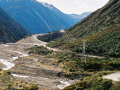
1864
Arthur, George and Edward Dobson were searching for a route between Canterbury and the West Coast that the chief Tarapuhi had told them about.
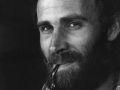
1975
Returning from leave in Laos, 30-year-old Malcolm ‘Mac’ Riding was on board an Air Vietnam DC4 when it crashed 25 km from his Red Cross team’s compound near Pleiku, South Vietnam.
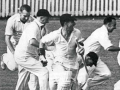
1956
New Zealand was already 3–0 down in the series going into the fourth and final test at Eden Park in Auckland. Their West Indies opponents included household names such as Gary Sobers and Everton Weekes, who had broken batting records for a New Zealand season.
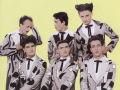
1980
The Kiwi group’s first New Zealand no. 1 hit, from their album True colours, also topped the charts in Australia and Canada. It reached no. 12 in Britain and no. 53 in the United States.
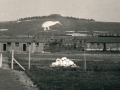
1919
Four months after the end of the First World War, hundreds of New Zealand soldiers rioted at Sling Camp on Salisbury Plain in southern England. It was the most serious breakdown of discipline in the New Zealand Expeditionary Force in the European theatre.
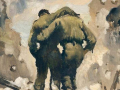
1944
6 New Zealand Brigade attacked the Italian town of Cassino as part of the Allies‘ advance on Rome. By the time 2 New Zealand Division was withdrawn in early April, 343 New Zealanders had lost their lives.
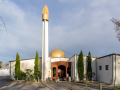
2019
New Zealand’s Muslim community suffered an horrific attack when a self-proclaimed ‘white nationalist’ opened fire on worshippers at two mosques in Christchurch. Fifty people were killed and 41 wounded, one of whom died six weeks later.

1940
‘If old-fashioned underwear makes you squirm, switch to Jockey.’ That was the pitch from clothing manufacturer Lane Walker Rudkin when it began marketing the Jockey Y-front to New Zealand men on 16 March 1940.

1999
NZ History was launched by the Minister of Internal Affairs, Jack Elder, at a function at National Archives (now Archives New Zealand) in Wellington on 16 March 1999.
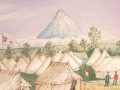
1860
The opening shots of the first Taranaki War were fired when British troops attacked a pā built by Te Āti Awa at Te Kohia, Waitara.
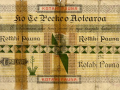
1905
The Maungatautari Bank was one of several set up by Māori in the decades after the New Zealand Wars to handle the money they were receiving from land sales.
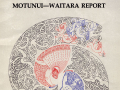
1983
In a landmark ruling, the Waitangi Tribunal found that the Crown’s obligations under Te Tiriti o Waitangi included a duty to protect Māori fishing grounds.
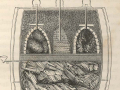
1839
Mary Bumby, the sister of a Methodist missionary, was probably the person who introduced honey bees to New Zealand.
1946
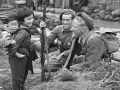
About 4500 New Zealand servicemen arrived as part of a 36,000-strong British Commonwealth Occupation Force that was to work alongside the US military forces that had occupied most of Japan.
1834
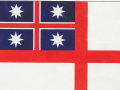
A New Zealand flag was first suggested in 1830 after Sydney customs officials seized a Hokianga-built ship.

1994
Eleven-year-old Anna Paquin became the first New Zealander to win an Academy Award for acting when she was named best supporting actress for her role as Flora McGrath in the acclaimed historical drama, The piano. Paquin was the second youngest recipient of this award in Oscar history.
2003
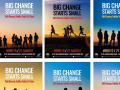
Race Relations Day was first formally celebrated in 2003 with the theme, 'Hands Up for Kiwis of Every Race and Place'.
1902
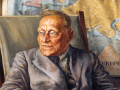
Victoria College’s first professor of modern languages joined the fledgling institution’s four foundation professors.

1848
Otago celebrates the arrival of the immigrant ship John Wickliffe as the founding day of the province.
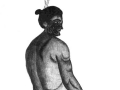
1770
Ranginui was a Ngāti Kahu chief from Doubtless Bay who was kidnapped by the French explorer Jean François Marie de Surville.
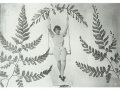
1894
‘One of the most courageous feats ever performed in Waikato’ almost ended in tragedy when Leila Adair’s hot-air balloon burst several hundred feet above Hamilton East.

1989
RainbowYOUTH was conceived at a Gay and Lesbian Conference held in Auckland on 24 March 1989
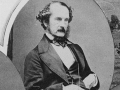
1847
Isaac Featherston, editor of the Wellington Independent, had in effect accused William Wakefield, the New Zealand Company's principal agent, of being a thief. Neither man was hurt in the duel.
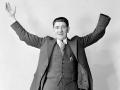
1940
A charismatic ex-soldier, orator and writer, John A. Lee had been active in the New Zealand Labour Party since shortly after the First World War.
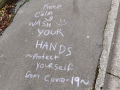
2020
At 11.59 p.m. on Wednesday 25 March 2020, New Zealand entered a nationwide lockdown to prevent the spread of the COVID-19 virus around the country.

1896
At 9.30 a.m., an explosion tore through the Brunner mine in Westland’s Grey Valley. Two men sent underground to investigate were later found unconscious after inhaling black damp, a suffocating mixture of nitrogen and carbon dioxide.
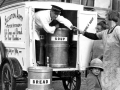
1883
Two English Salvation Army officers landed at Port Chalmers to set up a New Zealand branch of the Christian evangelical movement.
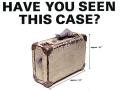
1984
Caretaker and unionist Ernie Abbott was killed on 27 March 1984 when a bomb exploded inside Trades’ Hall on Wellington’s Vivian St.
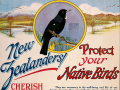
1923
The New Zealand Native Bird Protection Society was formed at a meeting in Wellington called by a local conservation advocate, Captain Ernest ‘Val’ Sanderson.
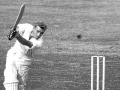
1955
Bert Sutcliffe top-scored with 11 runs as New Zealand was skittled for the lowest total in test cricket history – 26 runs.
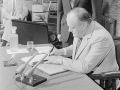
1983
New Zealand and Australia formally signed the Closer Economic Relations (CER) agreement, strengthening trade ties between the Tasman neighbours.

2004
Highlights of the rolling coverage of the dawn pōwhiri at Māori Television’s new offices in Newmarket, Auckland, featured in the first regular programming the following day.
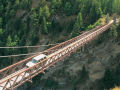
1901
At 96 m long and 91 m high, the suspension bridge over the Shotover River near Queenstown in Central Otago is one of the most spectacular bridges in New Zealand.
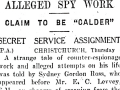
1942
During the Second World War, convicted conman Sydney Gordon Ross duped New Zealand’s intelligence service into believing that Nazi agents were planning to carry out sabotage in New Zealand.
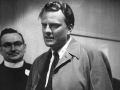
1959
In the first half of 1959 Billy Graham and his associate evangelists Leighton Ford, Grady Wilson and Joseph Blinco held crusades in New Zealand and Australia which attracted large audiences.
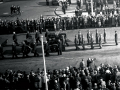
1940
New Zealand’s first Labour prime minister, Michael Joseph Savage, died in office on 27 March 1940. His body lay in state at Parliament for two days before his funeral cortège, which was more than 1.6 km long, set off for the railway station at 9 a.m. on 30 March.

2004
Historian Michael King (aged 58) and his wife Maria Jungowska died in a car accident in south Waikato. King’s Penguin history of New Zealand became the most popular book of the year, and was the Readers’ Choice at the 2004 Montana New Zealand Book Awards.
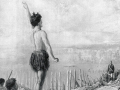
1864
The last battle of the Waikato War began when the spearhead of a strong British force charged an apparently weak Māori position at Ōrākau, south-east of Te Awamutu. After two frontal assaults failed, the British besieged the pā.
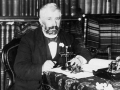
1910
Thomas Hocken’s priceless legacy of historical material is the most important collection outside Crown ownership in New Zealand.

1967
Well-known Auckland aviator Fred Ladd illegally flew his Widgeon amphibian aircraft under the Auckland Harbour Bridge.