This timeline guides you through pivotal events between 1968 and 1977, the peak years of the Dawn Raids era. We highlight key legislative changes and social responses, and their impact on Pacific communities.
1968
Amendment to the Immigration Act 1964
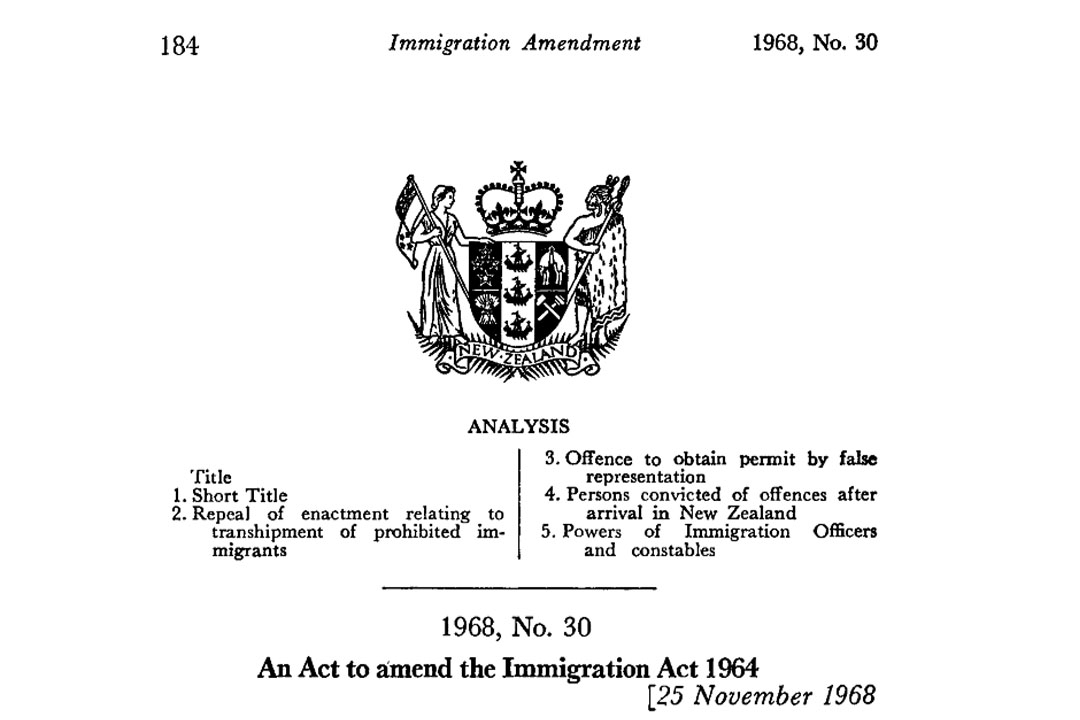
A 1968 amendment to the Immigration Act 1964 (which enabled the deportation of individuals who overstayed the terms of their temporary work or visitor permit) grants police the authority to require individuals to produce a valid passport, entry permit or other identification papers upon request. If this request is refused or these documents are not presented for an acceptable reason, the individual can be arrested by police.
Immigration Amendment Act 1968 (NZ Legal Information Institute)
1971
Pacific Island population growth in census data
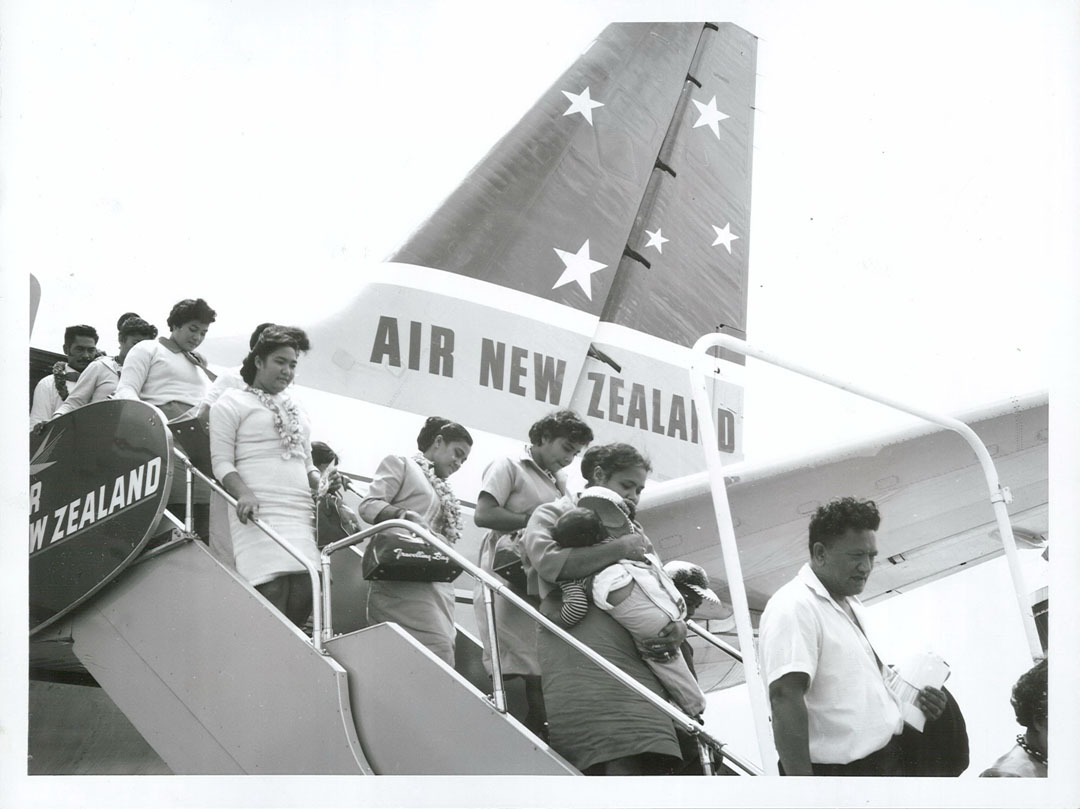
Pacific migration to New Zealand in the post-war years was encouraged due to labour shortages in manufacturing and other sectors.
The 1971 census recorded 40,918 Pacific Islanders in New Zealand; by 1976 there were 61,354. During this period, Samoans and Cook Islanders made up most of the Pacific Islander population, followed by Niueans. There was also a rapidly growing Tongan community, and smaller numbers of Tokelauans and Fijians. In 1945 there had been only 1,896 Pacific Islanders in New Zealand.
16 June 1971
The Polynesian Panther movement is formed
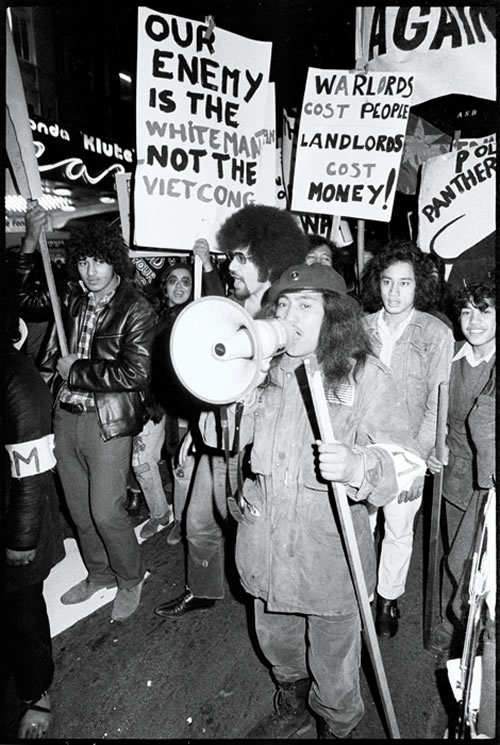
A revolutionary social activist group, led by young Pacific Islanders born or raised in New Zealand, is founded in central Auckland. Influenced by the Black Panther Party and the Black Power liberation movement in the United States, the group confronts racism experienced by Polynesian communities head on. The Polynesian Panthers lead community initiatives that include homework centres, legal aid, housing advocacy, and facilitating family visits to prisons.
Fifty years later, in early 2021, the Polynesian Panthers Legacy Trust calls on the government to deliver a formal apology for the Dawn Raids.
1973
Oil shocks and economic downturn
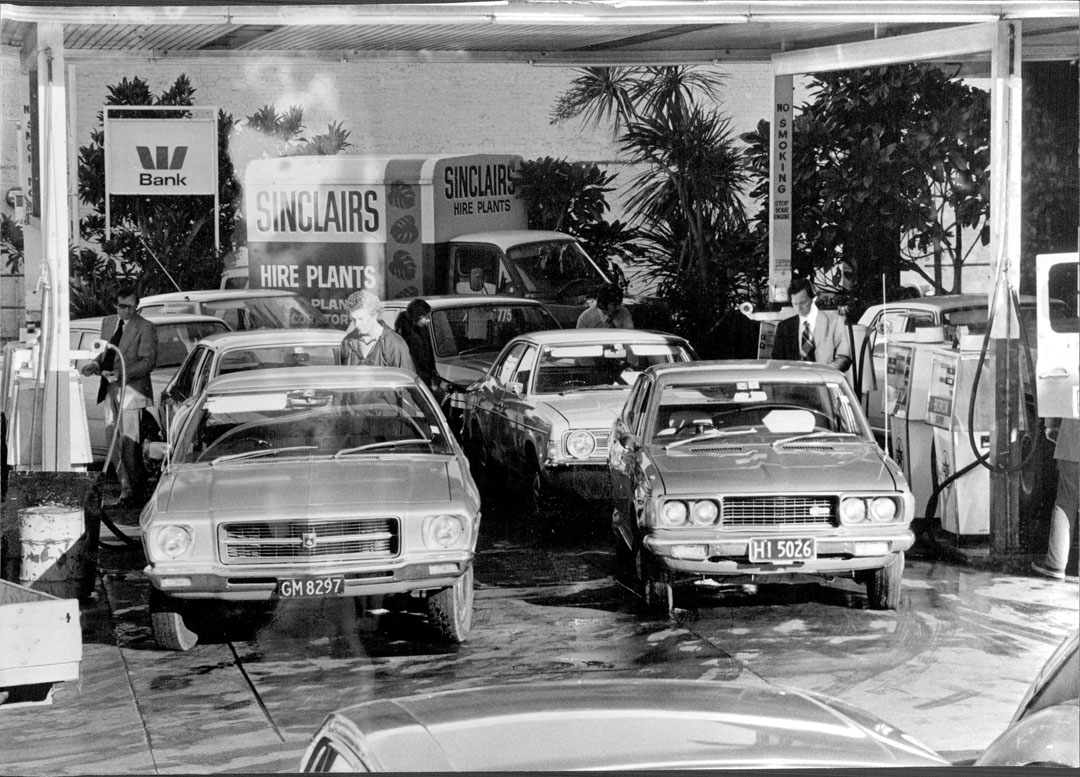
New Zealand’s economy suffers two severe blows when its major trading partner, the United Kingdom, joins the European Economic Community and a global oil production crisis raises fuel costs for businesses. The resulting uncertainty, coupled with rising unemployment, lead to the scapegoating of Pacific Islanders, and put pressure on the third Labour government to address immigration and overstaying.
12–13 March; 18–19 March 1974
Targeted raids of Tongan households in Auckland
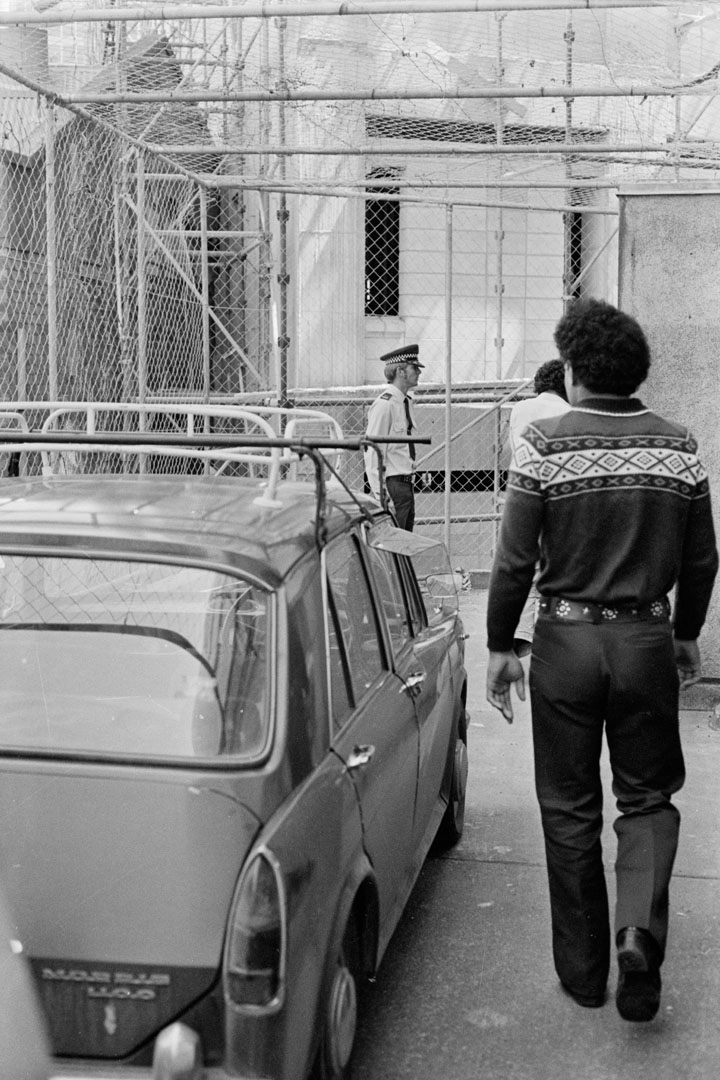
On the night of 12-13 March, between 11 p.m. and 3 a.m., several homes in the Auckland suburb of Onehunga are raided by police and immigration officials acting on anonymous information, resulting in the arrest of 13 Tongan nationals. On 18 March, another series of raids lead to 21 more arrests. The next evening, a prayer meeting of the Free Church of Tonga in the Auckland suburb of Grey Lynn is disrupted by police with dogs and five people are arrested, including the minister who is conducting the meeting.
21 March 1974
Labour government announces end to raids
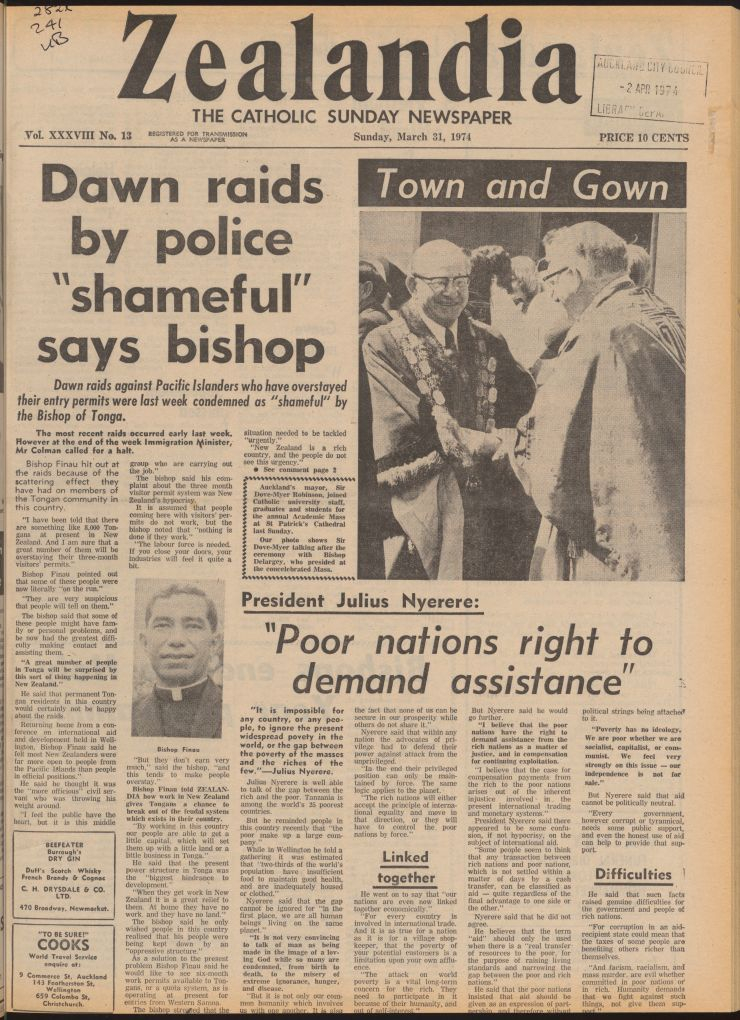
The raids spark significant public outcry, with protests by churches, community organisations, unions, and political groups which object to the targeting of one ethnic group. Concerned about the potential damage to diplomatic relations with neighbouring Pacific countries, Immigration Minister Fraser Colman announces an end to the raids, which he describes as ‘alien to our way of life’.
31 March 1974
Ocean Monarch wharf protest
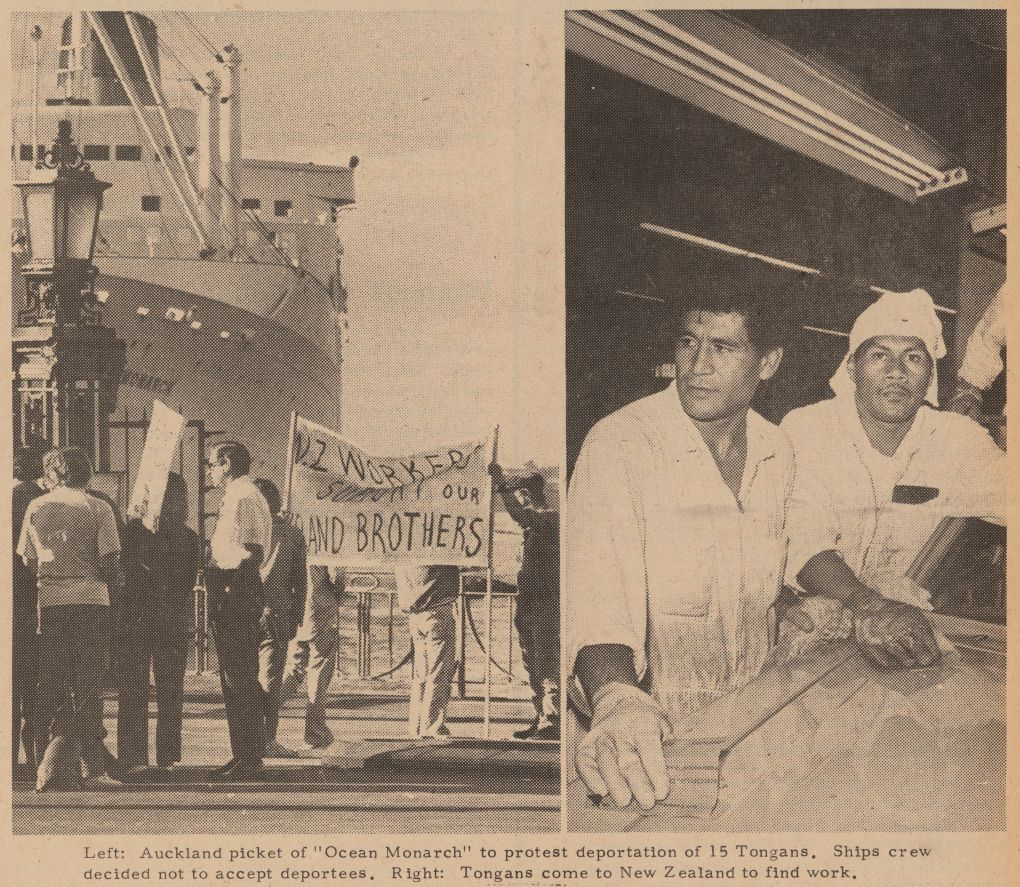
A group of 15 overstayers arrested in the raids is scheduled to be deported to Tonga on the cruise ship Ocean Monarch, which is docked in Auckland. A protest organised by the Citizens’ Association for Racial Equality (CARE) and other activist groups persuades the ship’s crew not to sail with the overstayers on board. The group is quietly put on an Air New Zealand flight to Nuku’alofa the next day.
1 April 1974
Partial amnesty and overstayer register announced
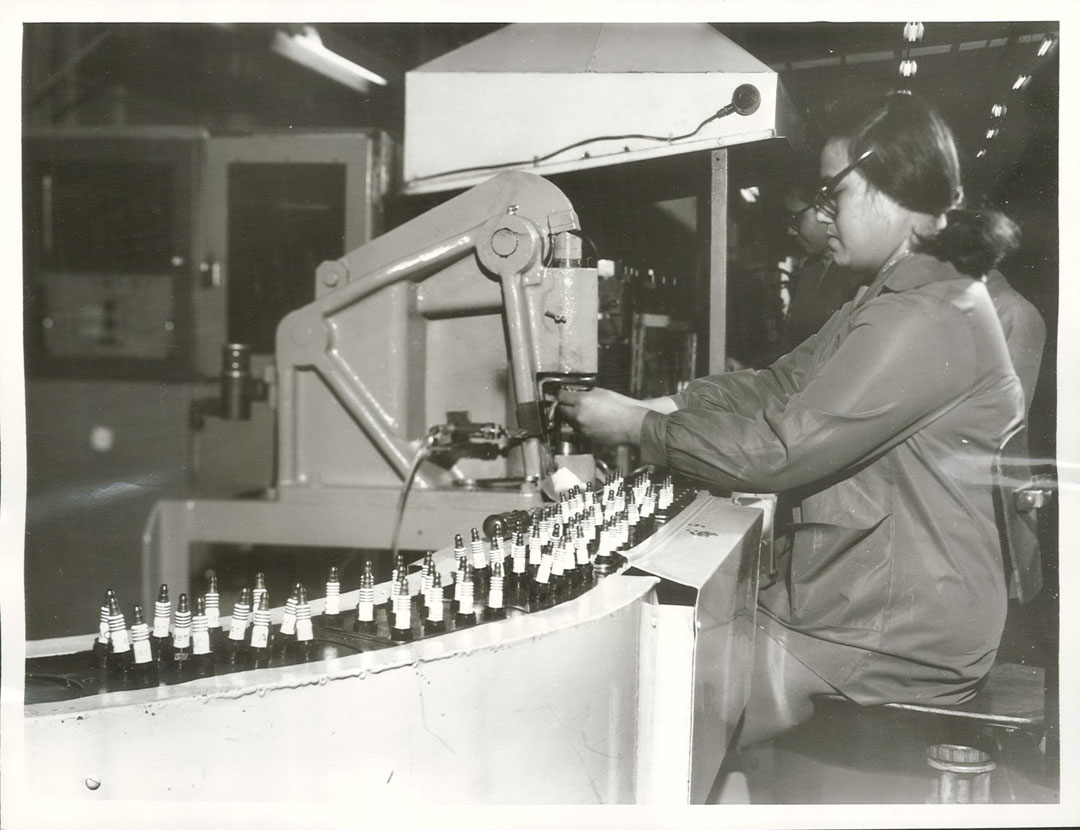
The Labour government announces a temporary suspension of entry permits to Tongans until a work permit scheme is in place. They also announce a partial amnesty and overstayer register to allow time for those on expired permits to put their affairs in order before returning home to the islands. Employers lobby the government to extend the deadline for the amnesty to the end of the year, aiming to minimise disruptions caused by the loss of valuable workers.
26 June 1974
Auckland Task Force mobilised
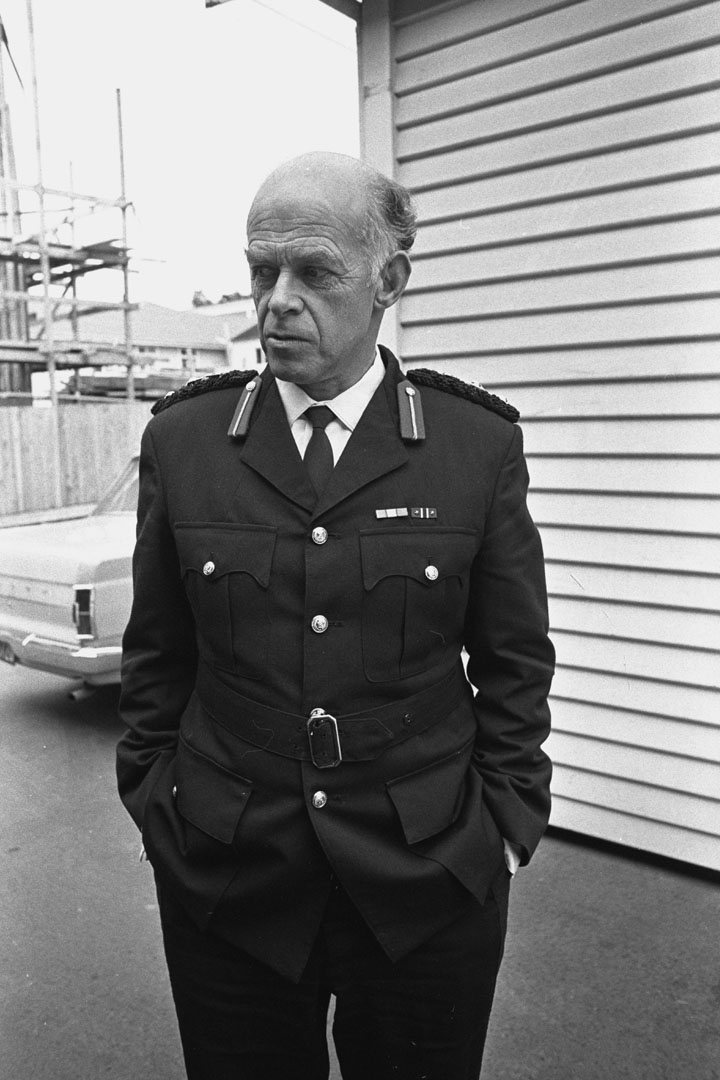
The Labour government, in response to growing concerns about violence and other crime in the inner city, mobilises the Auckland Police Task Force with a remit to make the streets safer. The Task Force draws criticism over several months from groups which have concerns about racial profiling and discrimination, as a disproportionate number of those arrested are Māori and Pacific Islanders. The Task Force winds down its activities in June 1975.
September 1974
Coalition Against Police Oppression (CAPO) formed
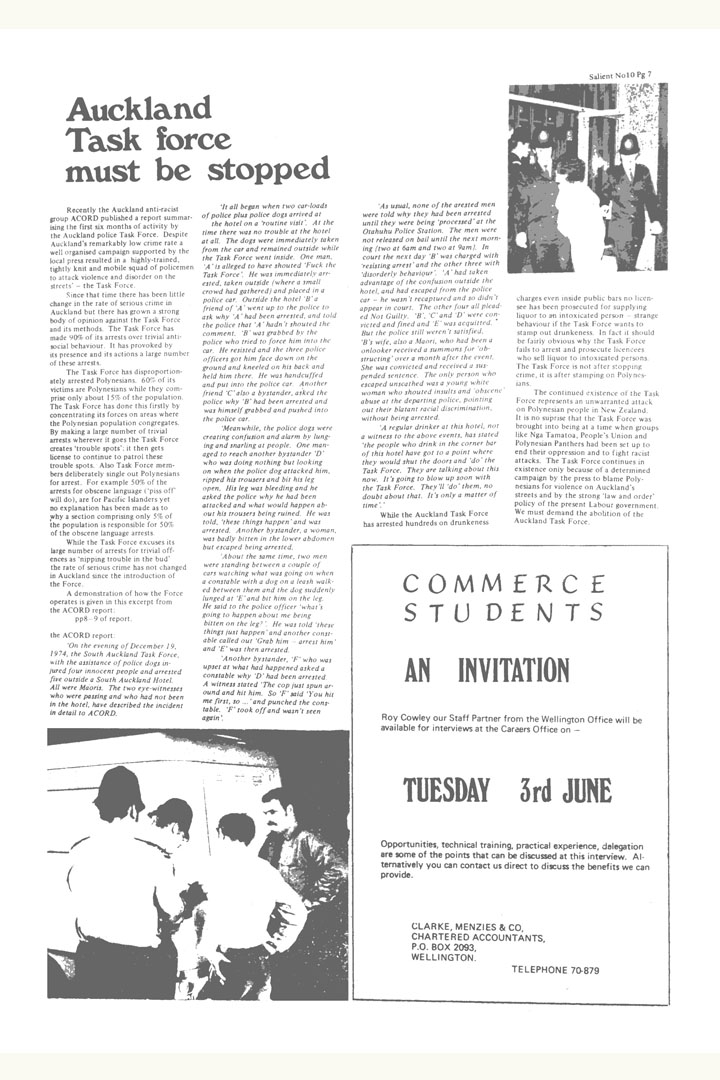
Formed by members of anti-racist activist groups such as Ngā Tamatoa, Polynesian Panthers, the Auckland Committee on Racism and Discrimination (ACORD), Ponsonby People’s Union and CARE, the collective organises protest actions and rosters ‘Police Investigation Group’ (PIG) Patrols to monitor Task Force arrests and ensure these are lawful and not discriminatory.
Salient – May 22, 1975 (New Zealand Electronic Text Collection)
September 1974
Pacific Islands Advisory Councils (PIAC) are formed
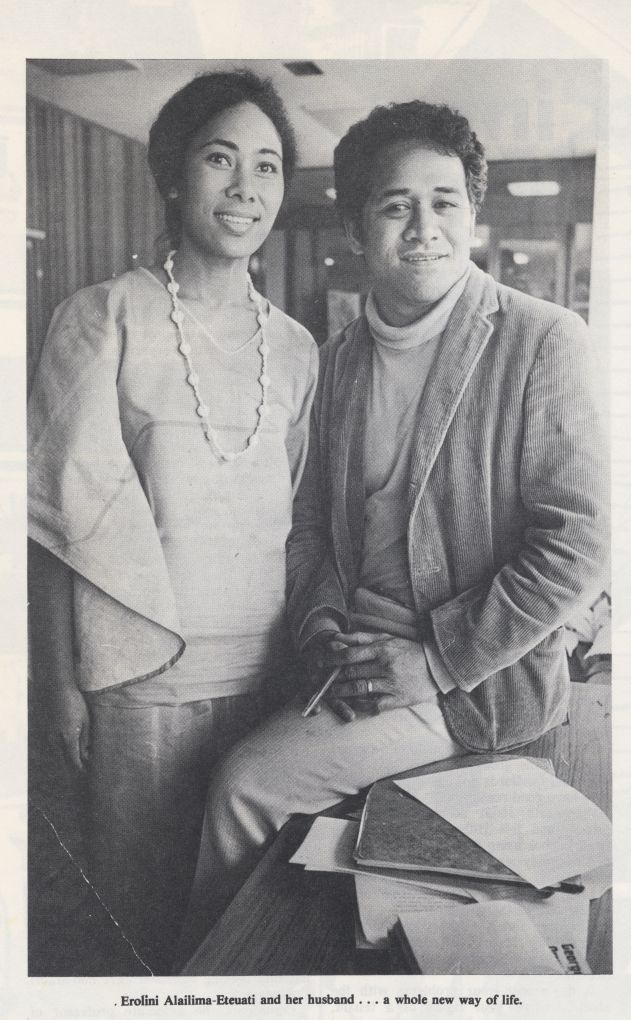
These advisory groups are created to encourage a channel of communication between the government and representative voices of the rapidly growing Pacific Island communities settling in Auckland and Wellington. While originally intended to shape educational outcomes for new migrants in the country, their remit quickly expands to cover several pressing social issues of the day. The advisory councils take on a greater role in advocacy on behalf of overstayers in the coming years and included representatives from Tongan, Samoan, Niuean, Cook Island, Tokelau and Fijian communities.
Salient – May 22, 1975 (New Zealand Electronic Text Collection)
5 October 1974
The ‘People’s Tribunal’ hears evidence
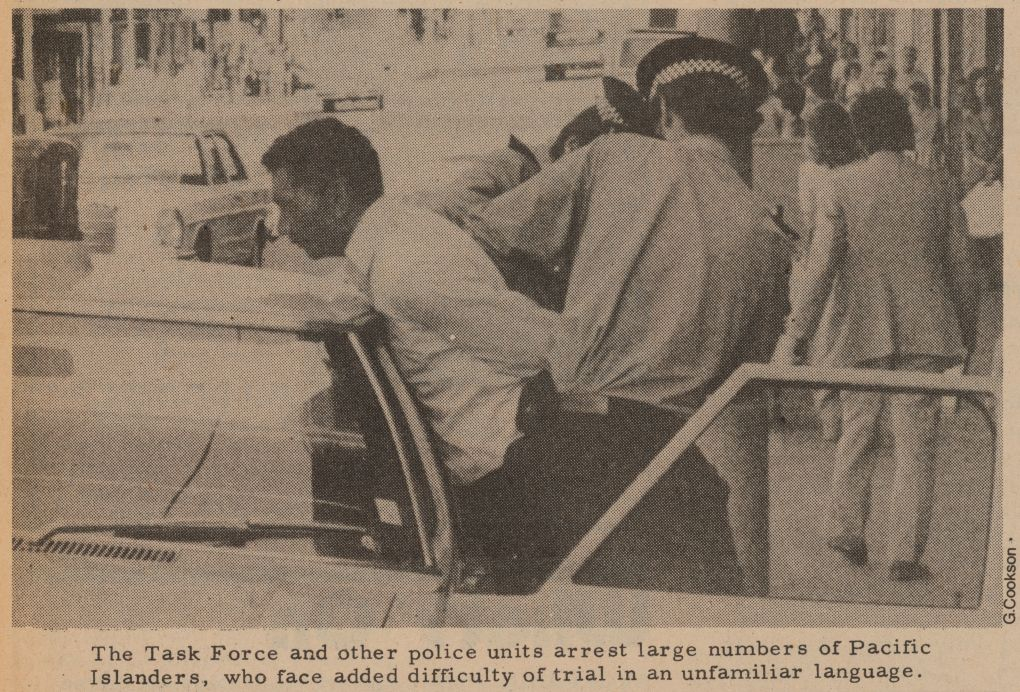
ACORD and CARE organise a 'People’s tribunal' in response to the Auckland Task Force. Described as part public inquiry, part court hearing and part public meeting, the informal tribunal's panel of eight members invites the local community to share testimony of their experiences with the Auckland Task Force. Senior Police also attend the tribunal, held at the Auckland Trades Hall in Grey Lynn.
Salient – May 22, 1975 (New Zealand Electronic Text Collection)
21 August 1975
Further raids made public
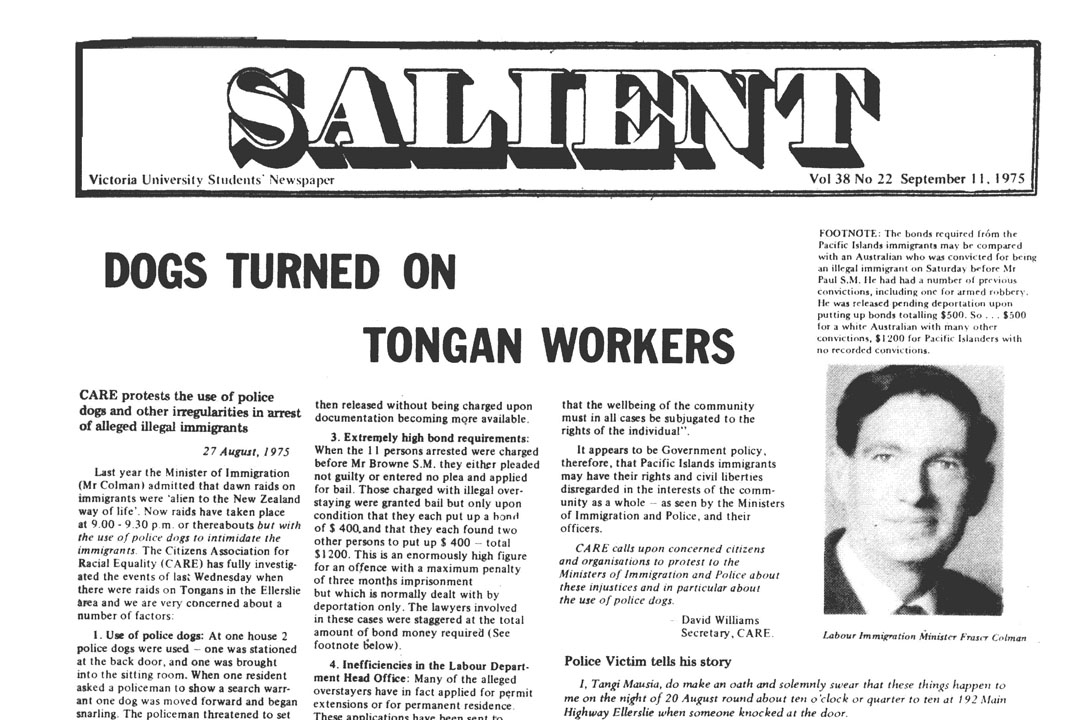
CARE continues to publicise police raids targeting Pacific Islanders. A raid in the Auckland suburb of Ellerslie occurs earlier in the evening and involves the use of police dogs. Socialist Action newspaper reports that ten Tongans and Fijians appeared in the Auckland Magistrates Court following a raid on four houses. Eight are charged with overstaying their temporary permits while two are charged with failing to surrender their passports.
Salient – September 11, 1975 (New Zealand Electronic Text Collection)
21 August 1975
Petition to Parliament by Western Samoan matai (chiefs)
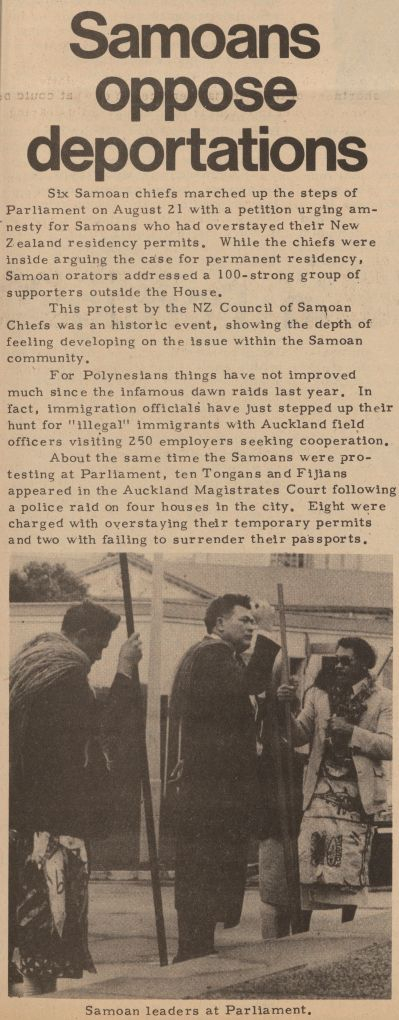
Six representatives of the NZ Council of Samoan Chiefs, accompanied by a 100-strong group of supporters, present a petition of 1116 signatures to Parliament, calling for amnesty for Western Samoans who have overstayed their New Zealand residency permits.
The petition cites the significant contribution that Western Samoans have made to the New Zealand workforce and economy, their adoption of the New Zealand way of life, and the hardships faced by those who are forced to return to Western Samoa after they have been residing in New Zealand for some time.
Salient – May 22, 1975 (New Zealand Electronic Text Collection)
1975
National Party airs election campaign ads on television
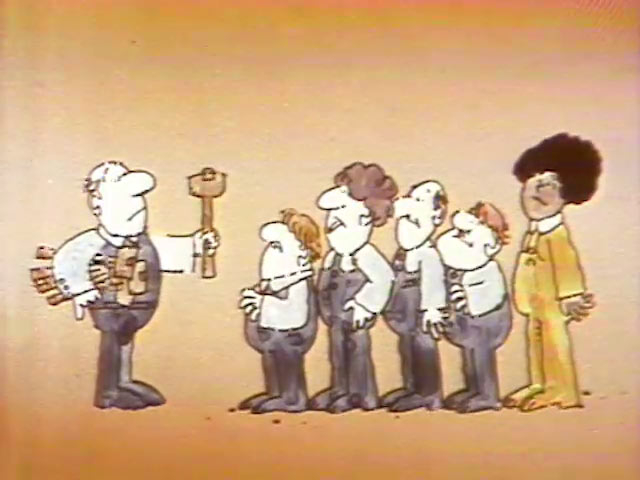
In the lead-up to the November 1975 general election, the National Party campaigns on a platform of strict immigration control. It releases a series of cartoons produced by US-based animation studio Hanna-Barbera. One cartoon reinforces racial stereotypes by depicting a Pacific Islander as a threatening, potentially violent figure.
17–18 February 1976
Raids resume under new National government
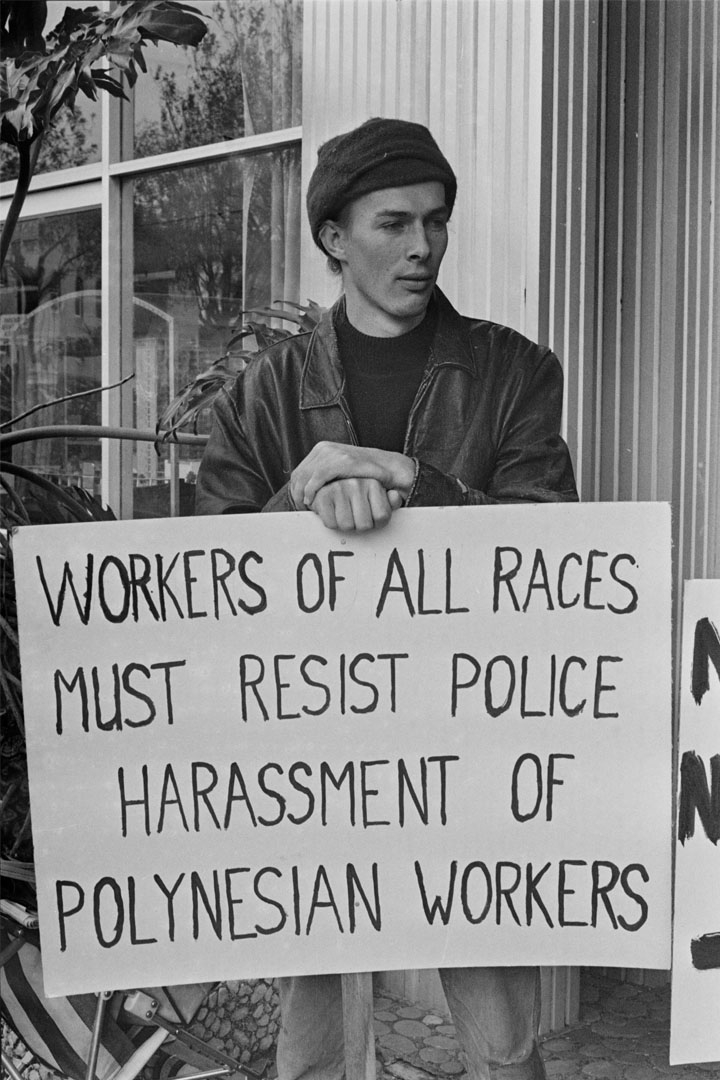
The Onehunga home of Telesia Topping is raided by police and immigration officials at 6 a.m., as are 17 other households in the same area. Her experience is reported in the Auckland Star. Four houses are raided in Ponsonby, another Auckland suburb, the following night. Twenty-three arrests are made.
26 February 1976
Police report commissioned
In the aftermath of the February raids, the police commission Superintendent R.P. Silk to investigate the methods used by police to enforce the provisions of the Immigration Act 1964. His report finds a lack of coordination between the Police and Immigration departments and notes the frequency with which police receive tips about individuals with expired permits, a practice often referred to as ‘dobbing in’ or ‘potting’.
27 February 1976
Churches’ petition submitted
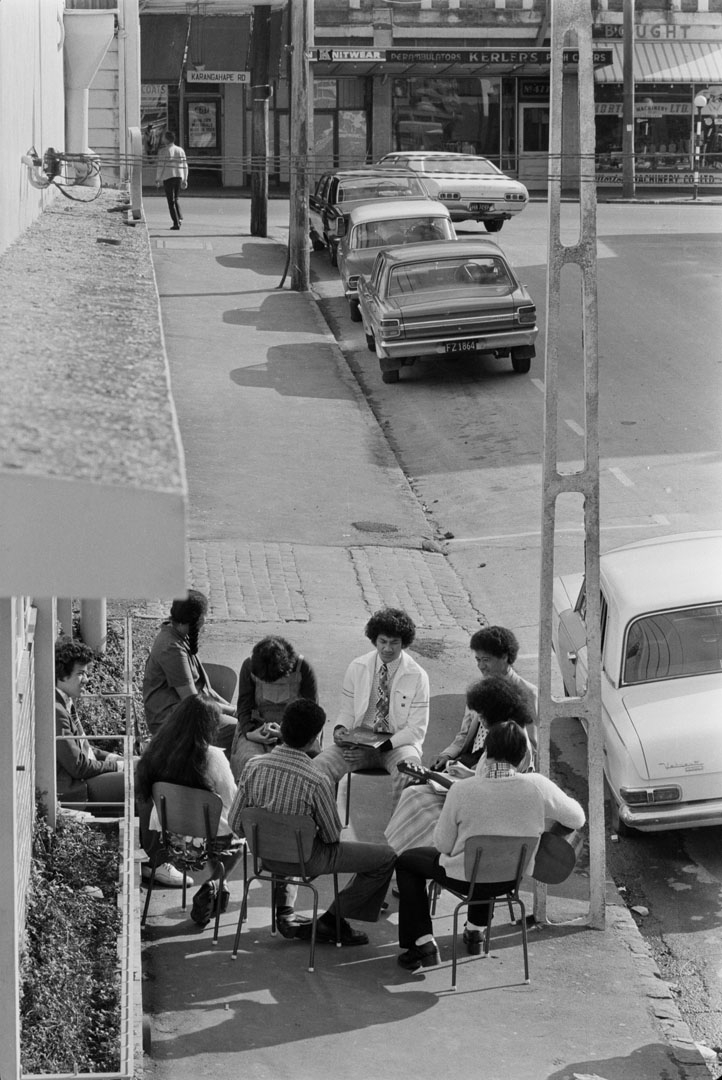
A petition organised by Tongan churches is sent to the Minister of Immigration. The petitionexpresses concern that the government’s resolve to deport illegal overstayers will cause significant suffering and emotional upheaval in their community.
As central pillars of Pacific communities, churches provide not only spiritual support but also act as social welfare advocates for community well-being.
10 April 1976
Immigration Minister Frank Gill meets with Pacific community leaders, announces a stay of proceedings
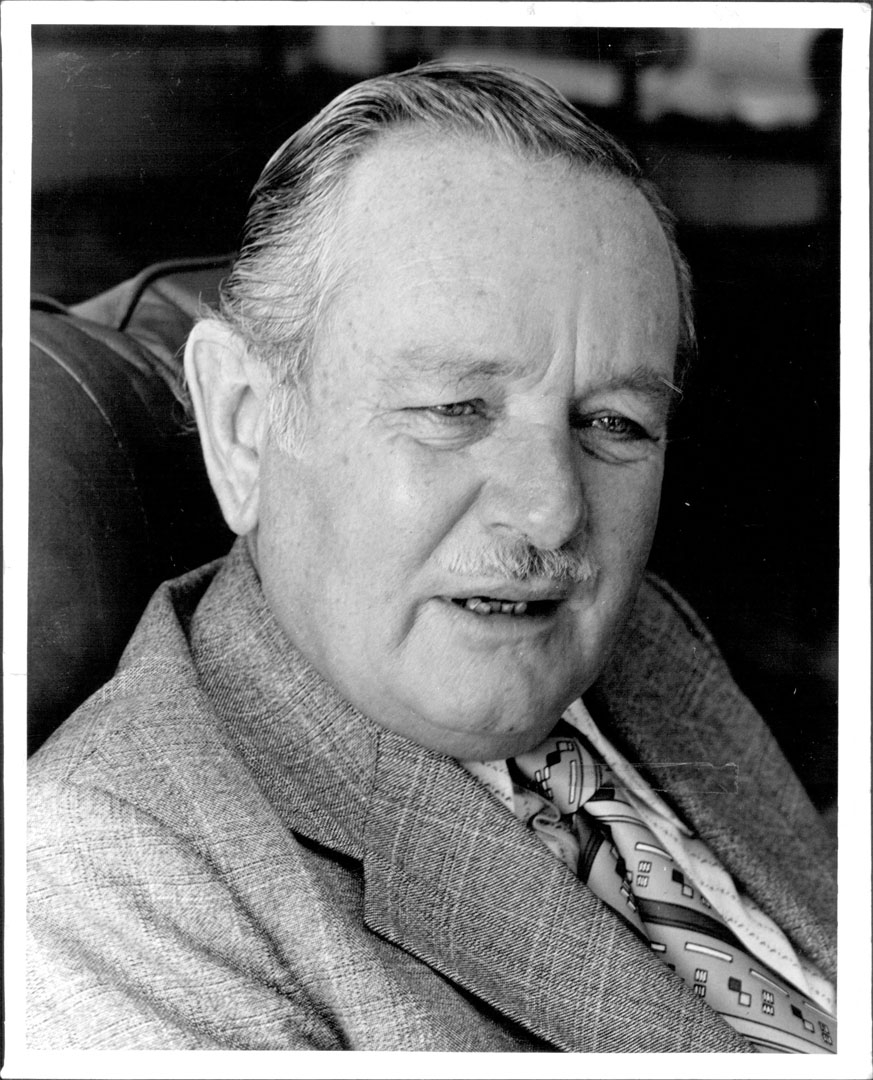
A meeting between Immigration Minister Frank Gill and concerned community leaders, including members of the Pacific Islands Advisory Councils, take place in Auckland. The leaders are hoping the summit will open up dialogue with the government, but Gill reads from prepared notes, announcing a 12-week stay of proceedings to allow overstayers to make arrangements to leave or apply for permanent residency.
13 July 1976
PIAC meets with government officials
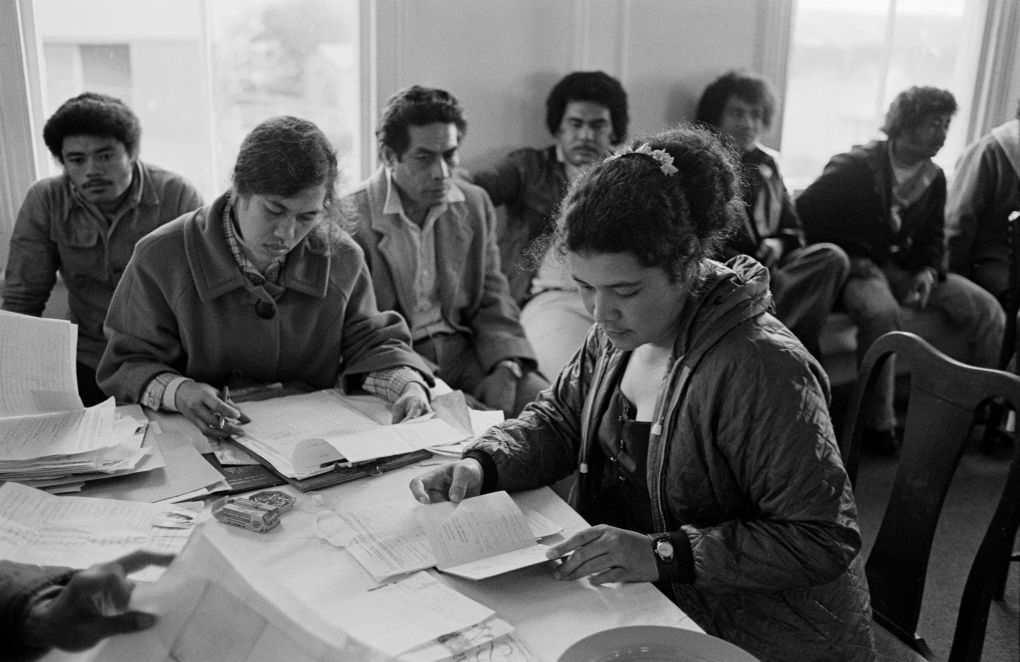
The Pacific Island Advisory Council (PIAC) lobbies the cross-government committee responsible for Pacific affairs to have an independent representative join the panel reviewing registered overstayers' applications for permanent residency. They wish to ensure that the process is undertaken fairly, and that unsuccessful applicants are treated with dignity and consideration. They also lobby for a fair and dignified process for unregistered overstayers to be returned home.
Salient – May 22, 1975 (New Zealand Electronic Text Collection)
July–September 1976
Overstayer register closes, Labour Department reviews permanent residency applications
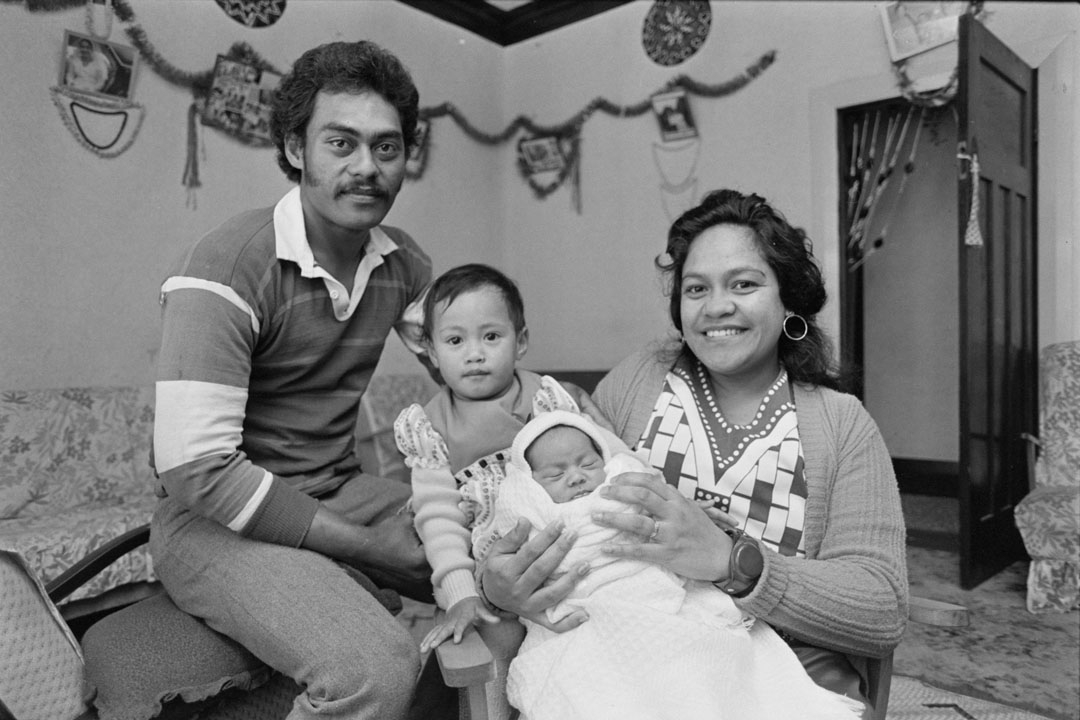
The overstayer register closes on 7 September 1976 with 4,647 people registered. All but 70 are of Pacific descent. PIAC leaders have encouraged members of their communities to sign in good faith, despite their reservations and fears. In comparison, only 18 British overstayers have signed the register, out of an estimated 3,000 to 4,000 thought to be in the country. A panel of Labour Department officials begin considering applications for permanent residency from registered overstayers.
5 October 1976
Raids in Wellington and South Auckland
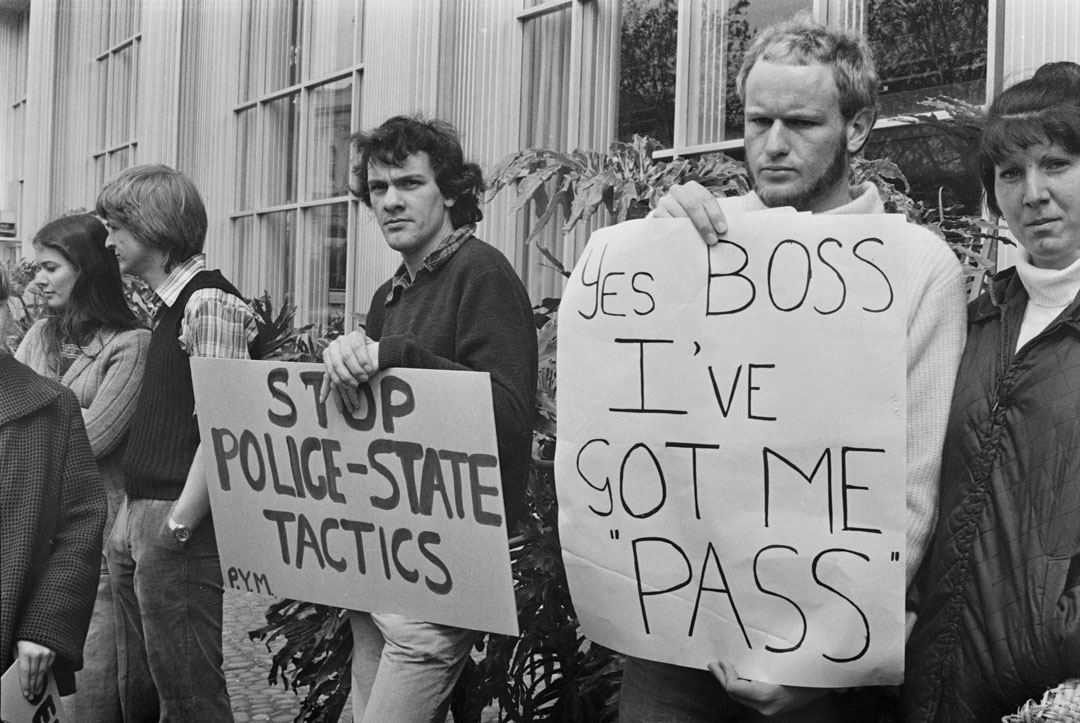
Raids take place at 20 homes in South Auckland and three in Wellington.
October 1976
Cabinet directs Minister for Police to lead the ‘overstayers issue’
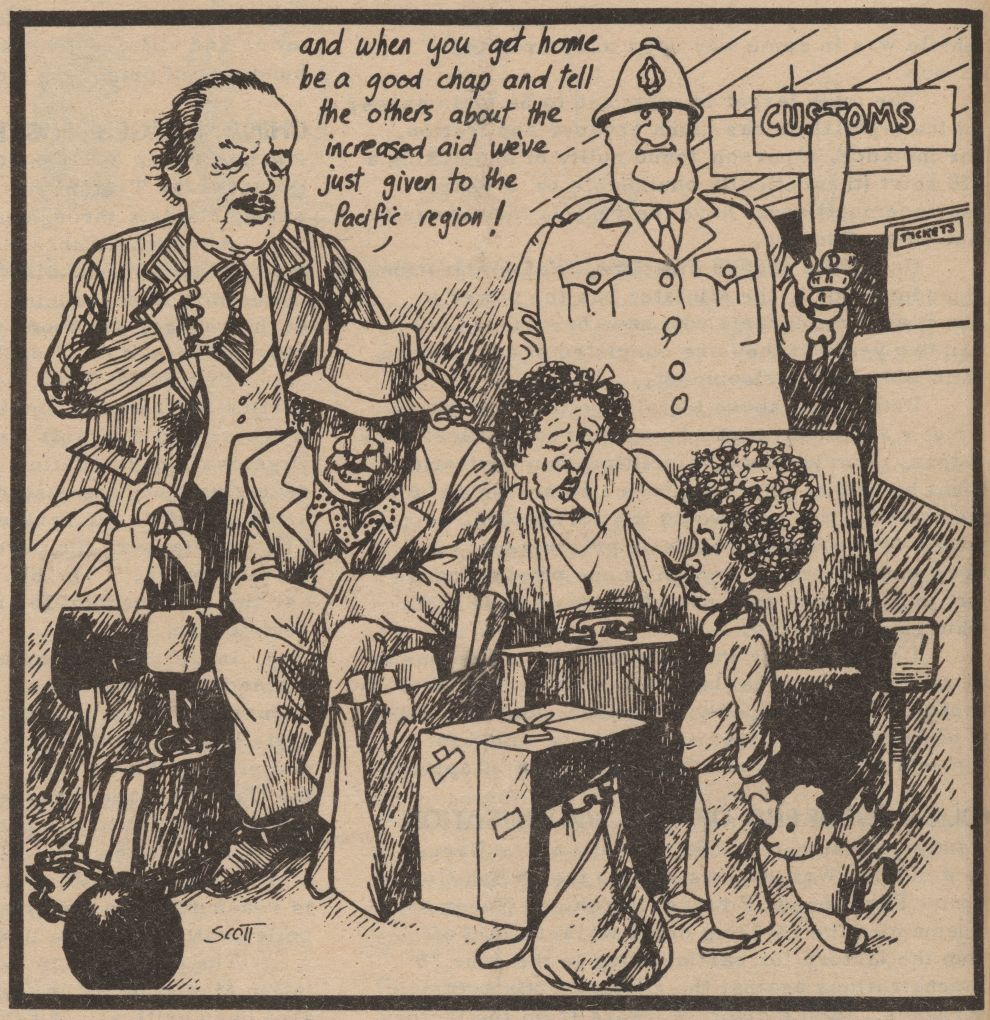
The Police Commissioner is directed to increase Police enforcement of immigration laws in relation to overstayers. The government is concerned with the large number of overstayers and illegal immigrants in New Zealand. Police are given the responsibility of intensifying the government’s efforts by taking early and positive action in tracing offenders for a specified period of three months from 21 October 1976. Active police participation is to be reviewed after the three-month period. Prior to this, the Department of Labour (Immigration Division) was the government’s lead agency on immigration enforcement.
Salient – May 22, 1975 (New Zealand Electronic Text Collection)
21–24 October 1976
Operation Immigration (also known as Operation Pot Black)
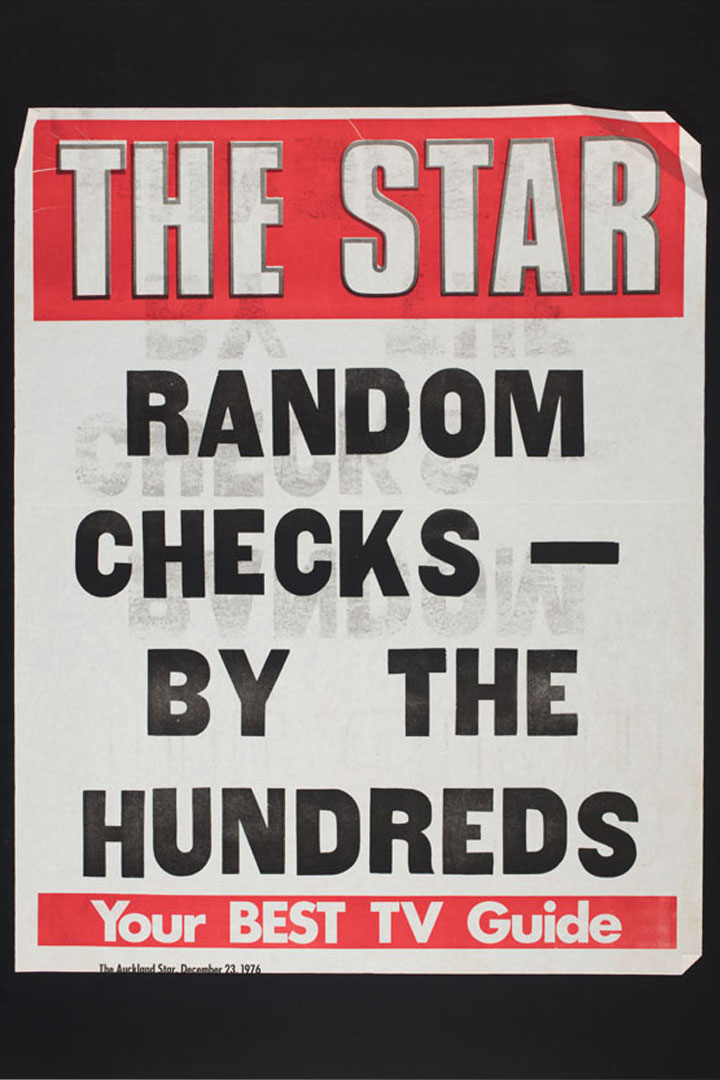
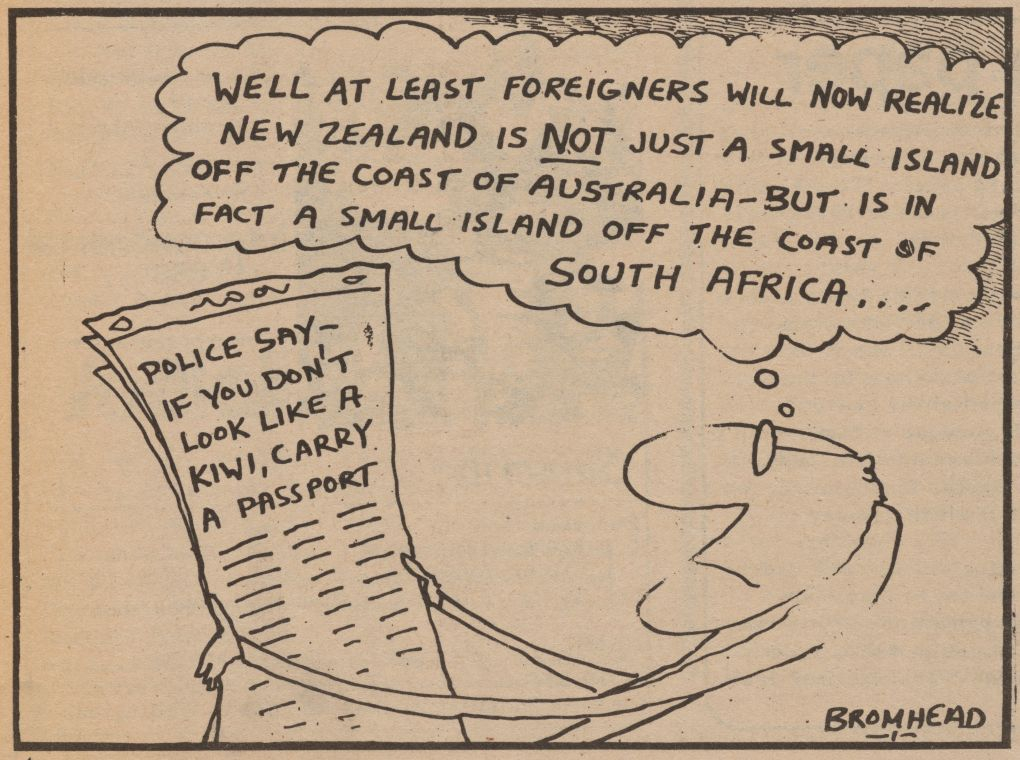
Over Labour weekend, starting at 7 p.m. on Thursday, Auckland police launch an unprecedented blitz of random street checks in a bid to flush out overstayers. Most of the 856 people stopped are Pacific Islanders. They are asked for their passports and identification documents. Multiple arrests are made, though a lack of communication between Immigration and Police lead to wrongful detention of many individuals. In Wellington, police raid 141 homes, question 172 people and make 16 arrests. A senior police officer is quoted as saying, ‘Anyone who speaks in a non-Kiwi accent or looks as though he was not born in this country should carry a passport.’
24 October 1976
Amnesty Aroha community meeting
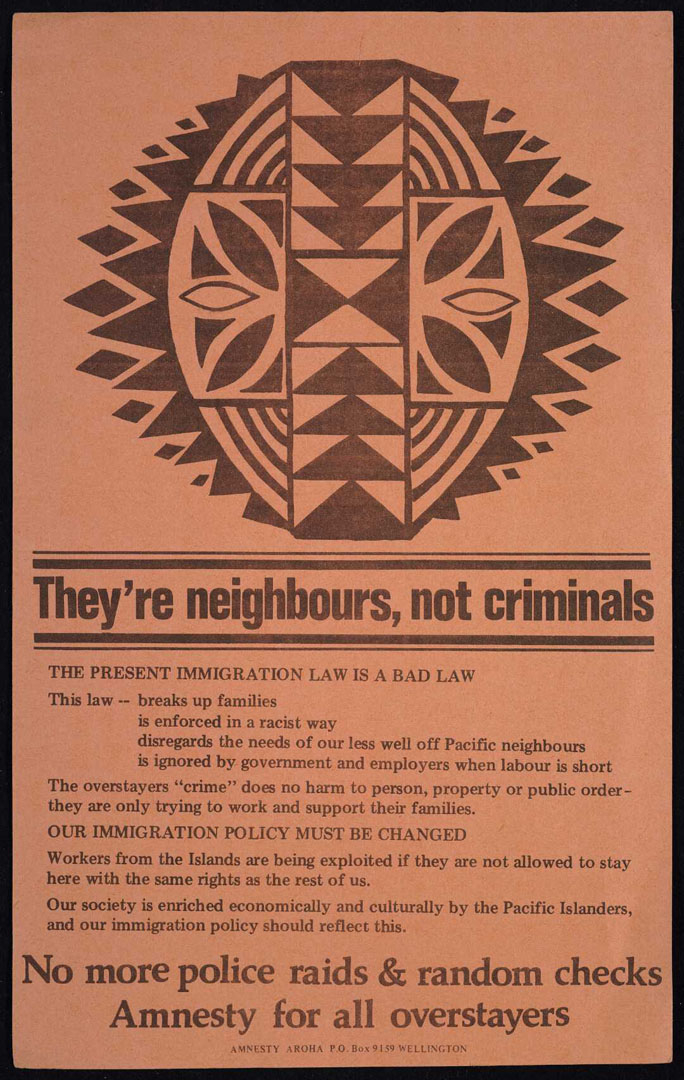
In response to events in Auckland, the Council for Civil Liberties and the Wellington Regional Pacific Advisory Council is held at Newtown School in Wellington. Hundreds of people attend, and the overstayer advocacy group Amnesty Aroha is formed the following day.
25 October 1976
Emergency Auckland City Council meeting held
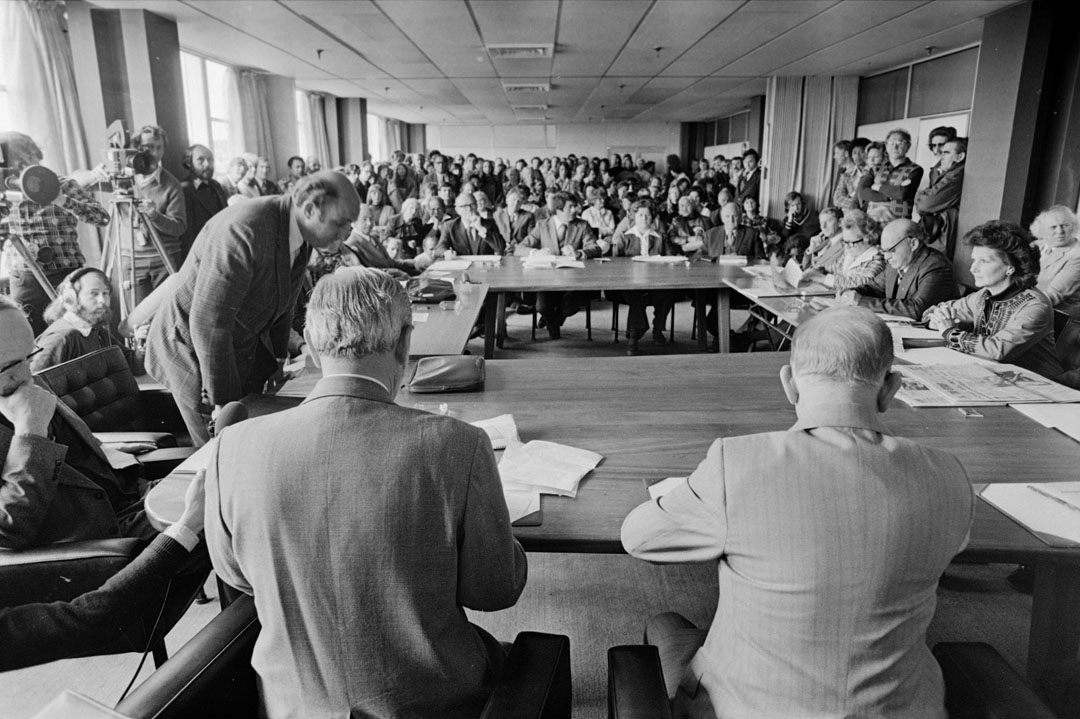
An emergency meeting in Auckland’s council chambers to discuss the weekend’s police blitz is moved to the Town Hall concert chamber to accommodate the large public attendance. Councillors hear from Pacific community leaders Dr Leopino Foliaki, Tofa Pua Sofi and Steve Niumata about the painful effects on their communities of the events over the weekend.
In towns and cities across New Zealand, several meetings and protests are held in reaction to the random police checks in Auckland, a testament to the outrage of the public at large towards the state’s violation of civil liberties.
25 October 1976
PIAC call a public meeting
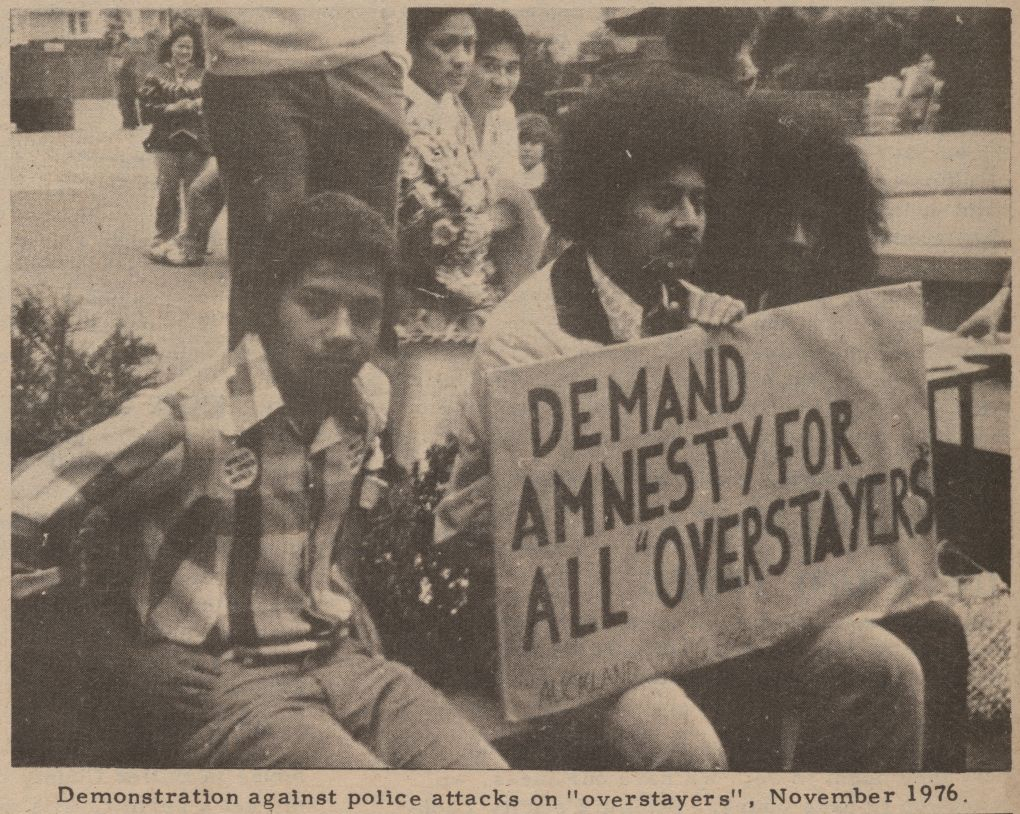
Demonstration in Auckland, November 1976. Socialist Action newspaper, 11 February 1977, page 12.
Dissatisfied with the outcome of the emergency Auckland City Council meeting, leaders of the Pacific Island Advisory Council (PIAC) call their own public meeting at 4pm that same afternoon at the Pacific Islands Presbyterian Church in Edinburgh St, Newton. Several hundred people from the community are in attendance. Eight resolutions are moved and endorsed three days later at a follow up meeting.
These resolutions include: a call for a total amnesty for all overstayers; condemnation of the government for its support for random checks and street interrogations; a demand for the Minister of Police to make a public apology to Pacific Islanders, Māori and others who were wrongfully arrested; and a publicly acknowledgement of the positive contribution made to society by Pacific Islanders.
26 October 1976
Sworn affidavits of random checks
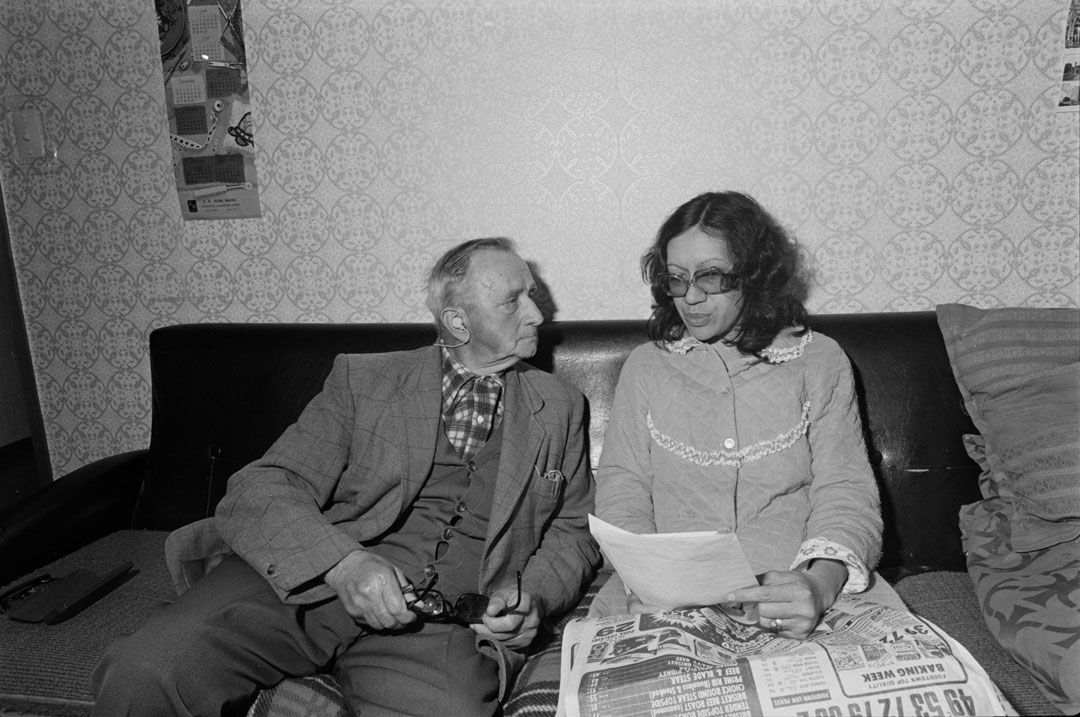
In response to Prime Minister Robert Muldoon’s demand for proof that random checks did take place, the Auckland Star newspaper sends him sworn testimony from six individuals, mostly Pacific Islanders and one Māori woman, who report experiencing random checks during the Labour weekend operation. Police Minister Allan McCready questions the legitimacy of this information, noting that police badge numbers have not been provided by the individuals who affirm that they were stopped.
26 October 1976
Police memo leaked
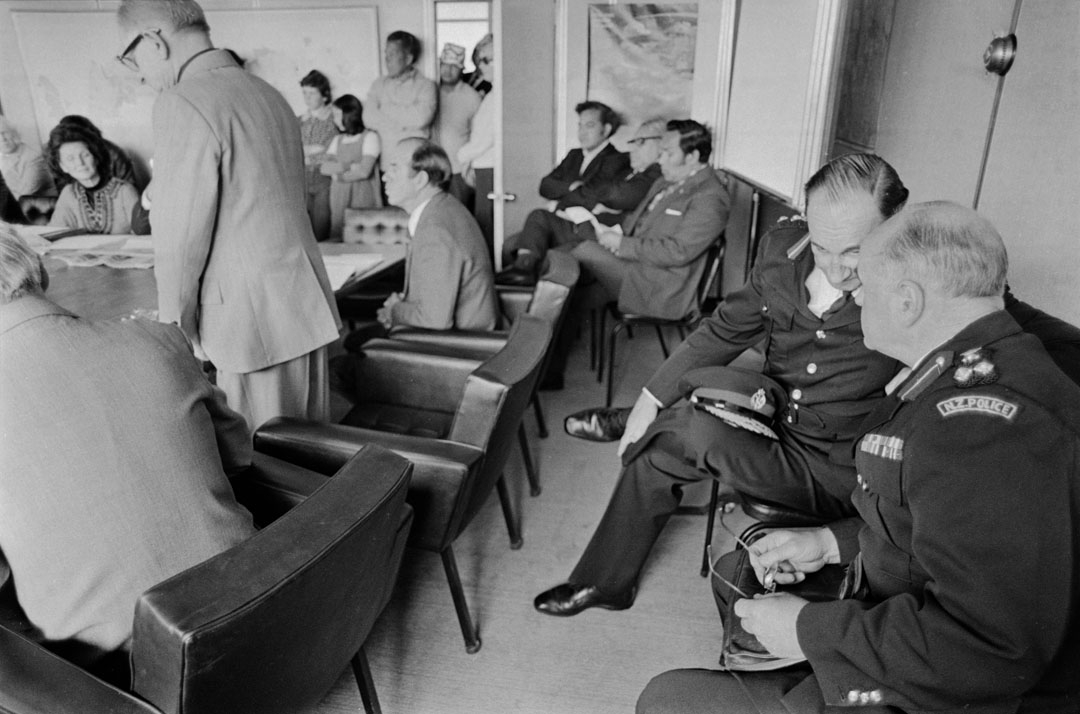
Sergeant P. Ngata, chair of the Auckland branch of the Police Association, releases to the media the full text of an official memo distributed to police officers, which instructs them to stop and question suspected overstayers ‘on the streets’. Ngata describes the methods used to track down overstayers during Labour weekend as ‘quite abhorrent’.
30 October 1976
Auckland Trades Council takes out a full-page advertisement in the Auckland Star calling for a full amnesty for overstayers
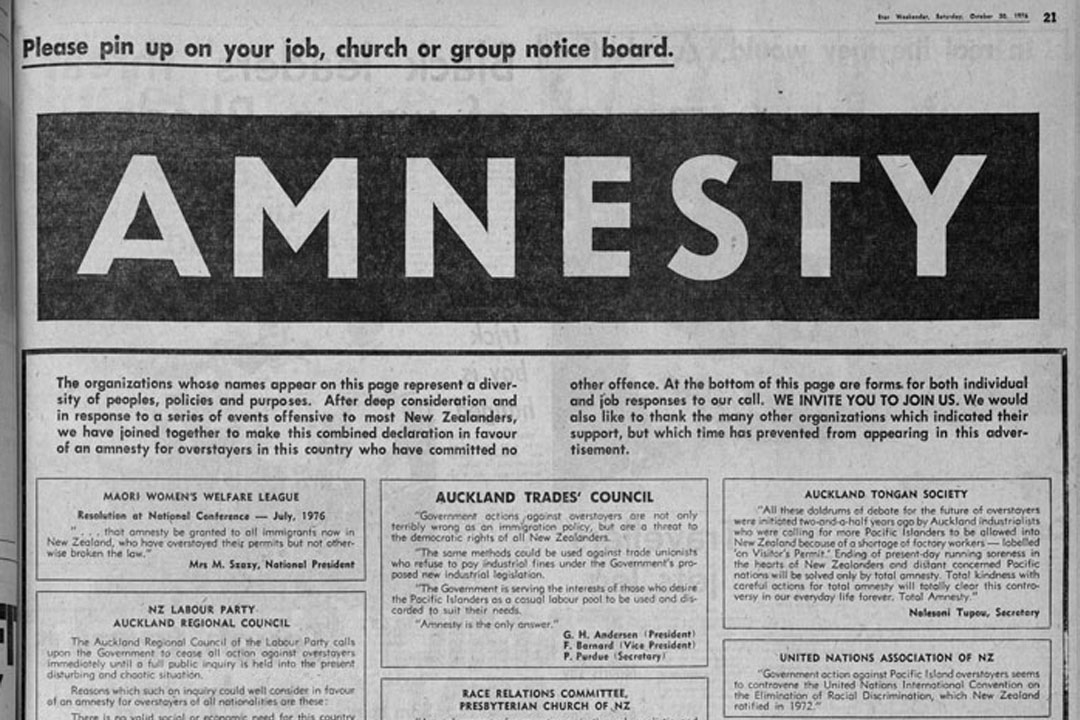
The advertisement contains statements by many community organisations which support this call for full amnesty for overstayers. These include the Māori Women’s Welfare League, the Auckland Tongan Society, the United Nations Association, the Polynesian Panther Party, the Presbyterian Church, the Pacific Islands Council, the Auckland District Māori Council, the Pacific Islands Housing and Welfare Association, CARE, the Auckland Committee on Racism and Discrimination, the Inter-Church Trade and Industry Mission and the Samoan Action Organisation.
30 October 1976
Police inquiry launched; overstayer register reopened
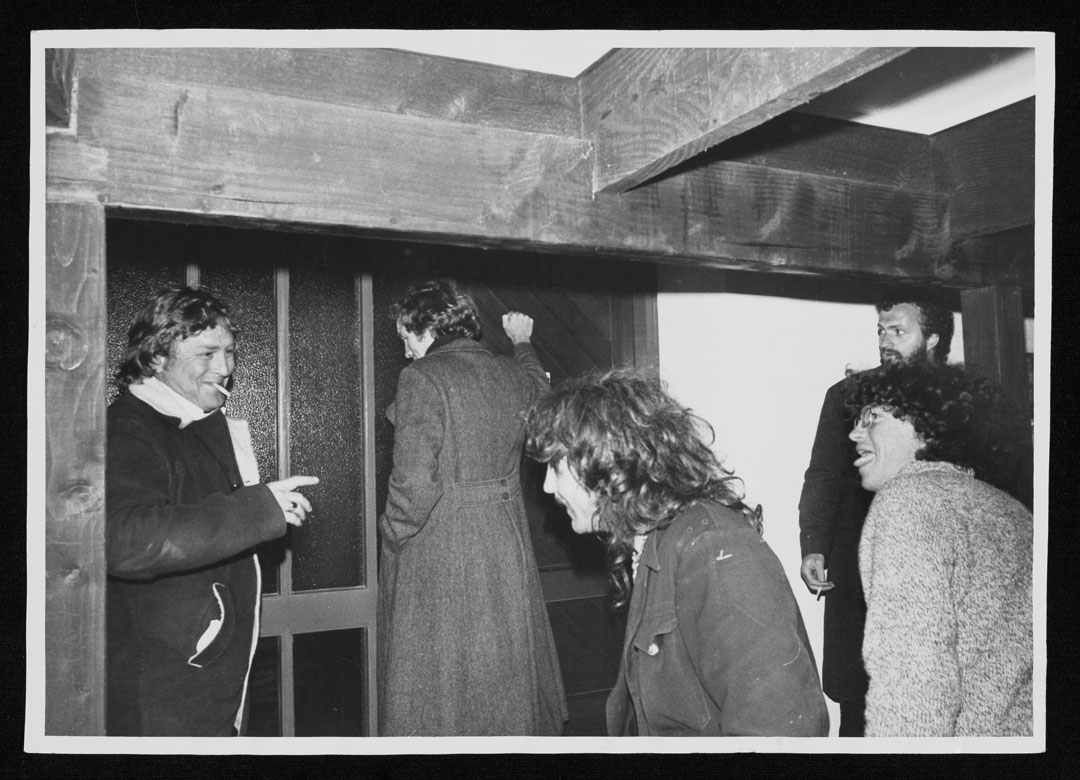
Police Minister Allan McCready is compelled to admit publicly that random checks did occur over Labour weekend and announces an inquiry into the police operation due to overwhelming public pressure. The inquiry focuses on the policing of the Immigration Act 1964 in Auckland during the period from 21 October to 1 November 1976.
On the same day, Immigration Minister Frank Gill announces the reopening of the overstayer register for a six-week period in December and January, and promises to revisit previous applications for permanent residency.
31 October 1976
‘The Ugly Reality’
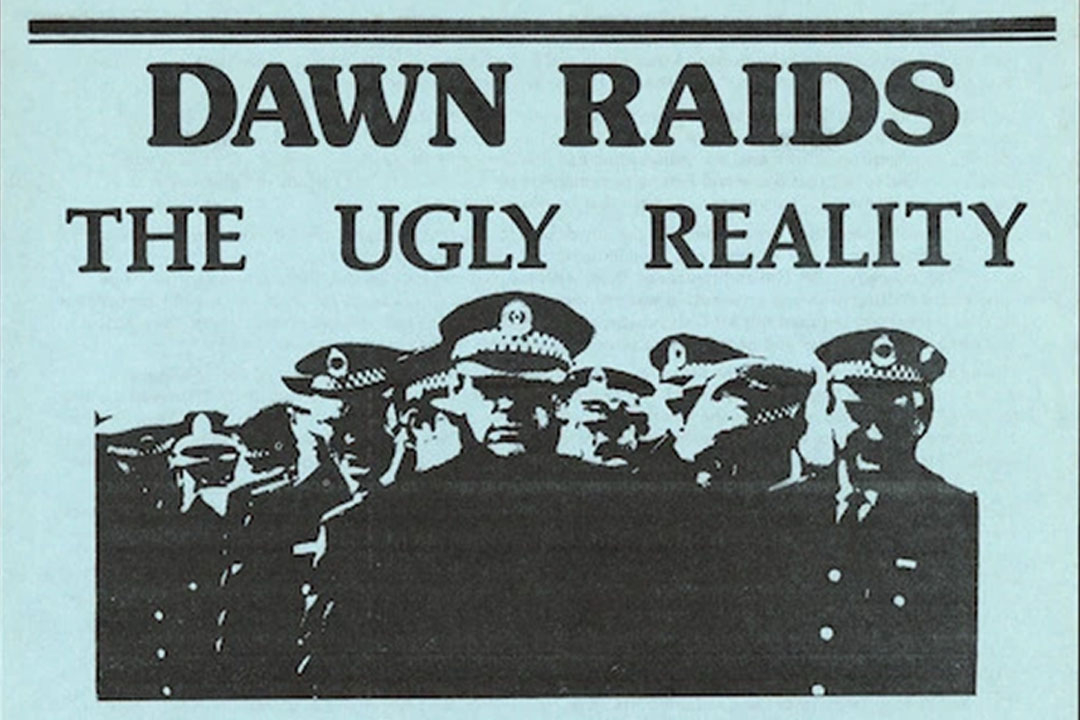
ACORD and Amnesty Aroha release a publication documenting the traumatic experience of a Tongan family whose home was raided by police in the early hours of Saturday 30 October, even though they had signed the overstayer register.
In 2021, Tesimoni Fuavao gave powerful witness testimony to the Royal Commission of Inquiry into Abuse in Care about what he and his family endured.
November 1976
Immigration Minister visits Samoa, Fiji and Tonga
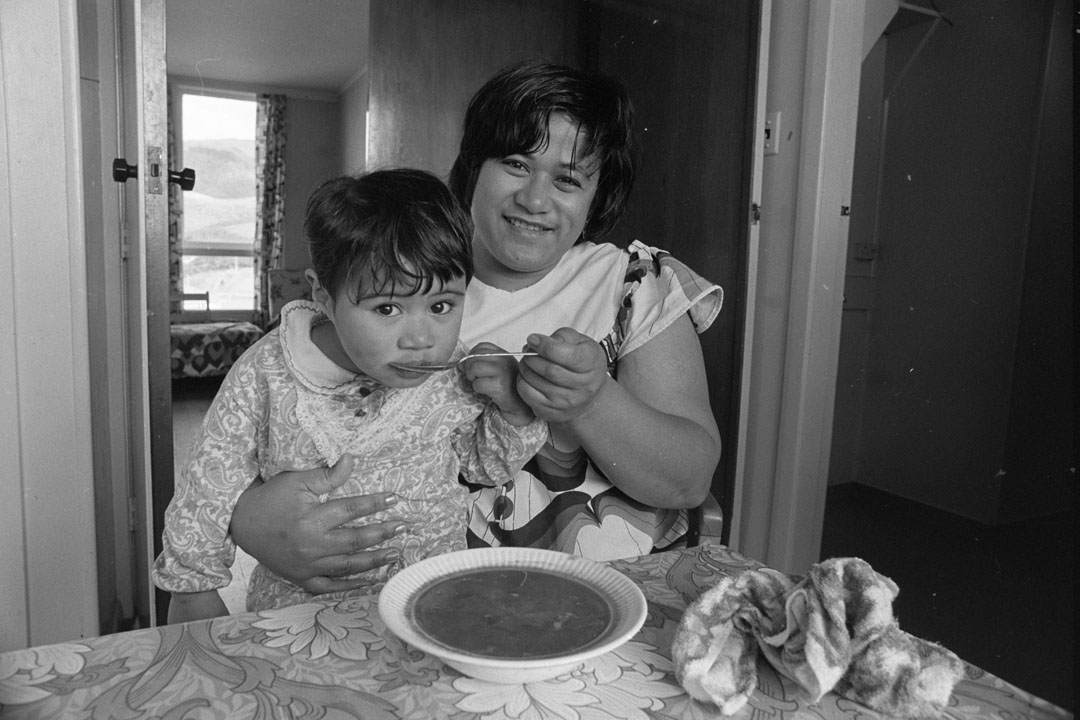
In an effort to salvage relationships with New Zealand’s Pacific neighbours, Immigration Minister Frank Gill visits Western Samoa, Fiji and Tonga to meet with government officials.
December 1976
Police inquiry report into Labour weekend events is partially released
A short summary of the Inquiry's findings is released in the weeks leading up to Christmas. The timing of the release and lack of detail is criticised by community organisations and Opposition MPs. Their calls to release the full report to the public are ignored.
The report does confirm that 93% of people sought out, stopped, or questioned by police during Operation Immigration, were Polynesian.
1977
Computerisation of visitor arrival data and a shift in government approach

By 1977 the use of computers to track arrivals and expired work and visitor permits has become common practice. One such data printout in November 1977 revealed that 40 per cent of overstayers at that time were non-Pacific Islanders.
Printouts of up-to-date lists of individuals are part of a broader shift in immigration policy and processes from prosecution to deterrence. The Department of Labour is resourced to recruit more immigration officers. An amendments to the Immigration Act 1964, passed in December and effective from 1 February 1978, makes it an offence for employers to hire workers who do not possess a valid permit
Sources used
'The overstayers: Illegal immigration from the Pacific to New Zealand', Joris de Bres and Rob Campbell, 1976, Auckland Resources Centre for World Development.
'Dawn raids: When Pacific Islanders were forced to go “home”', Sharon Alice Liava’a, 1998, MA thesis, University of Auckland.
'Immigration and national identity in 1970s New Zealand', James Mitchell, 2003, PhD thesis, University of Otago.
'New Zealand’s overstaying Islander: A construct of the ideology of “race” and immigration', Tamara Brigid Ross, 1994, MA thesis, Victoria University of Wellington .