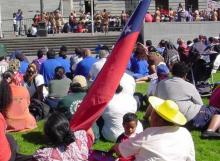
When the Privy Council granted New Zealand citizenship to Western Samoans born since 1924, the government did not accept this decision.
Pacific Peoples
Events In History
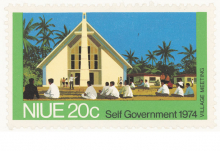
19 October 1974
In September 1974, 64% of resident Niueans voted in favour of the island becoming self-governing in free association with New Zealand.
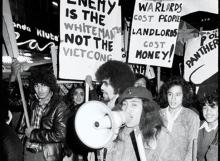
16 June 1971
The Polynesian Panther Party was founded in Auckland by six young Pacific Islanders: Paul Dapp, Will ’Ilolahia, Vaughan Sanft, Fred Schmidt, Nooroa Teavae and Eddie Williams. The group included Samoans, Tongans, Cook Islanders, and a few Māori.
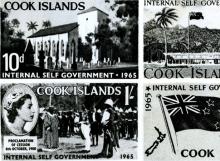
4 August 1965
First included within the boundaries of New Zealand in 1901, the islands were governed by a Resident Commissioner until 1946. When they achieved self-government, Cook Islanders remained New Zealand citizens.
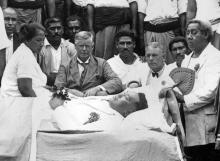
28 December 1929
New Zealand military police fired on Mau independence demonstrators in Apia, killing eight Samoans, including the independence leader Tupua Tamasese Lealofi III.
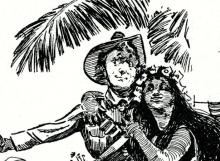
29 August 1914
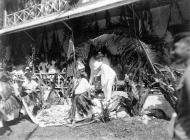
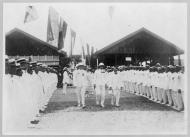
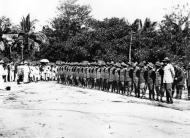
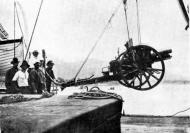
Colonel Robert Logan led a 1400-strong expeditionary force to capture German Samoa in New Zealand’s first military action of the First World War. This was the second German territory, after Togoland in West Africa, to fall to the Allies in the war.
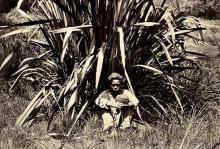
20 May 1870
New Zealand received its first known shipload of labourers from the Pacific Islands when the clipper schooner Lulu docked in Waitematā Harbour
Articles
The 1918 influenza pandemic
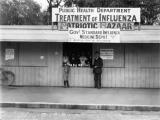
The lethal influenza pandemic that struck New Zealand between October and December 1918 killed about 9000 people in two months. No other event has claimed so many New Zealand lives in such a short time. Read the full article
Page 10 - Influenza in Samoa
The total number of deaths attributable to influenza is estimated as 8500, 22% of the Samoan
State housing

New Zealand's first state house was formally opened on 18 September 1937. But the government has provided rental housing for New Zealanders for more than a century. Explore the history of this country's various state housing schemes and their contribution to the New Zealand way of life. Read the full article
Page 6 - Making ends meet
For low-paid workers and beneficiaries, making ends meet has always been a constant struggle. Life can be even tougher for those without a home of their
New Zealand's administration of Samoa, 1920-35

New Zealand was ill-equipped to cope with the Western Samoa mandate it was allocated by the League of Nations in 1920. The Mau movement's passive resistance culminated in the violence of 'Black Saturday', 28 December 1929, which left 11 Samoans and one New Zealand policeman dead. Read the full article
Page 1 - New Zealand's administration of Samoa, 1920-35
New Zealand was ill-equipped to cope with the Western Samoa mandate it was allocated by the League of Nations in 1920. The Mau movement's passive resistance culminated in the
Page 2 - Background
When war broke out in Europe in August 1914, Britain asked New Zealand to seize German Samoa as a 'great and urgent Imperial
Page 4 - Sowing seeds of discontent
By 1926, anti-New Zealand feeling was strong throughout Samoa.
Page 5 - The rise of the Mau movement
Samoa has a history of opposition to European rule, but the opposition that emerged in the late 1920s was organised and
Page 6 - Stepping up the Mau campaign
In January 1928 Mau policemen dressed in a uniform of a purple lavalava with a white stripe began enforcing a sā - ban - on European stores in Apia.
Page 7 - Black Saturday
One New Zealand policeman and eight Samoans, including Tupua Tamasese Lealofi III, were killed in Apia on Black Saturday - 28 December
Page 8 - Towards independence
On 4 June 2002, New Zealand Prime Minister Helen Clark offered 'a formal apology to the people of Samoa for the injustices arising from New Zealand's administration of Samoa in
Capture of German Samoa

When war broke out in Europe in August 1914, Britain asked New Zealand to seize German Samoa as a ‘great and urgent Imperial service’. Although the tiny German garrison offered no opposition, at the time it was regarded as a potentially risky action. Read the full article
Page 2 - New Zealand in the Pacific
Samoans were not consulted when Britain, Germany and the United States agreed to partition their islands in December
Page 3 - Seizing German Samoa
With hindsight, New Zealand's capture of German Samoa on 29 August 1914 was an easy affair. But at the time it was regarded as a potentially risky action with uncertain
Page 4 - Wartime administration
German officials were replaced by New Zealand military officers, civilians, or British residents. These often lacked the experience or qualifications to do the
Pacific Islanders in the NZEF

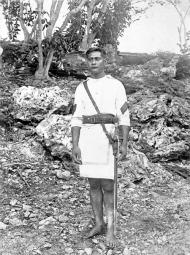
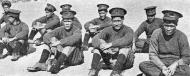
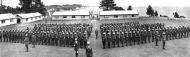
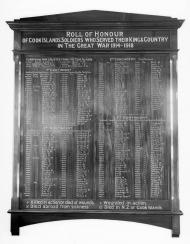
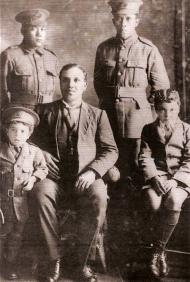
Cook Islanders, Niueans, Fijians and Gilbert Islanders all took their place in the ranks of the New Zealand Expeditionary Force during the First World War. As well as the dangers of war, Pacific soldiers faced language difficulties, an unfamiliar army diet and European diseases. Read the full article
Page 1 - Pacific Islanders in NZEF
Cook Islanders, Niueans, Fijians and Gilbert Islanders all took their place in the ranks of the New Zealand Expeditionary Force during the First World War. As well as the dangers
Page 2 - Niueans and Cook Islanders
Information about Niuean and Cook Island soldiers who were part of the 3rd Maori Contingent in
Page 3 - The Rarotongan Company
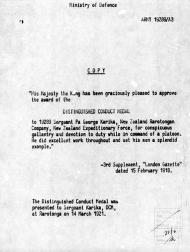
Information on the New Zealand Rarotongan Company, which served in the Sinai and Palestine campaigns
Page 4 - Fijian and Gilbert Island Contingents
Information about men from Fiji and the Gilbert Islands who enlisted for service in the NZEF.
Page 5 - Difficulties faced by Pacific Islanders
Information on the difficulties faced by Pacific Islanders when they left their island homes for the first time and entered the
Page 7 - Further information
Further reading and links to more information about Pacific Islanders in the NZEF during the First World
Pacific aftermath

Participation in the First World War changed Pacific Islanders' lives. Returning servicemen had seen the world. Read the full article
Page 1 - Aftermath of WW1 in the South Pacific
Participation in the First World War changed Pacific Islanders' lives. Returning servicemen had seen the
Page 2 - Peace celebrations in the Pacific
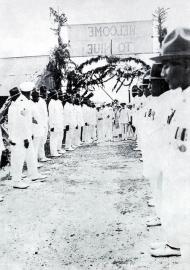
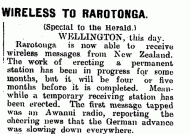
News of the Armistice in Europe in November 1918 came swiftly to Rarotonga via its new wireless
Page 3 - Troop repatriation
When the armistice was signed in November 1918, Pacific island troops in New Zealand service were stationed in a number of
Page 4 - NZ government acknowledgement
During the 1920s, the contribution of the Cook Islands and Niue to the war effort was recognised in a number of ways, especially official visits, the building of monuments and the
Page 5 - Economic, social and political impact
The First World War opened the Pacific Islands to the world more than they ever had been
Page 6 - Further information
Links and further
Anzac Day in the Pacific
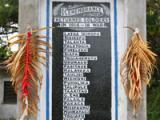
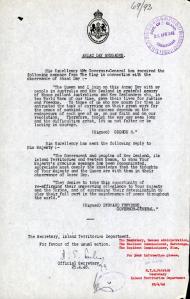
Armistice Day was the initial focal point for commemorations in the Cook Islands and Niue after the First World War. But because men from both countries had served in the New Zealand Expeditionary Force, observances gradually shifted to Anzac Day in April Read the full article
Page 1 - Anzac Day in the Pacific
Armistice Day was the initial focal point for commemorations in the Cook Islands and Niue after the First World War. But because men from both countries had served in the New
Page 2 - Early commemorative efforts
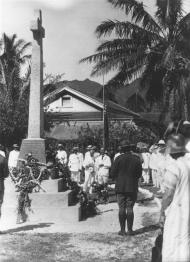
During the 1920s war memorials provided a focus for commemoration services in the Cook Islands, where the first Anzac Day service was possibly held in 1927. On Niue, Armistice
Page 3 - The growth of Anzac Day
By the end of the Second World War military commemorations in the Cook Islands and Niue centered around Anzac Day. Services in both countries followed the pattern of those in New
Page 4 - Present day commemorations
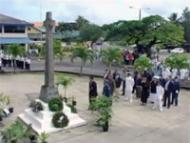
In the new millennium there has been increasing interest in the story of Pacific Island involvement in the First World War. In the Cook Islands there have been efforts to rebuild
Page 5 - Further information
Books and further reading relating to the history of Anzac Day in the Pacific Islands of Niue and the Cook
Māori and Pacific units
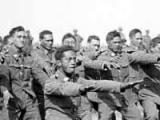
Māori and Pacific troops served mainly as non-combatants at Gallipoli, the Western Front and in Sinai-Palestine during the First World War. Read the full article
Page 1 - Māori and Pacific units
Māori and Pacific troops served mainly as non-combatants at Gallipoli, the Western Front and in Sinai-Palestine during the First World
Page 3 - Rarotongan Company
Rarotongan and Niuean recruits were included in the NZEF’s Māori units durng the First World
Encounters
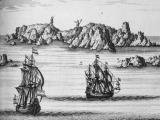
Discover stories of encounter between two great voyaging traditions, Polynesian and European, which led to the formation of a new nation Read the full article
Page 1 - Encounters
Discover stories of encounter between two great voyaging traditions, Polynesian and European, which led to the formation of a new
Page 2 - Pacific voyaging and discovery
It was only around 3000 years ago that people began heading eastwards from New Guinea and Solomon Islands into the Pacific
The Dawn Raids

The 1974-6 dawn raids have been described as ‘the most blatantly racist attack on Pacific peoples by the New Zealand government in New Zealand’s history’ Read the full article
Polynesian Panthers and the dawn raids

History associated with the dawn raids and the Polynesian Panther Party allows teachers and students to explore the exercise of power and understand the impacts of colonisation on all aspects of society. Read the full article
Government apologies

This article offers a brief overview of New Zealand government apologies, focusing on the 2021 dawn raids apology, before offering classroom-based ideas and activities that are intended for students between Years 7 and 13. Read the full article
Understanding Dawn Raids
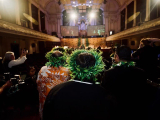
Resources relating to the Dawn Raids on Pacific communities in the 1970s Read the full article
Page 1 - Understanding Dawn Raids
Resources relating to the Dawn Raids on Pacific communities in the
Timeline of the Dawn Raids
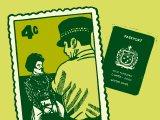
This timeline guides you through pivotal events between 1968 and 1977, the peak years of the Dawn Raids era Read the full article
Talanoa – learning about the Dawn Raids
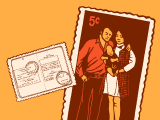
This is a dedicated space for sharing stories, dialogue and resources about the Dawn Raids and the Understanding Dawn Raids project. Read the full article
Dawn Raids on screen
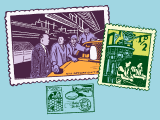
A selection of the rich collection of screen and moving image resources about the Dawn Raids. Read the full article
Women Together
Pacific Islands Women’s Health Project Aotearoa
The Pacific Islands Women's Project Aotearoa (PIWP), as it was originally called, was a national umbrella for Pacific women's groups working in the field of family violence and sexual abuse Read the full Women Together Essay
Pacific Women's Organisations
An old Samoan proverb, 'E au le inailau a fafine ae le inailau a tane' ( 'The women will get there but the men won't'), exemplifies the achievements of the many Pacific women's organisations in New Zealand. Read the full Women Together Essay
PACIFICA

PACIFICA was established by Pacific women living in New Zealand so that they could speak with one voice and be recognised as a force working for a more positive involvement of Pacific people in New Zealand society. Read the full Women Together Essay
Pan-Pacific and South-East Asia Women's Association

The Pan-Pacific and South-East Asia Women's Association (PPSEAWA) was formed to bring women of the region together to further understanding and friendship and to study social and political conditions. Read the full Women Together Essay
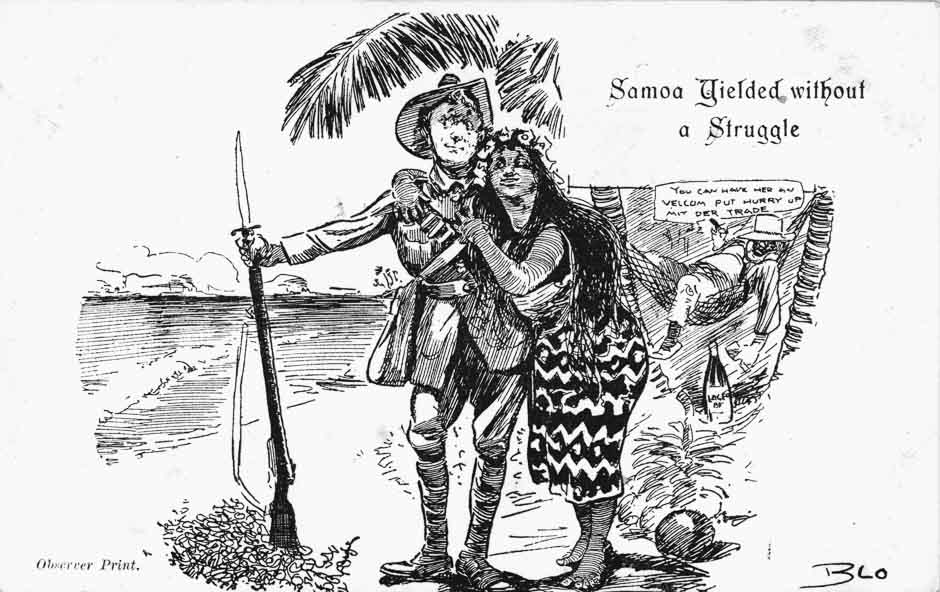
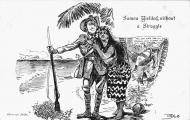
Main image: Samoa yielding postcard
Cartoon about the New Zealand occupation of German Samoa in 1914.