
This essay examines the Dawn Raids of the 1970s, a period when New Zealand immigration laws were enforced in ways that disproportionately targeted Pacific peoples. Shaped by colonial relationships with the Pacific, economic downturn and public anxiety about unemployment and social change, the Dawn Raids exposed inequalities within the state’s approach to migration. The causes, impacts on Pacific communities, and lasting significance of the Dawn Raids are considered, including the 2021 government apology.
Every year on Anzac Day, thousands of people across the country gather at dawn to commemorate those lost in war. These solemn services are accorded special significance. They offer a time to remember the sacrifice of past generations, to consider present-day conflict, and to make pledges for peace. For many Pacific communities, however, the quiet of dawn evokes another traumatic collective memory in New Zealand’s past: the Dawn Raids.
The term comes from early morning encounters when police and immigration officials conducted interrogations and arrests at the homes of Pacific peoples [1] suspected of being ‘overstayers’ (those who remained in the country after their entry permit had expired). These raids, which also occurred at other times of the day and night, intensified in the mid-1970s and included intimidating police tactics and the use of police dogs. They disproportionately targeted Pacific communities, guided by questionable anonymous tips and public anxiety that Pacific migrants were fuelling unemployment, housing pressures and crime. Dr Melani Anae describes this period as ‘the most blatantly racist attack on Pacific peoples by the New Zealand government in New Zealand’s history’.
Over time, the phrase ‘Dawn Raids’ has come to mean many things: the raids on people’s homes themselves, targeted enforcement operations, and the public vilification that accompanied them. Efforts to locate and prosecute Pacific overstayers involved heightened surveillance, arrests, deportations and on-the-spot demands for identification. For many Pacific families, the era is marked by fear, humiliation and persecution, and the resulting distrust of government institutions has persisted across generations.
New Zealand, the Pacific and immigration control
The tensions of the mid-1970s were shaped in part by the New Zealand government’s longstanding ties with Pacific nations, dating back to the 19th century—particularly with the Cook Islands, Niue, Western Sāmoa, Tonga, Fiji and later, Tokelau. From the 1840s, New Zealand developed relationships with Pacific nations through trade, education, missionary activity and health services, while participating in broader processes of imperial expansion. During this period, Fiji became a British crown colony (1874), Western Sāmoa a German colony (1899), and Tonga a British protectorate under an Indigenous monarchy (1900).
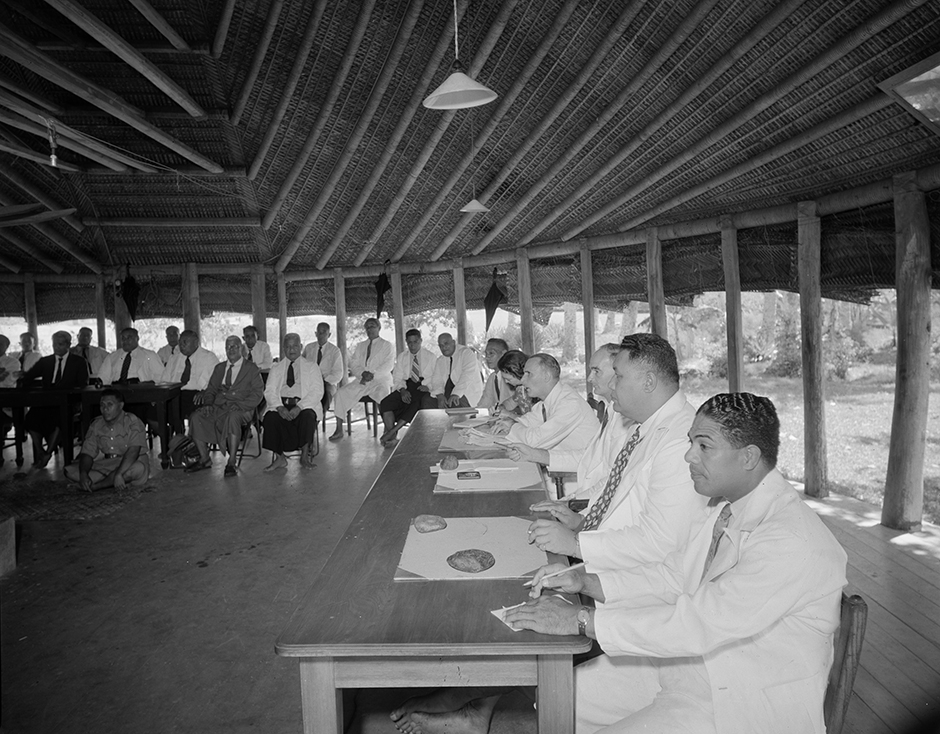
As part of New Zealand’s expanding presence in the Pacific, the Cook Islands group became the country’s first colonial possession in 1901, followed shortly afterwards by Niue, while Tokelau was transferred from British control in 1926. Residents of all three places were granted the right to enter New Zealand freely and to settle without restriction and recognised as citizens in 1948. After achieving internal self-governance in mid-late 20th century, these nations chose to retain New Zealand citizenship, preserving an open pathway for migration.
Sāmoa’s situation was more complex. New Zealand had seized control from Germany at the outset of the First World War in 1914 and maintained a military occupation until 1920. From that point, New Zealand administered Sāmoa under a League of Nations mandate – and later a United Nations trusteeship – until 1962. Under the terms of these arrangements, the New Zealand government initially allowed Samoans the same rights of access as Cook Islanders, Niueans and Tokelauans. A rule change in 1935 meant Samoans had to reside in New Zealand for five years and meet character requirements to gain permanent residence, and these conditions were progressively tightened from the late 1960s as the government sought to manage immigration numbers. The issue of Samoan citizenship would later be the centre of legal, political and public discourse in 1982.
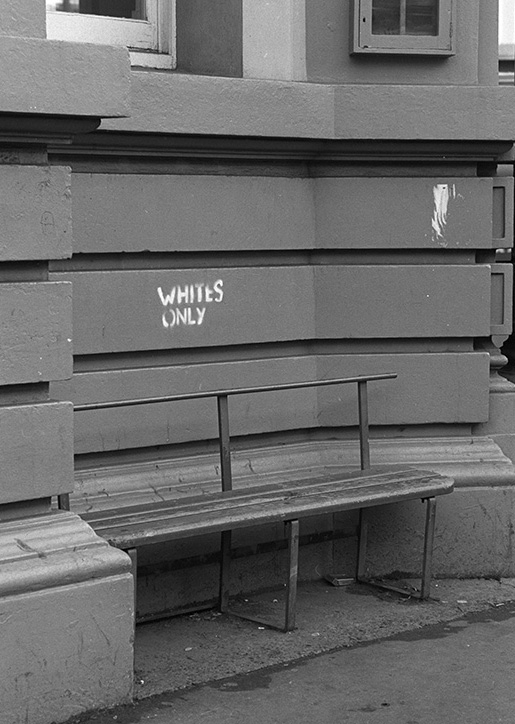
These differing constitutional and administrative arrangements created uneven pathways for Pacific migration. Cook Islanders, Niueans, Tokelauans and, for a time, Samoans, were able to access New Zealand relatively easily within an exclusionary immigration system that placed significant restrictions on Asians and other non-British immigrants. From 1899, non-British migrants were required to pass a literacy test and from 1920 they were required to obtain permits to enter New Zealand. In practice, the immigration system reflected a policy approach that prioritised maintaining a ‘white New Zealand’ population. Although permit requirements were extended to all immigrants in 1961, they continued to be administered in a way that made traditional white immigration relatively straightforward while continuing to make it difficult for others to settle permanently.
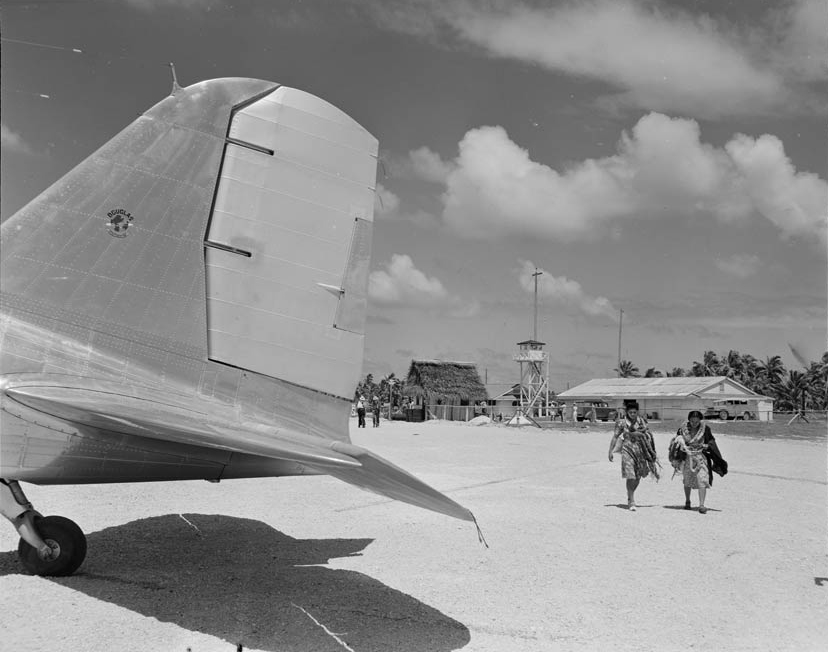
Citizens of Fiji, Tonga and other Pacific nations typically entered New Zealand as students, as close relatives of New Zealand citizens, or on six-month visitor permits.
Further reading
- League of Nations Mandate for German Samoa
- Colonial administration of Samoa
- White New Zealand policy introduced 1920
- New Zealand citizenship established 1948
- Pacific Islands and New Zealand (Te Ara)
- Immigration regulation (Te Ara)
The making of the ‘overstayer’
Overstaying emerged as an issue following the introduction of the temporary permit system in the 1920s. Faced with formidable – often insurmountable – legal barriers to settling in New Zealand, some migrants entered as temporary visitors and remained beyond the conditions of their permits. They could be legally deported and banned for life if apprehended, but identifying, locating and prosecuting them was difficult and time-consuming for officials. Before the 1960s, the provision to deport people for overstaying was used mainly to expel migrants convicted of violent crimes who had also overstayed their permits.
This began to change in the 1960s, in response to an increase of Indo-Fijian overstayers. An enforcement crackdown in 1965–6 revealed that existing laws made it difficult for immigration officials to apprehend and prosecute overstayers on a large scale. A 1968 amendment to the Immigration Act gave immigration officers and police the power to demand that anyone they suspected of overstaying must present their passport and identification documents on request, or face arrest and prosecution.
These new powers, and increased cooperation between police and immigration officials, led to a significant increase in overstayer enforcement from 1971 onwards. Officials entered the homes of people suspected of overstaying, demanding of immigration status and arresting those unable or unwilling to produce it. These visits often took place at night or early in the morning, when families were at home and unprepared for confrontation. People could be taken into custody and held in prison for months while awaiting conviction and deportation. By the early 1970s, such arrests had become regular occurrence – almost weekly – across the country, but mostly in Auckland and Wellington, where Pacific peoples were living in greater numbers and were most heavily targeted.
Of the more than 1500 overstayer convictions between 1949 and 1976, 39% were Tongans, 30% Fijians (both iTaukei and Indo-Fijians), 24% Samoans, 2% other Pacific countries, and 5% from the rest of the world. In this context, ‘overstayer’ becomes more than a legal term, emerging as a damaging racialised label associated with Pacific peoples.
Economic crisis and the Dawn Raids, 1973–4
New Zealand's economy faced significant shocks in the early 1970s leading to a dramatic increase in cost of living and unemployment. These crises hardened many New Zealanders’ attitudes towards immigrants. Several years of record arrivals, mostly from Britain and Australia, had increased pressure on the already strained housing and job markets. In response, in 1974 the Labour government sought to reduce overall immigration numbers.
Pacific migration had also increased: the national census recorded a rise in Pacific residents from 2159 in 1945 to 8103 in 1956, 26,271 in 1966, and 61,354 in 1976, counting both migrants and their New Zealand-born families. Reflecting on this movement, Tui Atua Tupua Tamasese (Prime Minister of Western Sāmoa 1976–1982) suggested three key reasons for why people wanted to come to New Zealand: diverse employment opportunities, money, and most importantly, access to education for children, which was seen as central to future success. Many migrants sent a proportion of their wages home, supporting families and funding housing developments across the Pacific. This became an increasingly important part of Pacific economies, particularly as populations grew and employment opportunities in developing island nations remained limited.
Official entry and departure statistics for the early 1970s suggested that a growing number of Samoans, Tongans and Fijians were overstaying their temporary permits. Although Pacific migrants made up only a small proportion of overall arrivals – especially when compared with Australian and British migrants – some public commentators began to single them out as a major cause of unemployment, housing shortages and crime. Overstayers became convenient scapegoats for those looking to blame someone for the country’s problems. At the same time, anti-racism and Indigenous rights activists publicly criticised New Zealand’s immigration policies, as part of broader race-based activism that highlighted Māori grievances and challenged the government to suspend sporting ties with the Apartheid regime of South Africa.
The issue came to a head in March 1974, when a series of early morning enforcement visits on the homes of suspected Tongan overstayers in Auckland and Wellington were widely reported in the New Zealand media. Critics and journalists labelled these visits ‘dawn raids’, the name by which they’d be remembered. While such raids were not new, the publicity surrounding them drew public notice, for the first time, to the methods used to carry them out. Activists such as the anti-racist lobby group CARE accused the police of employing excessive, heavy-handed tactics more appropriate to apprehending violent and dangerous criminals.
Auckland Tongans reported that the raids had created an atmosphere of fear throughout their community, with many worried they’d be carried off to prison if they couldn’t immediately present their passports (which were often stored securely at churches or workplaces and not readily accessible). Pacific community leaders, the Polynesian Panther Party, Māori student activists in Ngā Tamatoa, unions and a wide range of civic groups strongly condemned the raids, criticising the use of dogs and the apparently racially motivated nature of enforcement. Manufacturers and businesses also warned that deportations would aggravate labour shortages rather than protect New Zealand jobs.
Amid growing criticism, Prime Minister Norman Kirk announced a halt to further raids and introduced a partial amnesty from prosecution for overstayers who came forward to regularise their immigration status. Some 3500 Tongans registered under the amnesty, applying for permit extensions or for permanent resident status, or arranging their return to Tonga without facing conviction, imprisonment, or a permanent ban from New Zealand. Around 1500 people left the country, and the government addressed employer concerns about labour shortages by expanding the work permit schemes that enabled New Zealand businesses to recruit groups of workers from Pacific countries for short periods. Police and immigration officials resumed enforcement visits on the homes of suspected overstayers in July 1974 but were instructed to conduct them only between the hours of 6am and 11pm.
The 1975 election and the Dawn Raids of 1976
National Party leader Robert Muldoon adopted a hard-line stance on immigration during the 1975 election campaign, pledging to slash annual migrant numbers from 30,000 to 5000. The party’s campaign rhetoric exploited the unsettled social climate, framing immigrants as a drain on the economy and a threat to social cohesion. Although neither new nor universally accepted, such narratives gained traction, positioning Pacific people as unwelcome intruders and social burdens. In response to public anxiety over rising crime rates, amplified by media discussion of gang crime, Muldoon promised to take vigorous action to deport Pacific criminals if elected.

The National Party swept to victory in November 1975 and moved quickly to reduce immigration. The new immigration minister, Air Commodore Frank Gill, toured the Pacific region in January 1976 to signal the government’s tougher stance and its plans to progressively narrow eligibility and reduce intakes from all Pacific countries. Cabinet also discussed supporting industrial development initiatives in Pacific countries as part of a wider strategy to manage migration pressures and limit reliance on movement to New Zealand.
In February 1976, shortly after Gill’s return, a fresh Dawn Raids scandal broke when the media reported on a series of early morning enforcement visits in Auckland and Wellington. Tongan woman Telesia Topping told the press how police had burst into her Onehunga home at 6am, shone torches in the eyes of sleeping people, rummaged in drawers and wardrobes, ordered her from her home, and dragged her nephews – both in New Zealand legally – away in a van. These raids were the resumption of routine enforcement activities after the summer break, but Topping’s account was widely reported and sparked intense public debate.
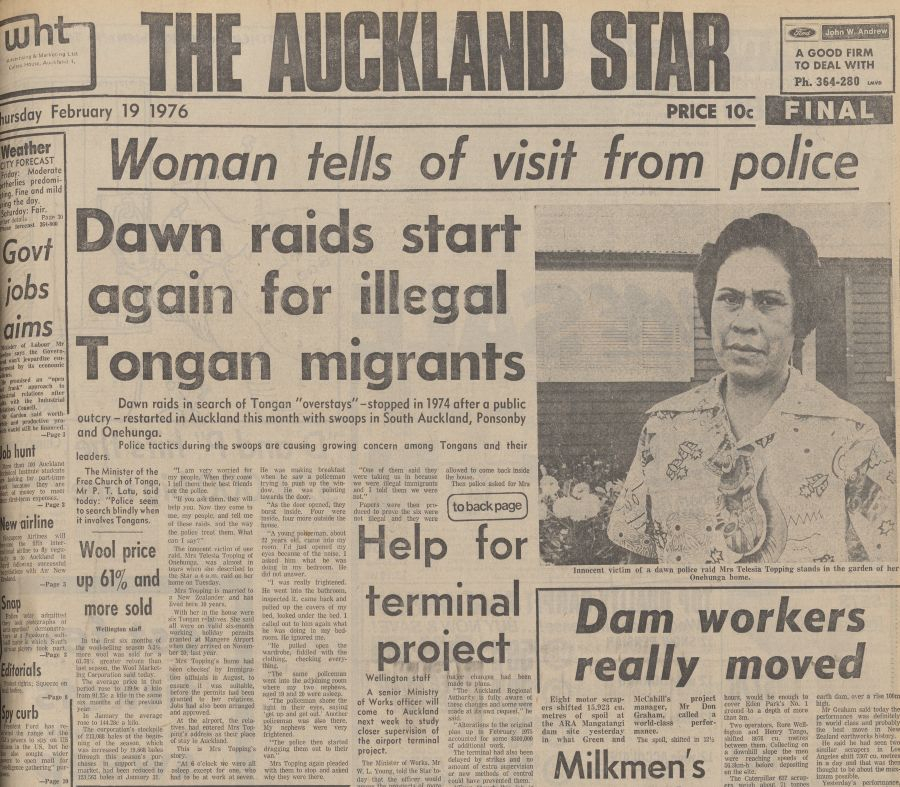
The overheated, racialised rhetoric of the election campaign had placed Pacific peoples under scrutiny, and some members of the public increasingly eyed their Pacific neighbours with suspicion and resentment. Between October 1975 and February 1976, Auckland immigration officials received 2500 tips about possible overstayers. Many were anonymous and sketchy, but the February 1976 raids had been launched by the Labour Department to investigate them. Gill and Muldoon insisted that the raids were a necessary and appropriate means of detecting and deporting the estimated 10–12,000 overstayers claimed to be in the country.
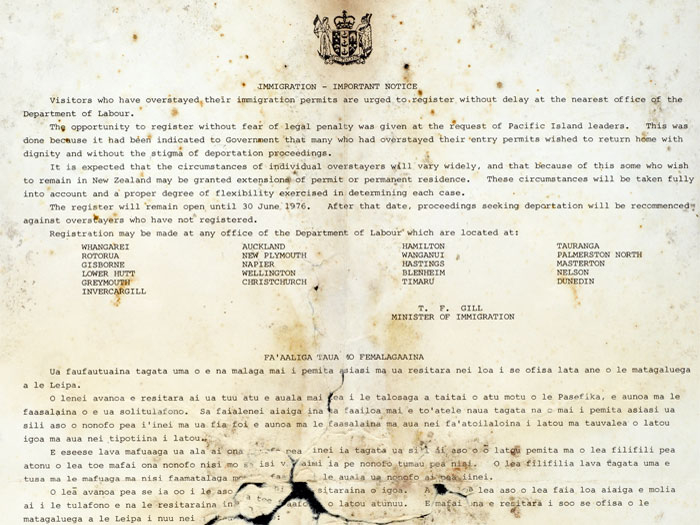
Community groups and activists called for a general amnesty, like those recently offered by the governments of Canada and Australia, but the government refused. Instead, it announced a ‘stay of proceedings’, similar to the partial amnesty of 1974. Overstayers would have the opportunity to come forward and officially register themselves, with the view to either lodge an application to seek permanent residence or put their affairs in order and leave without the threat of imprisonment or deportation. Pacific community leaders were initially sceptical but eventually endorsed the scheme and encouraged people to register. A committee of Immigration officials were tasked with approving applications for permanent residency provided certain criteria was met.
Operation Immigration, October 1976
The overstayer register closed in September 1976, and the government turned its attention towards pursuing and prosecuting the estimated 6–7000 overstayers which it believed had not registered and were still at large. In a move intended to show good faith to those who had registered, Gill argued that it would be unfair to compel those who’d come forward to leave without first concentrating enforcement efforts towards overstayers who had not registered.
This news item aired on TVNZ 2 October 1976. It highlights the difficult position of police who did not want to undertake the work of immigration officials and features an interview with a Mangere family who had been visited by Police.
In mid-October 1976, Cabinet directed the Minister for Police to take over from the Immigration Division in the nationwide enforcement of Immigration law with particular focus on locating and arresting unregistered overstayers for a trial period of three months. Minister for Police Alan McCready and Police Commissioner Ken Burnside were reluctant to take on the additional responsibilities of enforcement after earlier controversy in February but were overruled by the Prime Minister.
On the morning of 21 October Commissioner Burnside called a meeting of the area district commanders for Auckland, Wellington and Christchurch at the Police headquarters in Wellington to relay new instructions for overstayer enforcement. Returning to their respective districts, they began planning for the commencement of ‘Operation Immigration’.
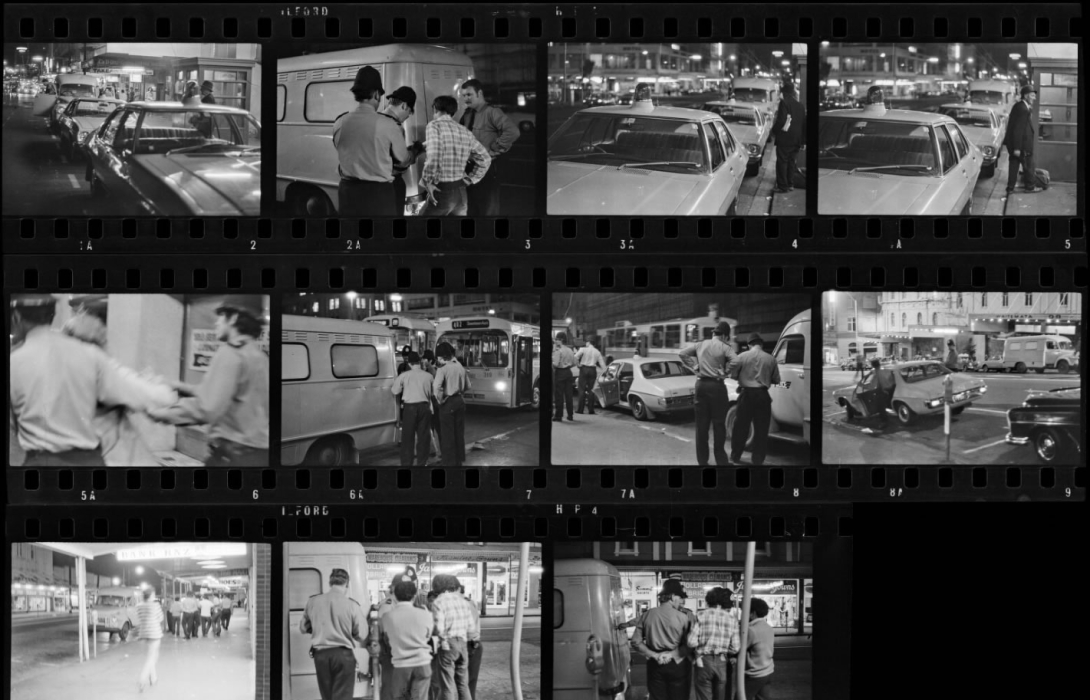
On his return to Auckland later that day, Acting District Commander A. K. Berriman, ordered the creation of a Special Immigration squad and instructed senior officers to direct all frontline staff to commence enquiries from 7pm that evening. In the scramble to implement these plans, only about half of frontline police on duty received official instructions in the first four days of the operation. The disorganisation contributed to discretionary practices, as many carried out random passport checks of Polynesian people in city streets and bars during the evening of 21 October and the following day.
The Special Immigration Squad also conducted a series of raids on the homes of suspected overstayers in the Auckland suburbs. Using binders of tips supplied by immigration officials, information that was later found to be out of date, police raided 233 homes across Ponsonby, Onehunga, Māngere, Ōtara, Ōtāhuhu, Papatoetoe, Papakura and Manurewa on 23 and 25 October. The disruption for these families and neighbourhoods was significant, yet these actions resulted in just 10 overstayer arrests.
All in all, police actions between 21 October and 1 November recorded over 800 interactions and over 200 street stops. Of the 40 arrests made, 16 were subsequently deemed unjustified.
It was a public relations fiasco. Media condemned the enforcement blitz as ‘sickening’ and ‘frightening’, while opposition MPs and public figures such as former Ombudsman Sir Guy Powles sharply criticised the government. Auckland City Council convened an emergency meeting attended by hundreds of members of the Pacific community, and community groups nationwide rallied in response. David Lange, then working as an Auckland lawyer, denounced the street checks as a ‘flagrant abuse of civil liberty’ at the first meeting of the newly formed Wellington-based advocacy group Amnesty Aroha. The group was vocal in condemning a police operation wherein ‘hundreds of people who were not overstayers were insulted, humiliated, and stripped of their basic human rights.’
Some defended the police actions as a necessary defence against lawbreaking, but the damage to relations between the government and Pacific communities was profound and long-lasting. McCready and Muldoon initially denied that random checks had occurred, despite ample evidence to the contrary, before being forced to concede that they had. On 31 October three Tongans who had registered during the stay of proceedings were arrested and detained, this and the ongoing controversy prompted McCready to order an inquiry into police actions.
On 29 November 1976, Gill announced that the overstayer register would be temporarily reopened for a period of six weeks from December 20 to January 31 the following year. Only two weeks earlier he had returned from visiting Fiji, Tonga and Sāmoa to allay their leaders’ concerns. This time around he was prepared to accept applications for previously unregistered overstayers as well as reconsider applications from registered overstayers whose applications had previously been rejected. Overall, of the 5381 people who registered as overstayers during the two stays of proceedings, just 74 came from non-Pacific nations; 3712 of them (68%) were granted permanent residence.
Changing enforcement and enduring legacies
With the final closure of the register in early 1977, the Dawn Raids gave way to a more systemised approach enforcement that attracted far less public attention yet proved more effective in securing the departure of overstayers.
New administrative tools enabled this shift. The computerisation of arrival and departure cards in October 1976, though not foolproof, provided authorities with much more accurate information about overstayers. The Labour Department’s Immigration Division expanded its capacity, recruiting a national team of field officers – also known as enforcement officers – with backgrounds in investigative and security work. Beginning their work in March 1977, the largest team was based in Auckland with smaller units in Wellington and Christchurch. By the end of that year, Gill reported that more than 7000 field visits had been carried out, leading to around 500 overstayers leaving the country. Most departed after having contact with field officers, while a smaller number had their cases taken to court.
In 1986, the Race Relations Office, led by Conciliator Wally Hirsh, investigated allegations made by journalist David McLoughlin and the Sunday Star that the immigration department continued to discriminate against Pacific migrants. The resulting report found that Pacific overstayers were pursued more actively by field officers than others and concluded that this discrimination was ‘the logical outcome of New Zealand’s immigration policy and law.’ As of March 1986, Pacific migrants made up an estimated one-third of all overstayers yet accounted for an overwhelming 86% of prosecutions.
The sharp increase in overstayer prosecutions in the late 1970s and early 1980s produced a spate of legal challenges to the legal basis of overstayer convictions. Some of these cases raised deeper constitutional questions about the nature and scope of New Zealand citizenship itself. A pivotal moment came with the landmark 1982 case of Falema‘i Lesā, in which the Privy Council in London (then New Zealand’s highest court of appeal) ruled that all Western Samoans born between 1924 and 1948 were legally New Zealand citizens. This controversial decision effectively extended citizenship to around 100,000 Samoans. In response, the New Zealand Parliament moved quickly to pass the Citizenship (Western Samoa) Act 1982 restricting citizenship to Samoans who were physically present in the country the day before the new law came into force.
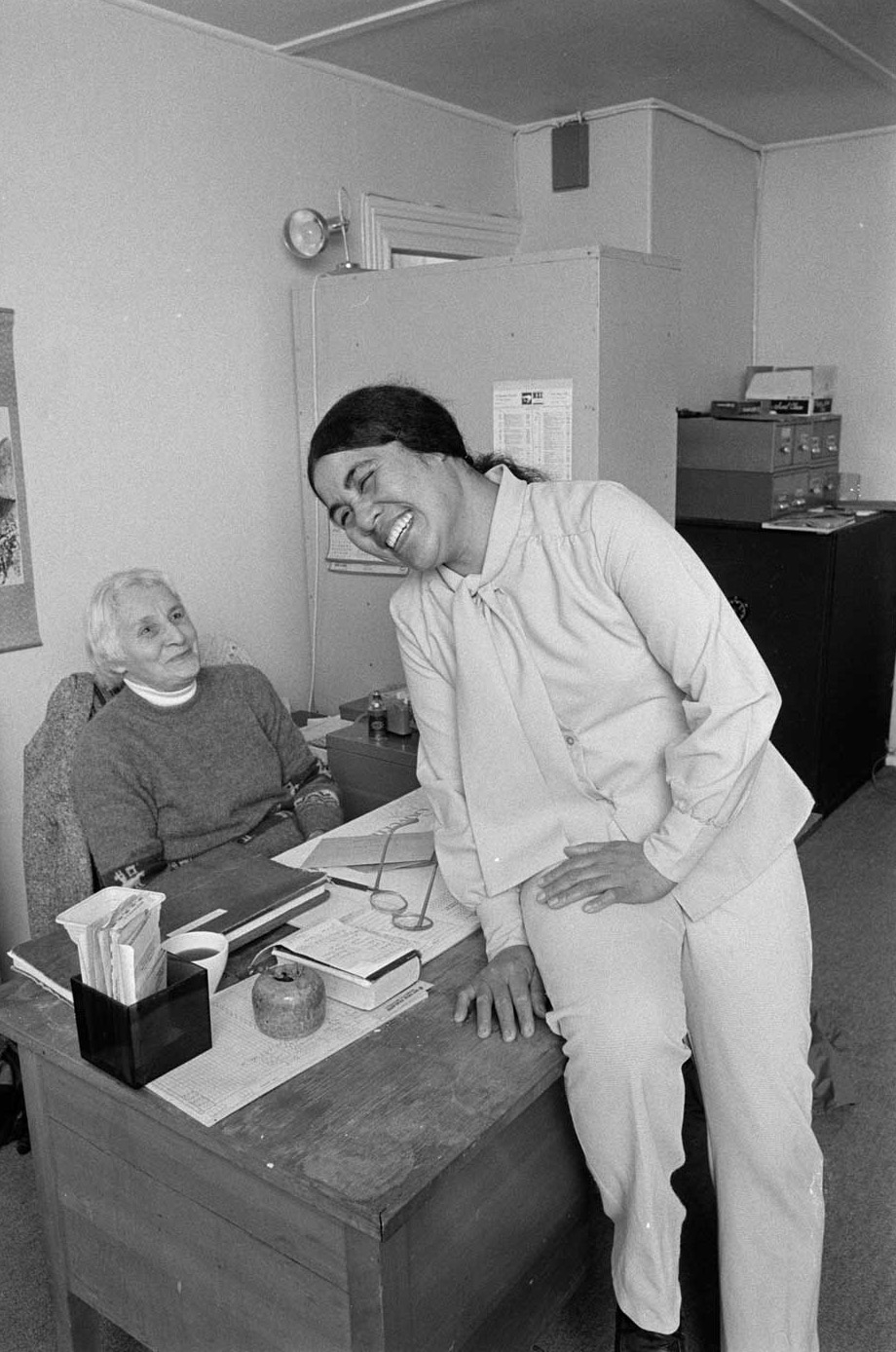
New Zealand society itself was changing during this period. Migration patterns diversified, with increasing arrivals from Asia, and the country began to shift from the overwhelmingly Pākehā-dominated society of the 1970s toward a more multicultural future. Immigration debates and inequities continued, but from the 1990s Pacific identity was increasingly shaped by a generation born and raised locally, signalling a gradual shift from a predominantly migrant population to one rooted in New Zealand-born experiences.
This growing confidence was expressed in Pacific arts and cultural life, where the history of the Dawn Raids has been revisited and reinterpreted. Oscar Kightley’s play Dawn Raids, first staged in 1997, brought these stories to new audiences and has more recently been used as a teaching resource in schools. The founding of hip hop and R&B label Dawn Raid Entertainment by Brotha D and Andy Murnane in 1999, and the launch of the clothing label Overstayer byBill Urale (King Kapisi) in 2003, reclaimed language once associated with stigma, transforming its meaning into symbols of Pacific resilience.
By the early decades of the 21st century, Pacific peoples constituted roughly 9% of New Zealand’s population, forming a youthful and diverse community with ancestral connections to more than 17 island nations. From migration and labour to culture, politics and civic life, Pacific communities have become an established and visible part of modern New Zealand.
While this presence has been influenced by New Zealand’s migration regimes, in a deeper sense Pacific peoples were not newcomers. They entered a society in which they shared longstanding Indigenous connections to Māori, grounded in histories of Pacific voyaging, kinship and exchange. In the 1970s, Māori were also experiencing significant change and urbanisation, and many were directly impacted by the Dawn Raids. These shared histories and relationships continue to shape a distinctive Pacific presence in Aotearoa.
The 2021 government apology
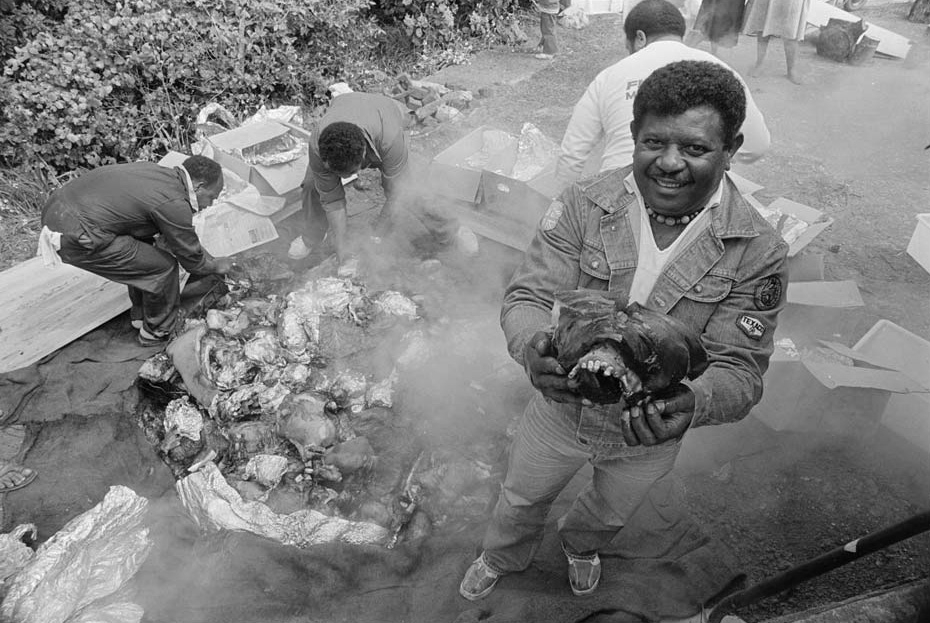
In August 2021, Prime Minister Rt Hon Jacinda Ardern issued a formal and unreserved apology on behalf of the New Zealand government for the Dawn Raids of the mid-1970s and the racial discrimination that drove them. The apology was prompted by a request from the Polynesian Panther Legacy Trust and coincided with the 50th anniversary of the founding of the Polynesian Panther Party, the first Pacific social justice activist group in Aotearoa.

At a ceremony at Auckland Town Hall, Ardern acknowledged that ‘the immigration laws of the time were enforced in a discriminatory manner’ and that ‘Pacific peoples were specifically targeted and racially profiled.’ Presenting herself ‘as a symbol of the Crown that wronged you’, she expressed remorse to the communities who endured these injustices.
The ceremony was developed in partnership with Pacific and Māori communities and included cultural protocols such as pōwhiri, hymns and a modified Samoan ifoga, a customary public apology. Accompanying the apology, the government committed to a package of goodwill gestures that included education scholarships and funding to support Pacific communities to document their own narratives from the era. The apology also acknowledged the role of Pacific peoples who, despite the hardship of the Dawn Raids, have made significant and enduring contributions to the fabric of this nation.
In his lāuga at the apology, then Minister of Pacific Peoples Aupito William Sio quoted the Samoan proverb:
E pala ma‘a, ‘ae lē pala ‘upu.
Stones turn to dust, but words live on.
This proverb encourages us to reflect on the lasting power of words in shaping how history is remembered and acknowledged. The Dawn Raids exposed how the power of the state could be wielded to marginalise and criminalise minority communities, while the stigma associated with overstaying left lasting impacts on Pacific peoples. The 2021 apology marked an important step in recognising these injustices, yet the work of honouring that history continues.
By Rachel Yates, Leone Samu Tui and Tim Shoebridge
An earlier version of this essay was developed by Ricky Prebble, former Educator and Historian at Manatū Taonga Ministry for Culture and Heritage. The essay has since been substantially reworked and expanded.
Further reading and resources
To explore a detailed timeline of the peak Dawn Raids years, visit the Timeline section, or learn more about the experiences and voices of Pacific communities in the Talanoa section of Understanding Dawn Raids. See also: Dawn Raids publications and Dawn Raids primary sources.
Amnesty Aroha. Submission to Government, November 1976. [1976]
Anae, Melani.The Platform: The Radical Legacy of the Polynesian Panthers. Bridget Williams Books, 2020
de Bres, Joris, and Rob Campbell. The Overstayers: Illegal Migration from the Pacific to New Zealand. Auckland Resource Centre for World Development, 1976.
Hirsh, W., C. Gwyn, and L. Smith. Investigation into Allegations of Discrimination in the Application of Immigration Laws in New Zealand, conducted by the Race Relations Office April–July 1986. Auckland: Office of the Race Relations Conciliator, 1986
Liava‘a, Sharon. ‘Dawn Raids: When Pacific Islanders Were Forced to Go “Home”’. MA thesis, University of Auckland, 1998
Mitchell, James. ‘Immigration and National Identity in 1970s New Zealand’. PhD thesis, University of Otago, 2003
Ross, Tamara Brigid. ‘New Zealand’s “Overstaying Islander”: A Construct of the Ideology of “Race” and Immigration’. MA thesis, Victoria University of Wellington, 1994
Sean Mallon, Kolokesa Māhina-Tuai, and Damon Salesa, eds. Tangata o le Moana: New Zealand and the People of the Pacific. Te Papa Press, 2012
Footnote
[1] For the purposes of this article, the term Pacific and Pacific peoples are used as broad collective descriptors. These terms acknowledge a diverse region and community that have also been referred to as Pacific Islanders, Pasifika, and Tangata o le Moana (People of the Ocean). Where relevant, specific ethnicities and national identities, such as Sāmoa, Fiji, Tonga, Niue and others are referenced directly.