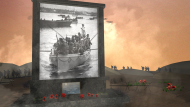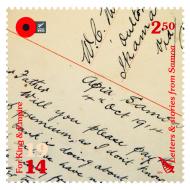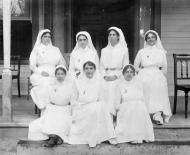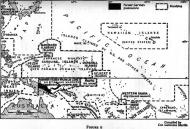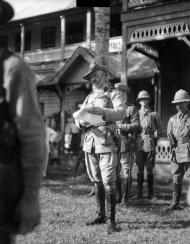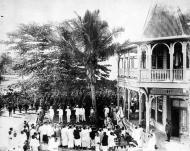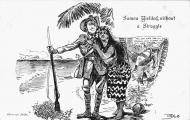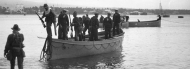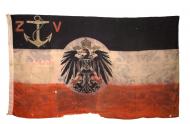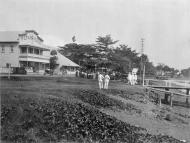
Colonel Robert Logan led a 1400-strong expeditionary force to capture German Samoa in New Zealand’s first military action of the First World War. This was the second German territory, after Togoland in West Africa, to fall to the Allies in the war.
German Samoa Occupation
Events In History
Articles
First World War - overview
Archduke Franz Ferdinand, heir to the throne of the Austro-Hungarian Empire, and his wife Sophie were assassinated in the Bosnian city of Sarajevo. This was a key event in sparking the Great War of 1914–18. Read the full article
Page 4 - New Zealand goes to war
Before the outbreak of war, Prime Minister W.F. Massey had made it clear that New Zealand’s main contribution would be supplying troops to the major theatre of conflict. But
New Zealand's administration of Samoa, 1920-35

New Zealand was ill-equipped to cope with the Western Samoa mandate it was allocated by the League of Nations in 1920. The Mau movement's passive resistance culminated in the violence of 'Black Saturday', 28 December 1929, which left 11 Samoans and one New Zealand policeman dead. Read the full article
Page 1 - New Zealand's administration of Samoa, 1920-35
New Zealand was ill-equipped to cope with the Western Samoa mandate it was allocated by the League of Nations in 1920. The Mau movement's passive resistance culminated in the
Page 2 - Background
When war broke out in Europe in August 1914, Britain asked New Zealand to seize German Samoa as a 'great and urgent Imperial
Capture of German Samoa

When war broke out in Europe in August 1914, Britain asked New Zealand to seize German Samoa as a ‘great and urgent Imperial service’. Although the tiny German garrison offered no opposition, at the time it was regarded as a potentially risky action. Read the full article
Page 1 - Capture of German Samoa
When war broke out in Europe in August 1914, Britain asked New Zealand to seize German Samoa as a ‘great and urgent Imperial service’. Although the tiny German garrison offered no
Page 2 - New Zealand in the Pacific
Samoans were not consulted when Britain, Germany and the United States agreed to partition their islands in December
Page 3 - Seizing German Samoa
With hindsight, New Zealand's capture of German Samoa on 29 August 1914 was an easy affair. But at the time it was regarded as a potentially risky action with uncertain
Page 4 - Wartime administration
German officials were replaced by New Zealand military officers, civilians, or British residents. These often lacked the experience or qualifications to do the
Page 5 - Further information
Find out more about the capture of German Samoa in the First World
NZ's First World War horses
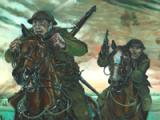
Between 1914 and 1916 the New Zealand government acquired more than 10,000 horses to equip the New Zealand Expeditionary Force. They served in German Samoa, Gallipoli, the Middle East and on the Western Front. Of those that survived the war, only four returned home. Read the full article
Page 4 - German Samoa
A total of 141 New Zealand horses were transported to Samoa during the First World War. Of these, 25 were despatched with the Samoa Advance Party of the New Zealand Expeditionary
HMS Philomel
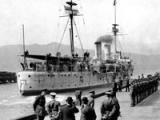
New Zealand's first warship, HMS Philomel formed the core of the country's naval forces during the First World War. The aged and largely obsolete vessel was commissioned in New Zealand in July 1914, and went on to serve in the Pacific, Mediterranean and Middle East. Read the full article
First World War farewells

Between 1914 and 1918, New Zealanders farewelled more than 100,000 men as they headed off to a military training camp or went straight to war. Read the full article
NZ Railways at war
The railway system and its workforce was one of the most valuable assets available to the New Zealand state to support the national effort during the First World War Read the full article
Page 4 - Railwaymen in the NZEF
More than 5000 permanent NZR employees served overseas during the war, about 40% of the 1914
Biographies
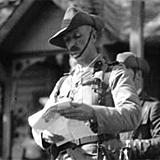
Robert Logan ran the military administration of German Samoa on behalf of Britain during the First World War.

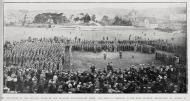
Main image: Samoan force members in Auckland
Auckland's section of the ‘Advance Guard’ march down Wellesley Street East, 10 August 1914