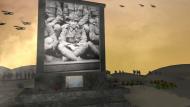
The former Cantabrian died in Beijing after living in China through six tumultuous decades.
Chinese
Events In History

15 June 1959
The prominent produce company Turners and Growers announced that it would from now on export Chinese gooseberries under the name 'kiwifruit'. First grown here in 1906, kiwifruit are now cultivated worldwide, with New Zealand-grown fruit marketed as 'Zespri'.
15 December 1944
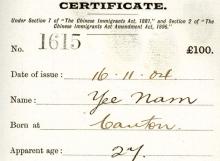
The Finance Act (No. 3) 1944 abolished the poll tax introduced in 1881, which was described by Minister of Finance Walter Nash as a 'blot on our legislation'.
24 September 1905
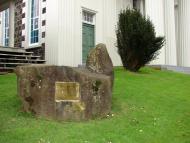
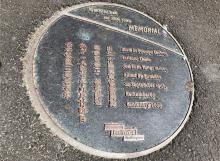
The murder of retired miner Joe Kum Yung by white supremacist Lionel Terry in Wellington’s Haining Street highlighted the hatred some felt towards New Zealand’s small but long-established Chinese community.
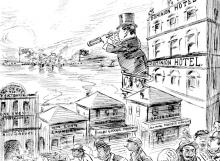
7 May 1888
A meeting in Dunedin presided over by the mayor unanimously called for a ban on further Chinese immigrants.
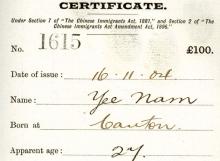
5 July 1881
Parliament passed the Chinese Immigrants Act, which introduced a ‘poll tax’ of £10 (equivalent to nearly $1700 today) on Chinese migrants and restricted the number allowed to land from each ship arriving in New Zealand.
Articles
The Cold War
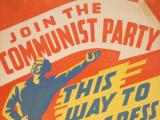
Although the origins of the so-called Cold War can be traced back to the Bolshevik revolution of 1917, this intense ideological struggle between the Western powers and the Soviet Union really began after the Second World War. Read the full article
Page 5 - South-East Asia
During the 1950s the focus of New Zealand’s defence strategy shifted from the Middle East to Asia.
Chinese New Year
Each year of the Chinese calendar is represented by an animal. Read the full article
Page 1 - Chinese New Year activities - social studies activities
Each year of the Chinese calendar is represented by an
Allies
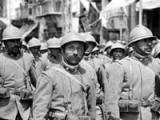
The military alliance that fought against the Central Powers was known as the Allies. Initially this alliance was based around the four great powers of Russia, France, Japan and the British Empire, along with the smaller states of Serbia, Montenegro and Belgium that also went to war in 1914. Read the full article
Page 1 - The Allies
The military alliance that fought against the Central Powers was known as the Allies. Initially this alliance was based around the four great powers of Russia, France, Japan and
Page 3 - Republic of China
Key information and statistics about the Republic of China during the First World
Stories in the land field trip
Page 2 - Stories in the land field trip
Field trips are a fantastic way for students and teachers to develop shared experiences outside of the classroom. This field trip – ‘Stories in the land’ – is facilitated by
Women Together
Chinese Women's Organisations
Women's organisations have been essentially alien to Chinese culture and society, which are traditionally patriarchal and family-centred. Read the full Women Together Essay
Biographies

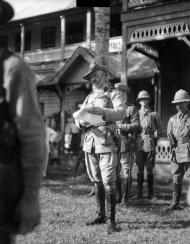
In December 1926 Rewi Alley left New Zealand ‘to go and have a look at the Chinese revolution’. Alley stayed in China for 60 years, becoming one of its best-known and best-loved foreigners.
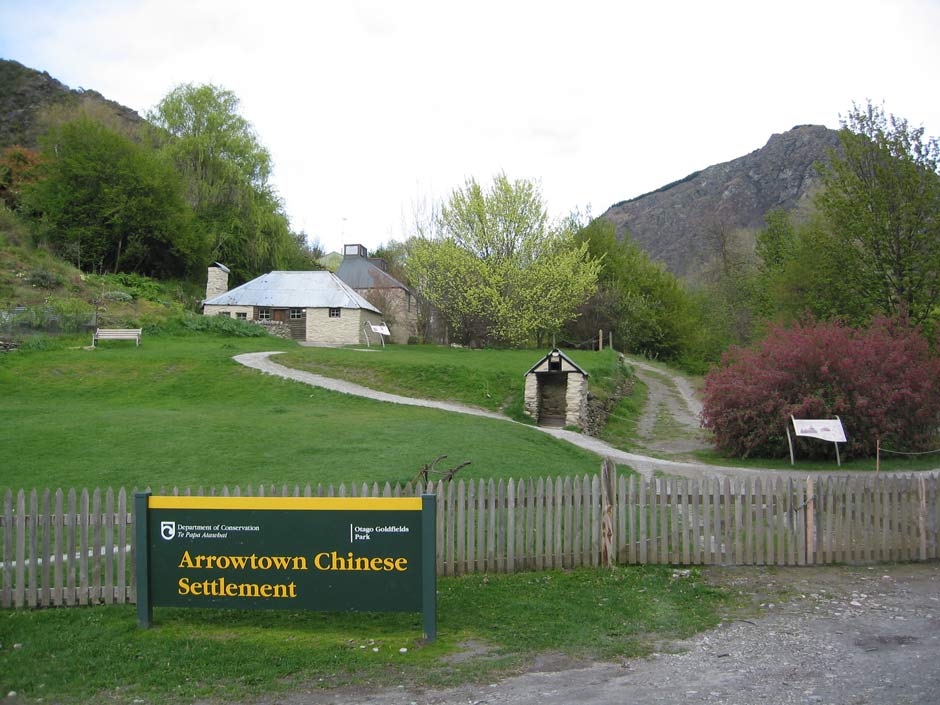
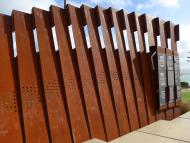
Main image: Arrowtown Chinese settlement
This partly reconstructed site is the best memorial to Central Otago's Chinese settlers.