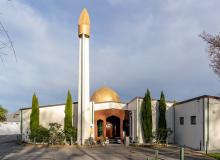
New Zealand’s Muslim community suffered an horrific attack when a self-proclaimed ‘white nationalist’ opened fire on worshippers at two mosques in Christchurch. Fifty people were killed and 41 wounded, one of whom died six weeks later.
Racism
Events In History
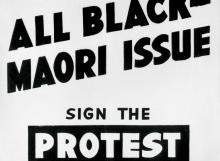
10 May 1960
Despite protests, the controversial rugby tour went ahead. The issue of sporting ties with South Africa would eventually split the country in 1981.
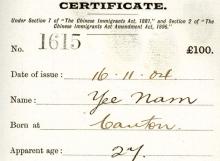
15 December 1944
The Finance Act (No. 3) 1944 abolished the poll tax introduced in 1881, which was described by Minister of Finance Walter Nash as a 'blot on our legislation'.
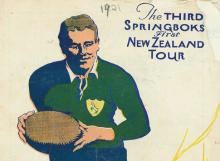
7 September 1921
A South African journalist was outraged when white spectators supported the New Zealand Māori rugby team playing the touring Springboks at Napier.

9 November 1920
The Immigration Restriction Amendment Act 1920 required intending immigrants to apply for a permanent residence permit before they arrived in New Zealand.
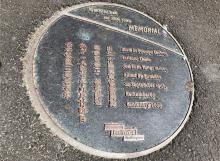
24 September 1905
The murder of retired miner Joe Kum Yung by white supremacist Lionel Terry in Wellington’s Haining Street highlighted the hatred some felt towards New Zealand’s small but long-established Chinese community.
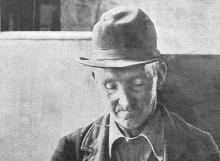
1 November 1898
A world first, the act gave a small means-tested pension to elderly men and women with few assets who were ‘of good moral character’ and were leading a ‘sober and reputable life’. It was one of the major achievements of Richard Seddon’s Liberal government.
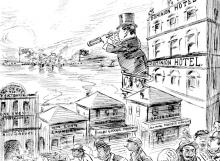
7 May 1888
A meeting in Dunedin presided over by the mayor unanimously called for a ban on further Chinese immigrants.
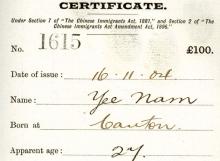
5 July 1881
Parliament passed the Chinese Immigrants Act, which introduced a ‘poll tax’ of £10 (equivalent to nearly $1700 today) on Chinese migrants and restricted the number allowed to land from each ship arriving in New Zealand.
Articles
1981 Springbok tour
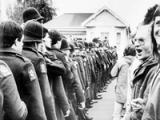
For 56 days in July, August and September 1981, New Zealanders were divided against each other in the largest civil disturbance seen since the 1951 waterfront dispute. The cause of this was the visit of the South African rugby team – the Springboks. Read the full article
Page 3 - Politics and sport
South Africa's apartheid policies and attitudes created obvious problems for New Zealand rugby, given the prominence of Māori in the
Page 5 - Gleneagles Agreement
The All Blacks accepted an invitation to tour South Africa in 1976, when world attention was fixed on the republic because of the Soweto
Hospital ships
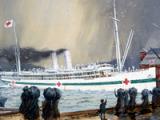
The Maheno and Marama were the poster ships of New Zealand's First World War effort. Until 1915 these steamers had carried passengers on the Tasman route. But as casualties mounted at Gallipoli, the government - helped by a massive public fundraising campaign - converted them into state-of-the-art floating hospitals. Read the full article
Page 5 - Life on board
What was life like aboard a hospital ship? That largely depended on your job, your rank and your
Government apologies

This article offers a brief overview of New Zealand government apologies, focusing on the 2021 dawn raids apology, before offering classroom-based ideas and activities that are intended for students between Years 7 and 13. Read the full article

Main image: Anjum Rahman
Anjum Rahman is a Muslim woman who has been actively advocating for women’s rights and against racism in New Zealand since the 1980s.