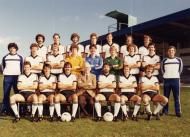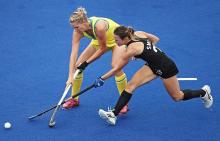
In the 2010s New Zealand’s women’s hockey team was consistently among the best in the world, but until 2018 it had not won a major tournament
Sport
Events In History
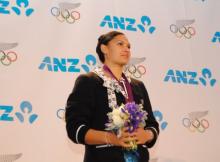
6 August 2012
Valerie Adams won gold in the shot put at the London Olympic Games. It was awarded a week after the competition, when the intial winner was disqualified for testing positive for an anabolic steroid.
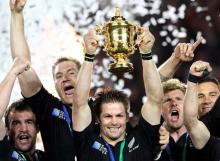
23 October 2011
The All Blacks won the Webb Ellis Cup for the second time in seven attempts, defending grimly to hold onto an 8–7 lead over France in front of 61,000 spectators at Eden Park, Auckland.

14 October 2010
Just how close the New Zealand and Australian netball teams were became clear as the match, the longest official game of netball ever played, stretched over 84 pulsating minutes.
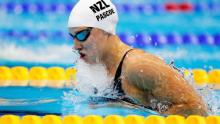
8 September 2008
At the 2008 Beijing Paralympics, 15-year-old Sophie Pascoe won her first medal, a silver in the women's 100m butterfly S10. She went on to win gold medals in 100m backstroke S10, 100m breaststroke SB9 and 200m individual medley SM10.
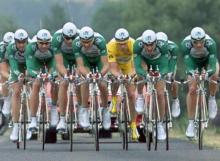
12 July 2001
The first stage win by a New Zealander in the Tour de France came in a team time trial. Although Chris Jenner didn't finish with the core of his Credit Agricole team, he shared in the stage win and got to stand on the podium.
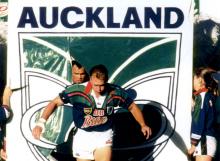
10 March 1995
The Auckland Warriors played their first match in the New South Wales Rugby League’s expanded Winfield Cup competition.
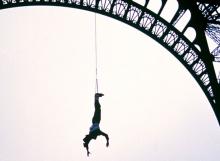
26 June 1987
The speed skier and bungy pioneer planned the 110-m leap meticulously. His dozen-strong team hid on the tower overnight and Hackett jumped at dawn. He described it as ‘one small step for a man, a bloody great leap for the adventure tourism industry.’

20 June 1987
With Michael Jones, John Kirwan and David Kirk scoring tries, the All Blacks defeated France 29–9 at Eden Park, Auckland. Kirk became the first captain to lift the Webb Ellis Cup.
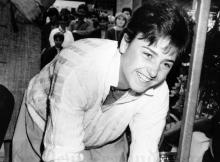
10 April 1984
In 1984, Susan Devoy became the first New Zealander to win the women’s title at the prestigious British Open squash tournament, the ‘Wimbledon of Squash’.
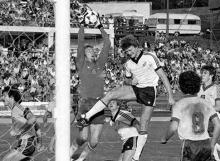
16 May 1981
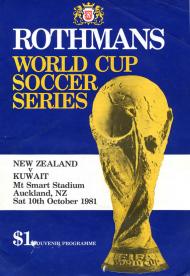
The New Zealand football team's famous 2-0 victory in Sydney was a defining moment in their epic qualifying campaign for the 1982 World Cup finals.
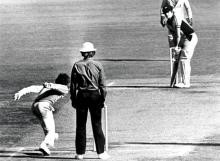
1 February 1981
Trans-Tasman sporting relations hit a new low at the Melbourne Cricket Ground when Australian captain Greg Chappell ordered his brother Trevor to bowl the final delivery of a 50-over cricket international against New Zealand underarm (along the ground).
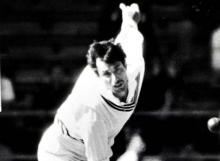
15 February 1978
Chasing 137 for victory in the first test at the Basin Reserve in Wellington, England was bowled out for 64, with Richard Hadlee taking 6 for 26.
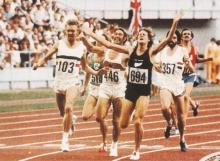
31 July 1976
Following in the footsteps of Jack Lovelock and Peter Snell, Walker won gold in the Olympic 1500 m. Black African nations boycotted the Games in protest at the All Blacks' tour of South Africa
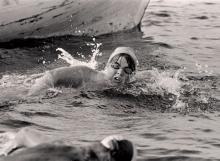
4 February 1975
American Lynne Cox swam from the North Island to the South in 12 hours 7 minutes. The fourth person to do so, she battled heavy seas and strong winds.
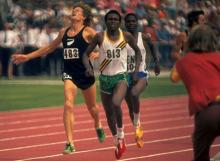
2 February 1974
The men’s 1500-m final was run on the last day of the 1974 Christchurch Commonwealth Games. Tanzanian Filbert Bayi ran the first 800 m in an astonishing 1 minute 52.2 seconds, conserved energy on the third lap, and held off 22-year-old New Zealander John Walker to set a new world record of 3:32.16.
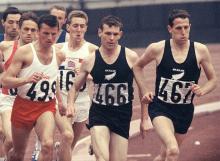
21 October 1964
Snell had successfully defended his 800-m title earlier at the Tokyo Olympics and completed the coveted middle-distance double with gold in the 1500 m. Fellow Kiwi John Davies won bronze.
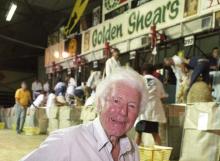
9 March 1961
First held at the Masterton War Memorial Stadium in 1961, the Golden Shears competition has become the iconic event for the shearing and wool-handling industry in New Zealand.
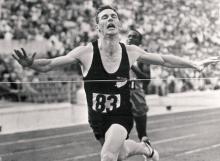
2 September 1960
New Zealand sport enjoyed one of its greatest days in Rome’s Olympic Stadium. Peter Snell won the 800 m and Murray Halberg won the 5000 m.
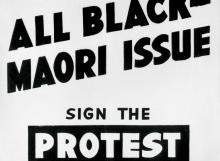
10 May 1960
Despite protests, the controversial rugby tour went ahead. The issue of sporting ties with South Africa would eventually split the country in 1981.
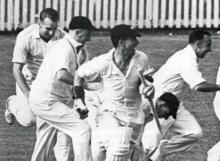
13 March 1956
New Zealand was already 3–0 down in the series going into the fourth and final test at Eden Park in Auckland. Their West Indies opponents included household names such as Gary Sobers and Everton Weekes, who had broken batting records for a New Zealand season.
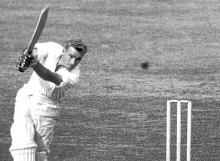
28 March 1955
Bert Sutcliffe top-scored with 11 runs as New Zealand was skittled for the lowest total in test cricket history – 26 runs.
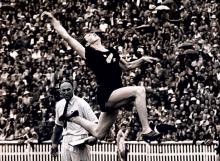
23 July 1952
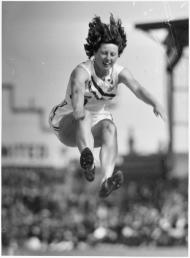
Yvette Williams (later Corlett) won the long jump to become New Zealand’s first female Olympic medallist.
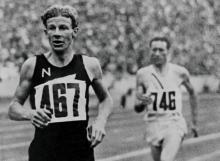
6 August 1936
Jack Lovelock won New Zealand’s first Olympic athletics gold medal at the 1936 Berlin Olympics in a race witnessed by 120,000 spectators – including Adolf Hitler.
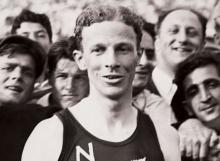
15 June 1935
The Ivy League Princeton University hosted an annual elite mile race during the 1930s. New Zealand medical student Jack Lovelock, who had set a world record there in 1933, was invited to return in 1935 to run in what became known as the ‘Mile of the Century’.
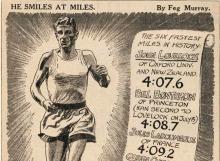
15 July 1933
Jack Lovelock's run at Princeton University broke Jules Ladoumegue’s record for the mile by 1.6 seconds. The race was dubbed the 'greatest mile of all time' by Time Magazine.
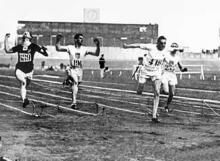
7 July 1924
The character in the Academy Award-winning film Chariots of fire (1981) was based on Arthur Porritt, who won a bronze medal for New Zealand in the 100 m at the 1924 Paris Olympics.
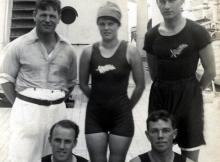
23 August 1920
Violet Waldron was New Zealand’s first female Olympian, and part of New Zealand’s first Olympic team of four. She competed in freestyle swimming in the 1920 Antwerp Summer Olympics.
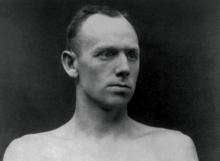
25 November 1903
By winning the light-heavyweight championship, Timaru boxer Bob Fitzsimmons became the first man to have won world professional boxing titles in three weight divisions.
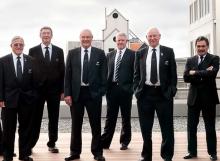
16 April 1892
As rugby grew in popularity in New Zealand, it became necessary to standardise the administration of the game in the colony. Despite some opposition, a New Zealand Rugby Football Union was founded.
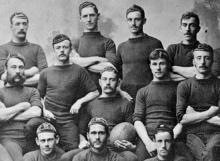
22 May 1884
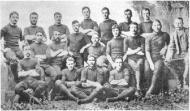
The first representative New Zealand rugby team played its first match, defeating a Wellington XV 9-0 before embarking on a tour of New South Wales.
Articles
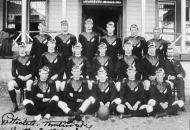
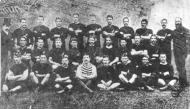
Natives' Rugby Tour, 1888-89
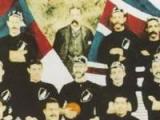
The title of 'The Originals' was bestowed on the next New Zealand rugby team to tour Britain, that of 1905-6, but even though it was soon forgotten, the Natives' tour was to have enduring significance for New Zealand rugby and society. Read the full article
Page 1 - New Zealand Natives' rugby tour of 1888-9
The title of 'The Originals' was bestowed on the next New Zealand rugby team to tour Britain, that of 1905-6, but even though it was soon forgotten, the Natives' tour was to have
Page 2 - Rugby in 1888
The rugby played by the Natives was different from the game we know today.
Page 3 - Māori and rugby
In 1872, 'Wirihana' became the first recorded Maori rugby player when he turned out for
Page 4 - Preparations
In the absence of any body regulating the game in New Zealand, Eyton was free to promote a tour of Britain as a private
Page 5 - The 'Noble Maori' arrive
After playing nine matches in New Zealand and two in Melbourne in the southern winter of 1888 (with only two losses), the Natives set off for Britain by
Page 6 - Daily routines
Between their first and last matches in Britain, the Natives played on average every 2.3
Page 7 - Unsporting behaviour?
Although hacking and tripping had been banned in the 1870s to make the game safe enough to appeal to gentlemen, rugby remained
Page 8 - Natives and northerners
In 1888 the gentlemen who ran the Rugby Union (and the Empire) were based in southern England, and the England test was played in London. Yet the playing strength of the English
Page 9 - Rugby and society
What effect did the Natives' tour have on rugby and wider New Zealand society? It showed that New Zealanders could compete on equal terms with representatives of the imperial
Page 10 - Matches played
Games and scores Total (rugby games only): played 107: won 78, drew 6, lost 23 Points for: 772; Points against: 305 In Britain: played 74: W49, D5, L20 Points for: 394; Points
Sport, 1940-1960
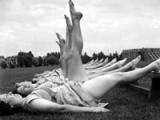
The mid-century decades brought more mass participation in sport, the consolidation of many national competitions, and greater achievement at international level. Read the full article
Page 1 - Sport in New Zealand 1940-1960
The mid-century decades brought more mass participation in sport, the consolidation of many national competitions, and greater achievement at international
Page 2 - Lydiard's legacy
The cult of masculinity had one positive spin-off: Arthur Lydiard. A runner of iron will but limited natural ability, he discovered that as he ran further he got fitter.
Page 3 - Women's sport, 1940-60
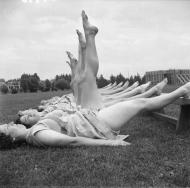
Women's sport matured in New Zealand after 1945. Mass participation in a period of prosperity, and increased mobility thanks to the now-common motor car, were crucial
Page 4 - Competitors and spectators
Sports participation and spectatorship were the only daytime leisure activities to rival home-centred pursuits such as gardening in this period. New Zealand's hosting of the
Page 5 - Changing trends
Professionals in an amateur
Page 6 - Further information
Links and books relating to Sport in New Zealand
1981 Springbok tour
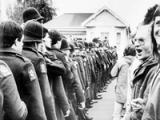
For 56 days in July, August and September 1981, New Zealanders were divided against each other in the largest civil disturbance seen since the 1951 waterfront dispute. The cause of this was the visit of the South African rugby team – the Springboks. Read the full article
Page 1 - The 1981 Springbok rugby tour
For 56 days in July, August and September 1981, New Zealanders were divided against each other in the largest civil disturbance seen since the 1951 waterfront dispute. The cause
Page 2 - All Blacks versus Springboks
Since rugby went professional in 1995 countries like Australia, England and France have challenged New Zealand and South Africa's claims to be the two powerhouses of world
Page 3 - Politics and sport
South Africa's apartheid policies and attitudes created obvious problems for New Zealand rugby, given the prominence of Māori in the
Page 4 - Stopping the 1973 tour
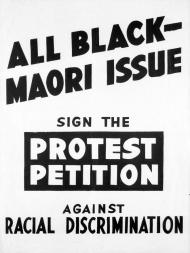
Keeping sport and politics separate was becoming increasingly difficult. In July 1969 HART (Halt All Racist Tours) was founded by University of Auckland students with the specific
Page 5 - Gleneagles Agreement
The All Blacks accepted an invitation to tour South Africa in 1976, when world attention was fixed on the republic because of the Soweto
Page 6 - Battle lines are drawn
Tour supporters were determined that the first Springbok visit to New Zealand since 1965 would not be spoiled. The anti-tour movement was equally determined to show its opposition
Page 7 - Tour diary
Select itinerary of the 1981 tour by the Springbok rugby
Page 8 - Impact
In Hamilton the protesters occupying the pitch had chanted 'The whole world is watching'. The same applied to New Zealand as a nation. Some believed the tour was an opportunity to
New Zealand cricket

Relive some of the highs and lows in the history of New Zealand's most popular summer team sport, cricket. Although the game has been played here since the 1830s, international success – especially against traditional rivals England and Australia – was a long time coming. Read the full article
Page 1 - Runs on the board
Relive some of the highs and lows in the history of New Zealand's most popular summer team sport, cricket. Although the game has been played here since the 1830s, international
1982 Football World Cup
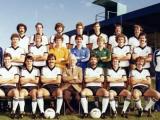
As New Zealand prepares for the 2010 FIFA World Cup, we look back to 1981-82, when football first seized the country’s imagination. After slogging through an epic qualifying schedule of 15 games, the 'All Whites' took on the best in the world at the 1982 finals in Spain. Read the full article
Page 1 - 1982 Football World Cup
As New Zealand prepares for the 2010 FIFA World Cup, we look back to 1981-82, when football first seized the country’s imagination. After slogging through an epic qualifying
Page 2 - Qualifying rounds
New Zealand’s long road to Spain began on Anzac Day 1981 with a hard-fought 3–3 draw with Australia at Mount Smart Stadium,
Page 3 - Playing in the finals
The New Zealanders were given little hope against their opposition in Group 6, which was dubbed the ‘pool of death’. This group included the cup favourites, Brazil, plus powerful
Page 4 - All Whites' results
Results from qualifying and finals games played by New
1987 Rugby World Cup
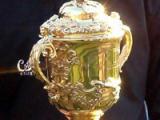
In a country where rugby became a surrogate for religion, hosting and then winning the first Rugby World Cup was a big deal. The story of how the tournament came about mixes the worlds of sport, politics and money. Read the full article
Page 1 - The 1987 Rugby World Cup
In a country where rugby became a surrogate for religion, hosting and then winning the first Rugby World Cup was a big deal. The story of how the tournament came about mixes the
Page 2 - Origins of international rugby
Before the 1987 Rugby World Cup and the professional era, rugby prided itself on extolling the virtues of friendly rivalry.
Page 3 - The long road to the cup
There were many obstacles along the road to the first Rugby World Cup.
Dominion status

On 26 September 1907 the colony of New Zealand ceased to exist. It became, instead, a dominion within the British Empire. Read the full article
Page 6 - New Zealand in 1907
What was New Zealand like when it became a
The 1960s
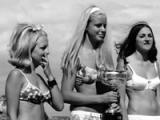
Five decades ago most Kiwis enjoyed a standard of living that was the envy of other nations. During the 1960s the arrival of TV and jet airliners shrank our world, and New Zealanders began to express themselves on a range of international issues, including opposition to the Vietnam War. Read the full article
Page 2 - Overview
Summary of what NZ was like in the 1960s, including our population, economy, popular culture, sporting achievements and
The 1970s

The 1970s were an era of economic and social change. Global oil shocks hit the New Zealand economy hard, while protests against the Vietnam War and nuclear testing continued. A new generation of activists raised questions about race relations, sexuality and the welfare system in New Zealand. Read the full article
Page 2 - Overview
Summary of what NZ was like in the 1970s, including our population, economy, popular culture, protest issues, politics and sporting
Women Together
Girls' Brigade New Zealand

Founded on the twin pillars of bible class and physical training, the Girls' Brigade's aim was 'The extension of Christ's kingdom among girls'. Read the full Women Together Essay
Marching New Zealand
From its founding, the main aims of the New Zealand Marching Association (NZMA) were to promote, encourage and control the sport of marching. Read the full Women Together Essay
Netball New Zealand

Outdoor basketball, now known as netball, was first played in New Zealand around the turn of the century. Read the full Women Together Essay
New Zealand Women's Cricket Council
Although women's cricket in New Zealand had not reached the same status as men's cricket by the early 1990s, it commanded a loyal following of immensely keen players, coaches and administrators Read the full Women Together Essay
New Zealand Women's Hockey Association
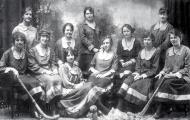
The first recorded game of hockey in New Zealand was played by a group of women in 1897 in Nelson. By the end of the century, most girls attending primary school played informal games of hockey among themselves. Read the full Women Together Essay
Women Climbing

Women Climbing was established to encourage women's participation in mountaineering, related alpine activities, and rock climbing Read the full Women Together Essay
Biographies
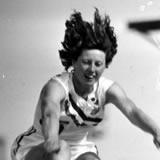
The sports writer Peter Heidenstrom rated Yvette Williams as his 'New Zealand Athlete of the Century'. There is no doubt that she was one of our greatest-ever athletes - and probably the most versatile.
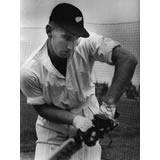
After debuting for the New Zealand cricket team against England in 1949 John Reid went on to play another 57 tests for his country, 34 of those as captain.
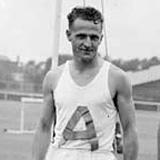
Arthur Lydiard was a marathon runner and athletics coach, whose most notable trainees included Olympic and Commonwealth Games champions.
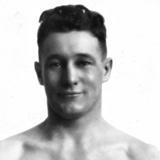
Ted Morgan was a boxer and a plumber, and the first New Zealander to win an individual Olympic gold medal.

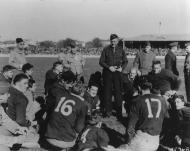
Main image: US servicemen playing rugby
A rugby game between US servicemen and a New Zealand team was described as 'mayhem'