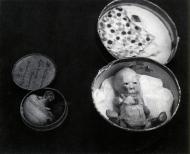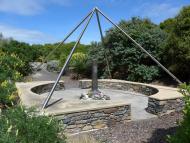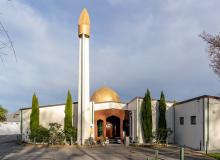
New Zealand’s Muslim community suffered an horrific attack when a self-proclaimed ‘white nationalist’ opened fire on worshippers at two mosques in Christchurch. Fifty people were killed and 41 wounded, one of whom died six weeks later.
Crime
Events In History
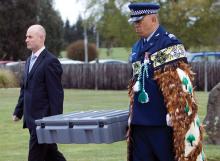
21 October 2008
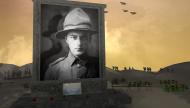
The 96 medals, including nine Victoria Crosses, two George Crosses and an Albert Medal, had been stolen from the Waiōuru museum early on the morning of 2 December 2007. The VCs included those awarded to Reginald Judson, Keith Elliott and Henry Laurent.
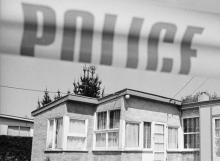
13 November 1990
The small seaside township of Aramoana, near Dunedin, was the scene of what was then the deadliest mass murder in New Zealand history.
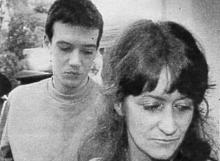
1 September 1987
Lorraine Cohen was sentenced to death by a Malaysian judge for heroin trafficking. On appeal her sentence was commuted to life imprisonment. The trial of Lorraine and her son Aaron, who was arrested at the same time, gained worldwide attention.

19 May 1987
An attempted hijacking of an Air New Zealand Boeing 747 at Nadi airport, Fiji, was thwarted when a member of the cabin crew struck the hijacker on the head with a whisky bottle.
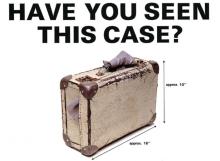
27 March 1984
Caretaker and unionist Ernie Abbott was killed on 27 March 1984 when a bomb exploded inside Trades’ Hall on Wellington’s Vivian St.
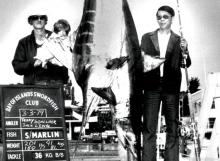
14 October 1979
The gangland murder of ‘Mr Asia’ (Marty Johnstone) led to the demise of one of New Zealand’s largest ever drug rings. Johnstone was killed on the orders of drug lord Terry Clark. Divers found his mutilated body in a flooded quarry in England.
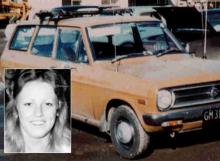
31 May 1975
Eighteen-year-old Mona Blades was last seen sitting in the back seat of an orange Datsun station wagon. Her body was never found and her disappearance has never been explained.
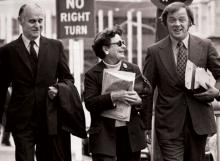
27 September 1974
On a rainy night in Wellington’s Aro St, the Security Intelligence Service (SIS) gatecrashed a meeting between William Sutch and Dimitri Razgovorov. They believed Sutch, a prominent economist and former senior public servant, was passing information to Razgovorov, a Soviet diplomat.
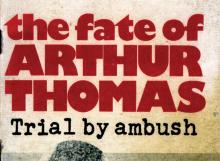
16 April 1973
Waikato farmer Arthur Allan Thomas was found guilty – for the second time – of the 1970 murder of his Pukekawa neighbours Harvey and Jeanette Crewe.
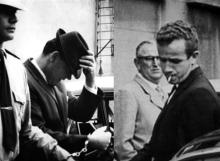
7 December 1963
The bullet-ridden bodies of Frederick George Walker and Kevin James Speight were found in a house on Bassett Rd in Remuera, Auckland. A team of 32 detectives began enquiries that led to the arrest of Ron Jorgensen and John Gillies.
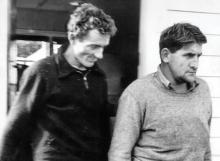
17 May 1962
George Wilder was a burglar who left apology and thank-you notes for his victims. He was at large for 65 days, becoming a folk hero in the process.
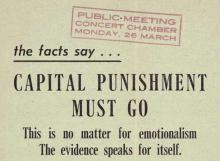
18 August 1955
Edward Te Whiu was one of the last four people executed in New Zealand. He admitted to killing 75-year-old widow Florence Smith, but his underprivileged background and childlike mental state led some to question the appropriateness of the death penalty.
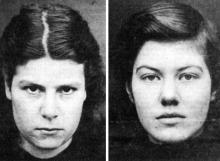
28 August 1954
Pauline Parker, aged 16, and Juliet Hulme, 15, were convicted of the murder of Pauline's mother Honora at Christchurch on 22 June. Their story was later the subject of Peter Jackson's acclaimed film, Heavenly creatures.
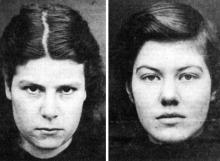
22 June 1954
Armed with a brick in a stocking, 16-year-old Pauline Parker and her best friend Juliet Hulme, 15, became two of New Zealand's most notorious female murderers when they killed Pauline's mother, Honorah, in Victoria Park, Christchurch.
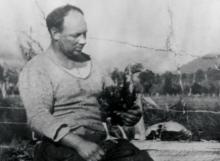
8 October 1941
Dairy farmer Stanley Graham killed seven people in Kōwhitirangi on the South Island’s West Coast.
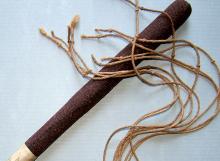
17 September 1941
As well as (temporarily) doing away with capital punishment for murder, the Crimes Amendment Act 1941 abolished judicial provision for flogging and whipping.
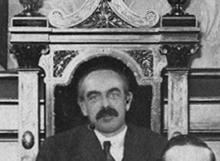
3 May 1929
Charles Ewing Mackay, the disgraced former mayor of Whanganui, was shot dead by Berlin police during May Day riots in the German capital.
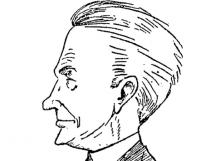
16 June 1923
A generation after the hanging of the infamous Minnie Dean, the murder trial of Daniel and Martha Cooper revealed that ‘baby farming’ and illegal abortion were still regarded as solutions to the problem of unwanted children in New Zealand.
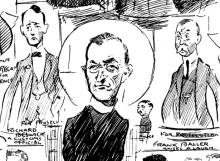
17 May 1922
James Liston, the assistant bishop of Auckland, was found not guilty of sedition following a high-profile court case.
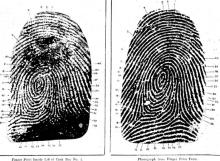
28 May 1920
In what may have been a world first for a capital crime, the conviction of Dennis Gunn was based almost entirely on fingerprint evidence.
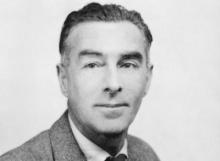
15 May 1920
The victim of the shooting, poet Walter D’Arcy Cresswell, alleged that Mayor Charles Mackay had made homosexual advances towards him in the mayoral office and panicked when faced with the prospect of public exposure.
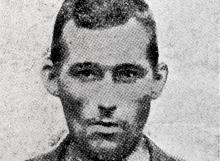
27 August 1911
Joseph Pawelka’s escape from Wellington’s Terrace Gaol was the last of three bold but seemingly effortless prison escapes he made over a period of 18 months.
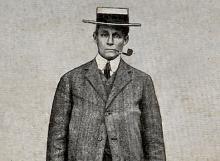
27 May 1909
The Tasmanian-born confidence trickster topped a long career impersonating well-off men for financial gain by claiming to be a sheepfarmer and the nephew of a bishop.
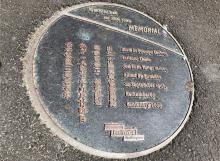
24 September 1905
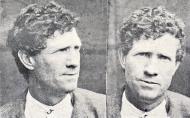
The murder of retired miner Joe Kum Yung by white supremacist Lionel Terry in Wellington’s Haining Street highlighted the hatred some felt towards New Zealand’s small but long-established Chinese community.
12 August 1895
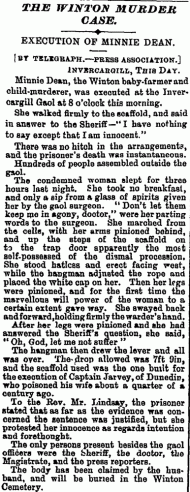
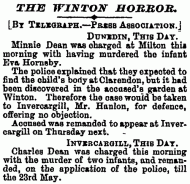
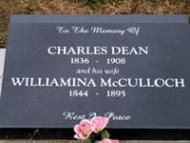
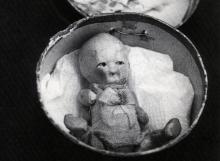
In 1895 Southland’s Williamina (Minnie) Dean became the first – and only – woman to be hanged in New Zealand. Her story exposed the stark realities of paid childcare and the lack of choice for many women in this period.
29 December 1880
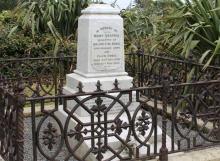
Tuhiata (Ngāti Ruanui, Tītahi; known as Tuhi) was hanged in Wellington for the murder of the artist Mary Dobie at Te Namu, near Ōpunake. He wrote to the governor of New Zealand a few days before his execution, asking that 'my bad companions, your children, beer, rum and other spirits die with me'.
16 November 1869
Hamiora Pere was hanged at the Terrace Gaol, Wellington. He is the only New Zealander to have been executed after being convicted of treason.
5 October 1866
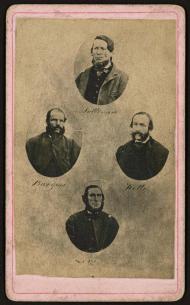
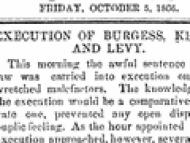
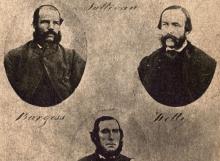
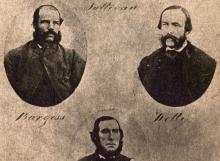
Burgess, Kelly and Levy were hanged. Joseph Sullivan, the fourth member of the 'Burgess gang', received a life sentence after turning Queen's evidence and helping convict his co-accused.
13 June 1866
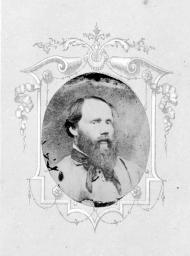
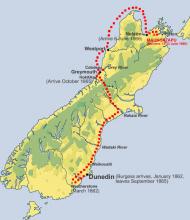
The murder of five men on the Maungatapu track, south-east of Nelson, in June 1866 shocked the colony.
22 January 1863
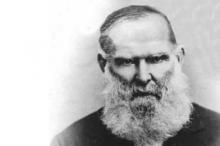
Slave trader Captain Thomas McGrath skippered the winning whaleboat in a race on Lambton Harbour which carried a £10 prize
4 March 1855
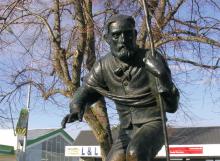
In March 1855, shepherds searching for 1000 missing sheep in the upper reaches of the Waitaki Valley apprehended suspected rustler James Mackenzie, one of New Zealand’s first and most enduring folk heroes.
18 April 1847
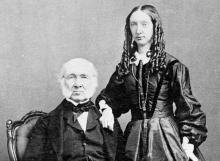
A Māori raid on the Gilfillan farm at Matarawa, just east of Whanganui, left four members of the family dead. The artist John Gilfillan and one of his daughters were severely wounded.
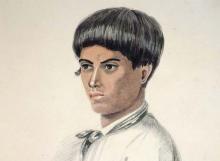
7 March 1842
17-year-old Maketū Wharetōtara was hanged in public, at the corner of Queen and Victoria streets in Auckland, for the 1841 murder of Elizabeth Roberton, her two children, and two other adults.
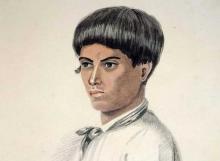
20 November 1841
Maketū Wharetōtara, the 17-year-old son of the Ngāpuhi chief Ruhe, killed five people at Motuarohia in the Bay of Islands. In March 1842 he became the first person to be legally executed in this country.
Articles
Children and adolescents, 1930-1960
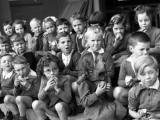
The need for the New Zealand government to promote national interests during the Depression and the Second World War created a renewed appreciation of the role of the family within society. Read the full article
Page 4 - The post-war family
As a consequence of the post-war economic boom there was increasing demand for consumer goods. The 1956 census revealed that more than half of New Zealand homes possessed
Homosexual law reform

The homosexual law reform campaign moved beyond the gay community to wider issues of human rights and discrimination. Extreme viewpoints ensured a lengthy and passionate debate before the Homosexual Law Reform Act was passed in July 1986. Read the full article
Page 2 - Setting the scene
There is a long history of opposition to sexual activity between men and an equally long history of legislation criminalising this
Page 3 - Birth of the gay movement
Social and political groups for homosexuals in New Zealand began with the Dorian Society in the 1960s. Within a decade, sexual and social liberation was in the
Page 4 - Reforming the law
To bring about change in the law, the gay movement needed a parliamentary champion. It found one in Labour MP Fran
Maungatapu murders, 1866
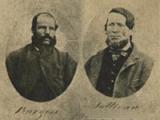
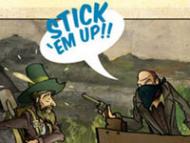
The 'Burgess gang' murdered and thieved their way around the South Island during the 1860s. Their most notorious crime was five killings over two days in June 1866, on the Maungatapu track near Nelson. Now you can read their story in a virtual comic book. Read the full article
Page 1 - The Maungatapu murders
The 'Burgess gang' murdered and thieved their way around the South Island during the 1860s. Their most notorious crime was five killings over two days in June 1866, on the
Page 2 - The Burgess gang
Richard Burgess, the gang's ringleader, originally known as Richard Hill, had been transported from London to Melbourne for theft at the age of 16, arriving in
Page 3 - The crimes
In May 1866 the Burgess gang embarked on a crime spree on the west coast of the South Island that would culminate in the murder of five men on the Maungatapu
Page 4 - Sullivan's betrayal
Joseph Sullivan claimed to have acted solely as a lookout for the gang, and told the police about the killing of James Battle, incriminating the
Page 5 - The trial
Deposition proceedings against the gang began on 2 August 1866 amid great excitement. Only now was it revealed that Sullivan had informed on the
Page 6 - The executions
Members of the Nelson Volunteers surrounded the gaol on the morning of the execution to ensure that 'good order was maintained' by the
Page 7 - Aftermath
When Joseph Sullivan returned to Hokitika to give evidence about the robbery of the Hokitika police camp and the murder of George Dobson, a mob called for him to be
Page 8 - Further information
Further reading and links to information about the Maungatapu
The death penalty

The first execution in New Zealand was that of a young Maori named Maketu, convicted at Auckland in 1842. Walter Bolton became the last to be executed when he was hanged at Mount Eden prison in 1957. In total there were 83 verified executions for murder and one for treason in New Zealand between these dates. Read the full article
Page 1 - Capital punishment in New Zealand
The first execution in New Zealand was that of a young Maori named Maketu, convicted at Auckland in 1842. Walter Bolton became the last to be executed when he was hanged at Mount
Page 2 - The first execution
On 7 March 1842 Maketu Wharetotara, the 17-year-old son of the Ngāpuhi chief Ruhe of Waimate, became the first person to be legally executed in New
Page 4 - The last execution
Walter Bolton was the last person to be executed in New Zealand when he was convicted of poisoning his wife, Beatrice. He was hanged for her murder at Mount Eden prison. The
Page 5 - List of executions
Between Maketu's execution in 1842 and Walter Bolton in 1957, there were a further 82
Capital punishment
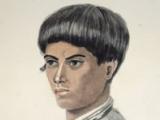
There were 83 verified executions for murder and one for treason in New Zealand between 1842 and 1957. The activities in this feature provide opportunities to discuss views around the death penalty. Read the full article
Baby farmers
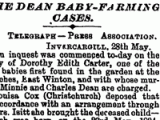
Baby farmers were paid caregivers who allegedly neglected children in their care, concealed their deaths or deliberately murdered the infants. The most notorious was Minnie Dean, who, in August 1895, became the first (and only) woman to be hanged for murder in New Zealand. Read the full article
Page 1 - Baby farmers
Baby farmers were paid caregivers who allegedly neglected children in their care, concealed their deaths or deliberately murdered the infants. The most notorious was Minnie Dean,
Page 2 - From childcare to baby farming
High-profile British and Australian court cases in the 1880s introduced New Zealanders to the sinister practices of baby farmers: paid caregivers who neglected children in their
Page 3 - Minnie Dean
In 1895 Southland's Williamina (Minnie) Dean became the first – and only – woman to be hanged in New Zealand. Her story exposed the stark realities of paid childcare and the lack
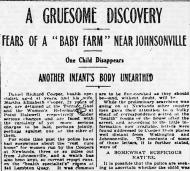
Page 4 - The Newlands baby farmers
The sensational murder trial of Daniel and Martha Cooper revealed that the difficulties facing single mothers and unwanted children continued well into the 20th
The 1920s
The 1920s was the decade that modern New Zealand came of age. Despite political and economic uncertainty, the country shrugged off the gloom of war to embrace the Jazz Age - an era of speed, power and glamour. Explore an overview of the decade and a year-by-year breakdown of key events. Read the full article
Page 6 - 1923 - key events
A selection of key New Zealand events from
Crime timeline
’New Zealand is often seen as a relatively safe country, but as this selection of notable crimes shows, the country has had its share of homicides, violence and other criminal acts. This timeline of more than 75 events can also be viewed as a map. Read the full article
Page 1 - New Zealand crime timeline
’New Zealand is often seen as a relatively safe country, but as this selection of notable crimes shows, the country has had its share of homicides, violence and other criminal
Page 2 - Further information
Links and books relating to NZ
Policing the war effort
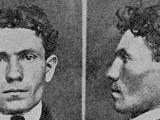
In 1914 the New Zealand government moved quickly to strengthen the rule of law and keep the country focused on winning the war Read the full article
New Zealanders who resisted the First World War
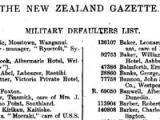
Lists of men who for a variety of reasons refused to serve in the First World War. Read the full article
Page 3 - Convictions for sedition 1915-18
The War Regulations Act 1914 allowed citizens to be arrested and charged with sedition for making ‘disloyal’ or ‘seditious’ statements, either verbally or in print. This page
Biographies
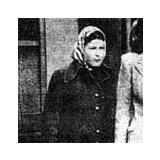
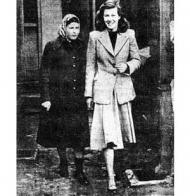
While attending Christchurch Girls' High School, Pauline Parker met Juliet Hulme and formed the friendship that was to radically change the course of both their lives. In 1954, the pair were convicted of murder in a sensational case.
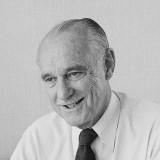
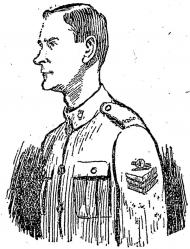
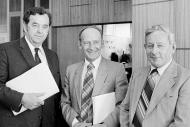
Even before his arrest, trial and acquittal on spy charges in the 1970s most New Zealanders had heard of Bill Sutch. He was a prominent citizen – known for his work as an economist, writer, public servant and diplomat.

Sydney Ross was perhaps the greatest political hoaxer in New Zealand’s history.

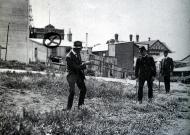
Main image: Shooting reconstruction, 1912 Waihi strike
Police photograph of a 'scene of crime' reconstruction of Frederick Evans' alleged shooting.