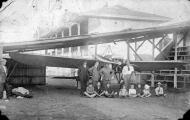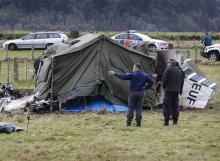
On 4 September 2010 a plane crashed soon after taking off from Fox Glacier airstrip, killing all nine people on board. The Walter Fletcher FU-24 was piloted by 33-year-old Chaminda Senadhira and carried four skydiving instructors and four skydivers who were touring the West Coast on a Kiwi Experience bus trip.
Aviation
Events In History
28 November 2008
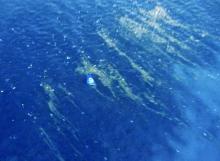
An Air NZ Airbus A320 crashed off the coast of France. All seven people on board, including five New Zealanders, were killed. It was 29 years to the day since Air NZ Flight TE901 had crashed in Antarctica, killing all 257 on board
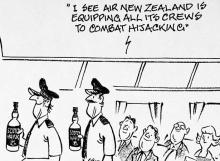
19 May 1987
An attempted hijacking of an Air New Zealand Boeing 747 at Nadi airport, Fiji, was thwarted when a member of the cabin crew struck the hijacker on the head with a whisky bottle.
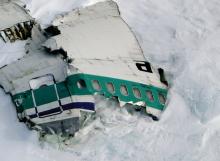
28 November 1979
On the morning of 28 November 1979, Air New Zealand Flight TE901 left Auckland for an 11-hour return sightseeing flight to Antarctica. At 12.49 p.m. (New Zealand Standard Time), the aircraft crashed into the lower slopes of Mt Erebus, killing all 257 passengers and crew.
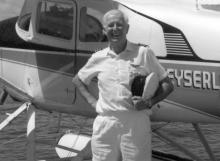
31 March 1967
Well-known Auckland aviator Fred Ladd illegally flew his Widgeon amphibian aircraft under the Auckland Harbour Bridge.
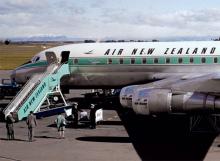
1 April 1965
New Zealand’s international airline, Tasman Empire Airways Limited (TEAL), was renamed Air New Zealand Limited.
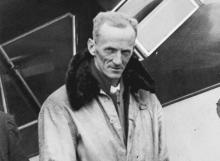
27 July 1963
Bolt was an outstanding figure in the development of commercial aviation in this country. Among his many achievements were taking New Zealand's first aerial photographs in 1912 and delivering its first official airmail in 1919
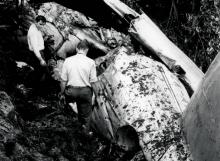
3 July 1963
The 1963 crash of a National Airways Corporation DC3, with the loss of all 23 people on board, remains the worst air accident within New Zealand.
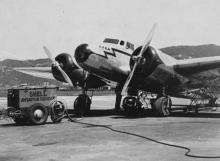
23 October 1948
The Lockheed Electra airliner ZK-AGK Kaka went missing in poor weather on a flight from Palmerston North to Hamilton. Searchers did not reach the wreckage for a week.
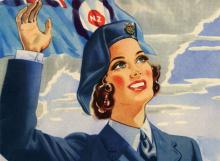
16 January 1941
The Women’s Auxiliary Air Force (WAAF) was formed to enable the Royal New Zealand Air Force to release more men for service overseas during the Second World War.
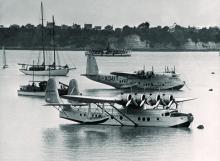
2 January 1938
The first official New Zealand airmail to the United States left Auckland for San Francisco on Pan American Airways’ Samoan Clipper.
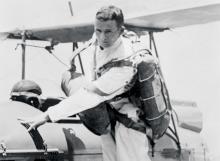
20 November 1937
George Sellars narrowly escaped serious injury when he was able to swing his parachute away from the glass roof of the Winter Gardens during the Farmers’ Christmas parade in Auckland.
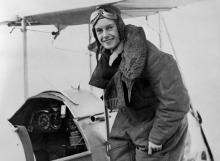
16 October 1936
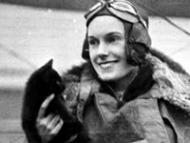
Jean Batten left for New Zealand from Kent, England, at 4.20 a.m. on 5 October 1936. Despite the early hour, a large media contingent gathered to see her off; Batten was already famous for her successful solo flights from England to Australia in May 1934, and to South America in November 1935.
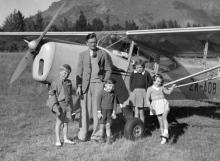
1 December 1933
Twenty-two-year-old pilot E.F. ('Teddy') Harvie and his female passenger, 18-year-old Trevor Hunter, set a record for the longest flight within New Zealand in a single day. They completed the 1880-km journey in 16 hours 10 minutes.
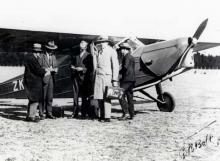
8 February 1931
All three people on board a Dominion Airlines Desoutter died when it crashed near Wairoa in northern Hawke’s Bay.
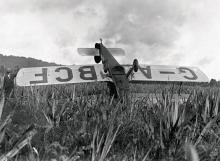
7 January 1931
Australian Guy Menzies’ flight from Sydney ended awkwardly when he crash-landed in a swamp at Harihari on the West Coast.
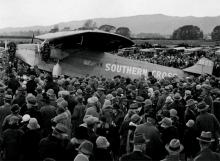
11 September 1928
Australian pilots Charles Kingsford Smith and Charles Ulm crossed the Tasman in a Fokker tri-motor named the Southern Cross, covering 2670 km in 14 hours 25 minutes.
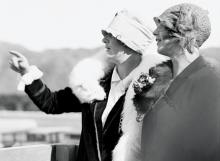
10 January 1928
New Zealanders George Hood and John Moncrieff disappeared during a ‘gallant if somewhat ill-organised attempt’ to complete the first flight across the Tasman Sea.
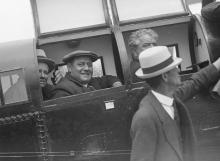
31 January 1921
Piloted by Captain Euan Dickson, the first flight of the Canterbury Aviation Company’s new airmail service left Christchurch at 8 a.m., carrying several hundred letters to Ashburton and Timaru into the teeth of a south-westerly gale.
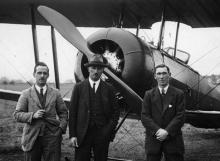
25 August 1920
Captain Euan Dickson completed the first air crossing of Cook Strait, flying a 110-hp Le Rhone Avro from Christchurch to Upper Hutt with the first air mail between the South and North Islands.
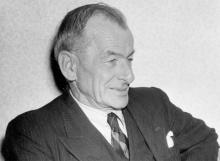
13 July 1916
Following the establishment of the New Zealand Flying School at Ōrākei on Auckland’s Waitematā Harbour, Vivian Walsh became the first pilot to obtain an aviator’s certificate in New Zealand (several New Zealanders had earlier qualified as pilots in England).
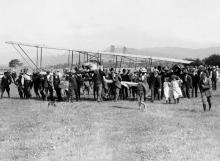
20 February 1914
J.W.H. Scotland flew a Caudron biplane from Invercargill to Gore, the first cross-country flight in New Zealand.
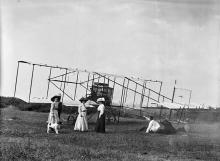
5 February 1911
Pioneering aviator Vivian Walsh took to the skies over South Auckland for the first successful flight in New Zealand.
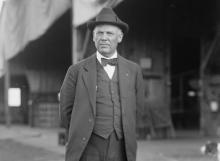
21 January 1889
‘Professor’ Thomas Baldwin landed safely by parachute from a balloon floating high above South Dunedin.
Articles
The 1920s
The 1920s was the decade that modern New Zealand came of age. Despite political and economic uncertainty, the country shrugged off the gloom of war to embrace the Jazz Age - an era of speed, power and glamour. Explore an overview of the decade and a year-by-year breakdown of key events. Read the full article
Page 11 - 1928 - key events
A selection of key New Zealand events from
The War in the air

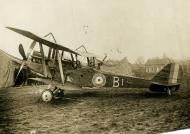
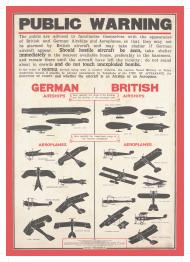
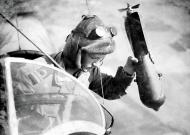
More than 800 New Zealanders served as air or ground crew in the war between 1914 and 1918, the vast majority of them in Europe. A handful saw action in Gallipoli and the Middle East. Read the full article
Page 1 - The War in the Air
More than 800 New Zealanders served as air or ground crew in the war between 1914 and 1918, the vast majority of them in Europe. A handful saw action in Gallipoli and the Middle
Page 2 - Early military aviation
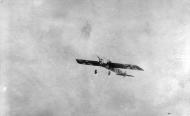
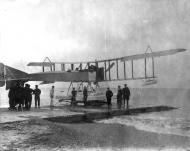
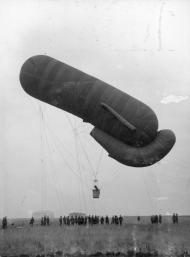
Military aviation began with balloons. Powered aircraft were first used for military purposes just before the outbreak of the First World
Page 3 - First World War developments
The remarkable story of how over four years a new and primitive weapon developed into a key element of
Page 4 - New Zealand's air war 1914-1918
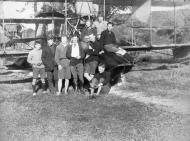
With no military flying corps in New Zealand, hundreds of adventurous young Kiwis joined British and Australian air services during the First World
Page 5 - Kiwi stories
Find out more about some of New Zealand's First World War
Page 6 - Further information
Books and links relating to the War in the Air during the First World
Biographies
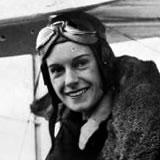
Jean Batten was New Zealand's greatest aviator, celebrated around the world for her heroic solo flights during the 1930s.
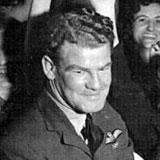
Alan Christopher Deere is possibly New Zealand’s most famous fighter pilot of the Second World War. He was also one of the luckiest – surviving several near death experiences to become one of the outstanding pilots of the Battle of Britain.
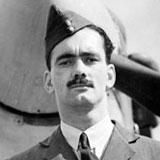
Wilfrid Greville Clouston was one of the first New Zealand air aces of the Second World War. He survived the Battle of Britain only to spend the majority of the war in a Japanese prisoner of war camp.
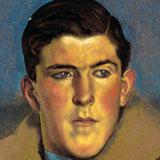
Michael James Herrick was one of five brothers to serve during the Second World War. He flew with distinction during the Battle of Britain and in the Pacific before being killed on air operations over Denmark.
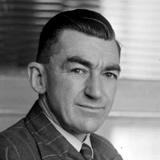
For much of his life Leo White successfully combined two of his passions, aviation and photography, starting Whites Aviation and finding his photographs decorating hundreds of New Zealand homes.
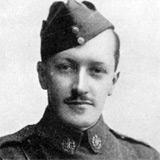
William Rhodes-Moorhouse, the first airman to receive a Victoria Cross, served as a mechanic and pilot in the early months of the First World War.
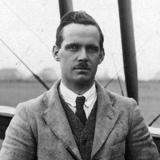
Euan Dickson was one of the most successful Allied bomber pilots of the First World War, flying 175 raids, and shooting down 14 enemy aircraft with the help of his observer.
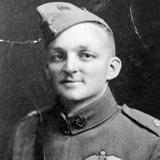
Perhaps New Zealand's most qualified and experienced First World War pilots, Clive Collett flew a total of about 1200 hours, many of them on experimental work, on at least 46 different types of aircraft.
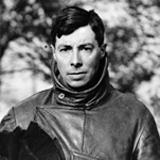
Wellington lawyer, Alfred de Bathe Brandon, was famed for his attacks on German Zeppelin airships during the First World War.
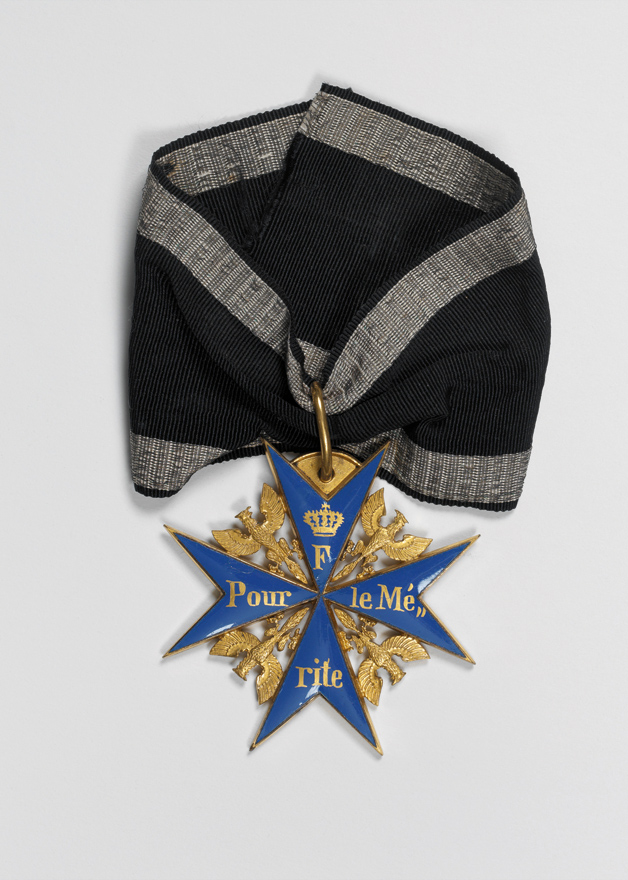
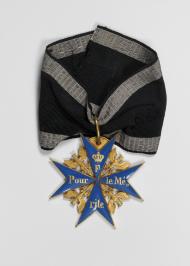
Main image: The Order of the Pour le Mérite
The Order of the Pour le Mérite, known informally as 'The Blue Max', was Germany's highest First World War military honour.