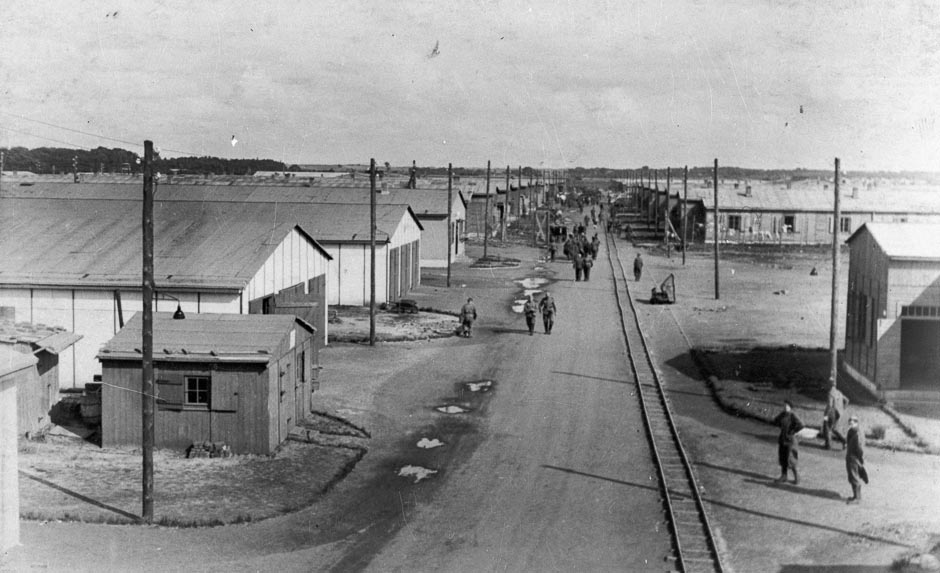
Camp environment
POW camps tended to be rather bleak places. They could not, for security reasons, have trees or other greenery, although many prisoners received seeds from the YMCA in Geneva and planted their own vegetable and flower gardens.
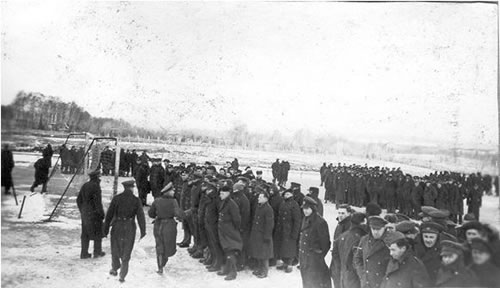
Morning parade
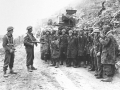
The length and frequency of parades ('roll calls') varied with the country in which the POW camp was situated and the person who ran the camp. It also depended on whether there had been escapes from the camp; if numbers did not add up. the men could be kept on parade for a very long time.
Filling in time
At some camps, provided they gave their word that they would not try to escape, POWs were allowed walks under guard outside the wire.

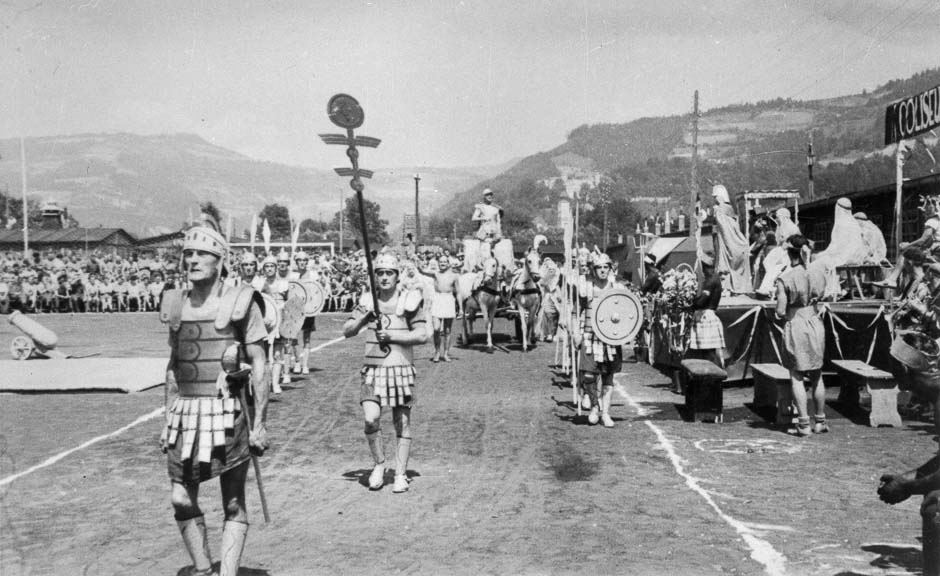
Roman holiday
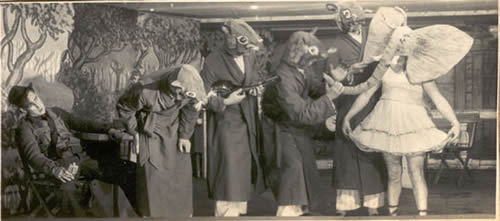
Prisoners of war seized any opportunity to pass the long hours of incarceration. Here POWs at Stalag XVIIIA parade in costumes made from material recycled from Red Cross parcels in a 'carnival' called Roman Holiday
Camp entertainment
'We had a marvellous section of actors and they put on plays ... we did shows by Wilde ... always something with a comic touch. The guys, they knew how important humour was ... we all liked to laugh, that was what kept us going I guess.... They'd put on a show for a week at a time, and they made all the stage props - marvellous stuff - just out of cardboard and packing cases and debris that was around the camp and they'd paint it up, it was lifelike, marvellous! And the shows were really good.'
'Stage performances face many more obstacles in the primitive atmosphere of a prisoner of war camp, where costumes and properties must be improvised, female characters impersonated, and lighting, sound effects, scenery and all other requisites devised. That these obstacles were overcome was a major triumph.'
Interlude: The story of British Prisoners of War in Stammlager VIIIA at Görlitz in Lower Silesia, Germany, London, 1945, p. 25
Hear George Trundle talk about how POWs kept themselves entertained.
Sport
When they were fit enough – in other words, when the Red Cross food parcels were in regular supply and they had enough to eat – POWs enjoyed participating in many different sports. Inter-country rugby matches were a highlight, but most sports were played at one time or another.

Camp library
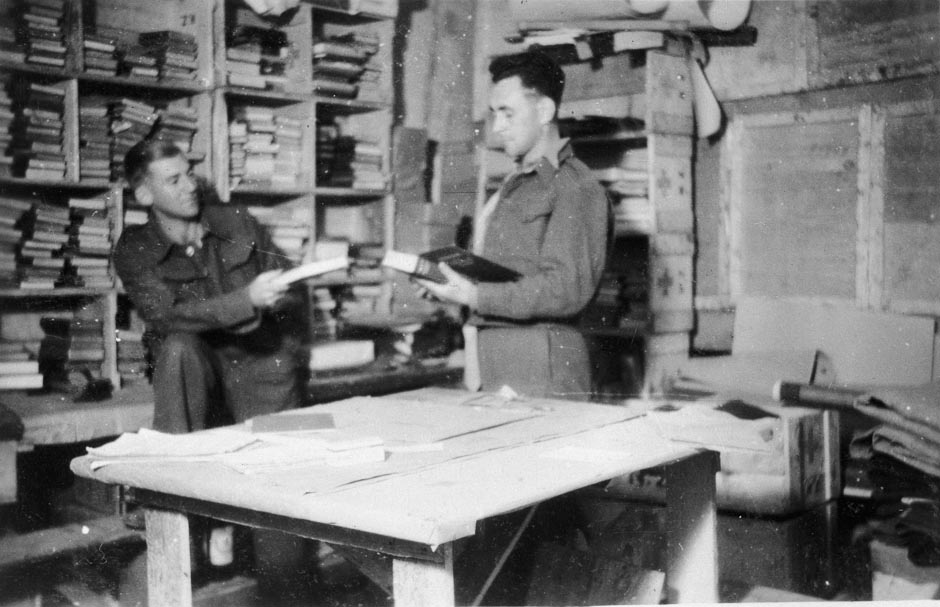
Many prison camps built up large libraries, thanks in part to the YMCA in Geneva, which sent parcels of books (and other recreational equipment) to POWs. Many took the opportunity to study – degrees, for example, were available through the University of London.
Food parcels
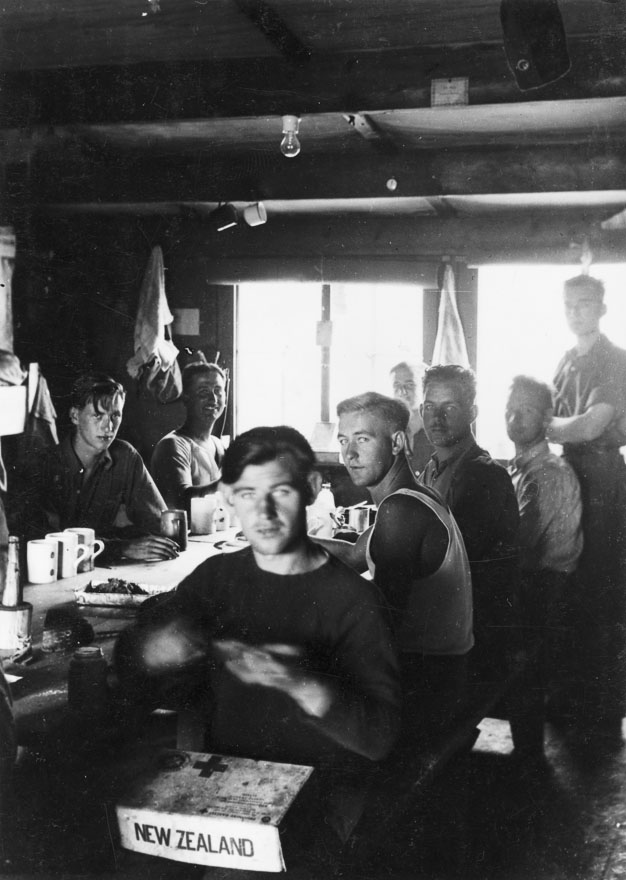
Because there was so little of it, food played a very important part in a POW’s life. The International Committee of the Red Cross in Geneva provided food parcels to POWs from those countries which were signatories to the 1929 Geneva Convention. Here men at Stalag 383 prepare their lunch using food from parcels.
Hear William Duncan talk about Red Cross parcels and rations
Mess time
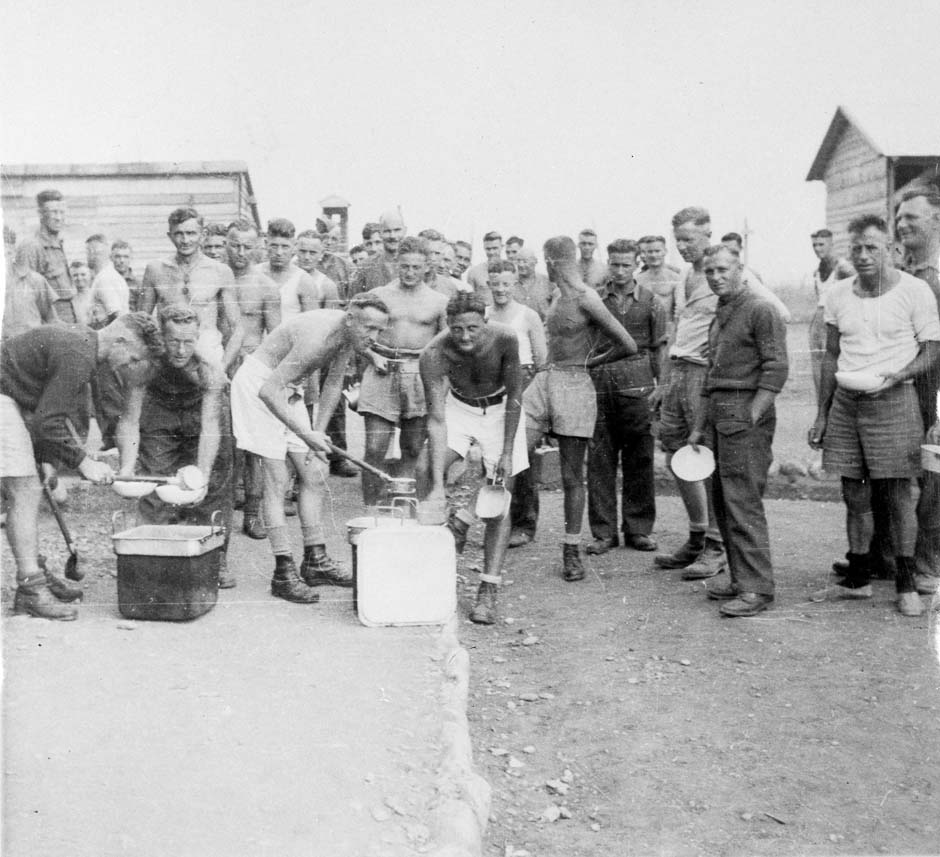
POWs at Campo PG57 in Italy line up for food. It is being cooked on a blower, a nifty invention made out of items recycled from Red Cross food parcels which POWs used to heat up and cook food. See also Camp Cooking article
Hear John Parfitt talk about 'camp cookers'
Working parties
If POWs were not officers or NCOs, they were likely to be sent out to work on what was called in Germany an arbeitskommando. POWs in Italian POW camps also worked, as did prisoners of the Japanese, most notoriously on the Burma Railway. Conditions for workers in Japanese POW camps were extremely bad and many people died as a result of inhumane treatment.

Secret radios
POWs on working parties could often get information about the outside world and the course of the war from civilians with whom they worked. While in camp, however, they relied on secret radios for news, particularly from the BBC in London. Men would listen to the radio and then go from hut to hut in the camp to let their fellow POWs know the latest news.
Hear Peter Howden talk about secret radios