Ethnicity
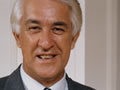
Sir Paul Reeves
From 1840 until 1972, New Zealand's governors and governors-general were British. But the term covers a mix of origins. Of the 16 governors appointed from Hobson in 1840 to Liverpool in 1912, five (Hobson, Bowen, Robinson, Ranfurly and Plunket) were Anglo-Irish, three (Sir James Fergusson, Gordon and Glasgow) were Scots and eight (FitzRoy, Grey, Gore Browne, Normanby, Jervois, Onslow, Islington and Liverpool) were English. The Scots and Anglo-Irish were 50% of the appointees even though they made up only 23% of the population of the United Kingdom in 1901.
The non-English influence diminished in the 10 governors-general appointed from Lord Jellicoe in 1920 to Sir Arthur Porritt in 1967. Lord Galway was the sole Anglo-Irishman, and Sir Charles and Sir Bernard Fergusson were the only Scots; Jellicoe, Bledisloe, Newall, Freyberg, Norrie, Cobham and the Whanganui-born Porritt were all Englishmen.
The Fergusson 'family racket'
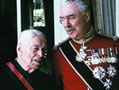
Sir Bernard Fergusson (1962–7) joked that governing New Zealand was 'the family racket'. His grandfather, Sir James, was governor in 1873–4. His father, Sir Charles, was governor-general between 1924 and 1930. Sir Bernard's mother, Alice, also had viceregal connections, living at Government House when her father, Lord Glasgow, was governor from 1892 to 1896. The Fergusson–New Zealand link was renewed in 2006 when George (Geordie) Fergusson, Sir Bernard's son, became British High Commissioner to New Zealand.
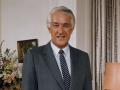
New Zealand residents have held the post since 1972. Sir Paul Reeves was of Māori (Te Āti Awa) and English descent. Anand Satyanand (appointed 2006), born in Auckland, was of Indian descent, making him the first governor-general of Asian ethnicity. He was also the first non-titled occupant of Government House in 150 years and the first Roman Catholic to hold the position.
Girls can do anything!

From the 1980s, Labour governments used the governor-generalship to emphasise New Zealand's growing racial and cultural diversity. In 1985 Sir Paul Reeves was appointed. In 1990 Dame Catherine Tizard became the first female governor-general. Some conservative members of all-male private clubs expressed concern, but Tizard found that gender was not a major issue or a bar to her exercising her viceregal duties. 'One man objected to the appointment because I was a woman – he didn't seem to remember who it is that is the GG's boss,' she joked in 1990, referring to the Queen. In 2000, when Labour next chose a governor-general, it appointed another woman, judge Dame Silvia Cartwright. National appointed Dame Patsy Reddy in 2016 and Labour chose Dame Cindy Kiro in 2021.
Youngest and oldest
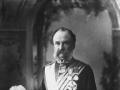
George Grey (1845–53 and 1861–8) was New Zealand's youngest governor, just 33 when he arrived here for the first time. The others under 40 were Robert FitzRoy (1843–5) and Lord Onslow (1889–92).
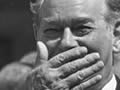
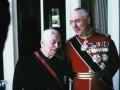
Sir Keith Holyoake (1977–80) was the oldest governor-general, and he was appointed for a three-year term on account of his age (73) and health. He suffered minor strokes and a heart attack while in office and used a walking stick in private. His travel was broken into short trips, and staff made provision for the 'discreet movement of Their Excellencies by vehicle as close as possible to their rooms' if their suite was more than 50 metres away from a hotel’s main entrance.
Age
In the early days, when travel was arduous – by sailing ship, canoe, on foot or on horseback – governing was a young man's job. Hobson, who died in office, was 47; FitzRoy was 38 and Grey 33 when given the job.
The professional governors between 1855 and 1889 were somewhat older; this is not surprising, given the time it took them to work their way up to a 'great government' such as New Zealand. They ranged in age from Sir James Fergusson, 41, to Sir William Jervois, 62. On average the six men sent out here during this period were 52 years old on appointment.
The aristocratic governors were relatively young, ranging in age from 36-year-old Onslow to 59-year-old Glasgow, with an average age of 45 on appointment. The governors-general, mainly retired warriors, from Lord Jellicoe (1920–4) to Sir Arthur Porritt (1967–72), were considerably older, with an average age of 57 when given the job.
The New Zealanders appointed to Government House since 1972 have been slightly older than their British predecessors, with an average age of 61 on appointment.