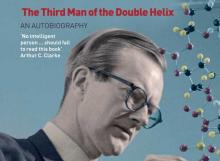
New Zealand-born Maurice Wilkins and his colleagues James Watson and Francis Crick shared the prize for their investigation of the structure of deoxyribonucleic acid (DNA), the genetic molecule found in all organisms.
Science
Events In History

31 August 1926
Parliament passed the Scientific and Industrial Research Act 1926, which established the DSIR to foster scientific research beneficial to the New Zealand economy.
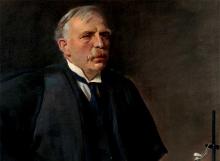
10 December 1908
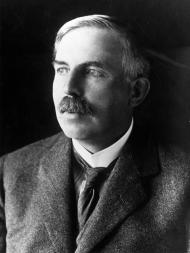
Ernest Rutherford’s discoveries about the nature of atoms shaped modern science and paved the way for nuclear physics. Albert Einstein called him a ‘second Newton’ who had ‘tunnelled into the very material of God’.
Articles
Scenery preservation 1903-1953
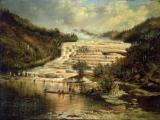
Premier Richard Seddon outlined his vision for 'God's own country' in 1903 as he steered the Scenery Preservation Act through Parliament. This act was an important landmark in preserving New Zealand's natural and historic heritage. Read the full article
Page 2 - Scientific origins
European settlers in New Zealand struggled to rework the indigenous
The 1920s

The 1920s was the decade that modern New Zealand came of age. Despite political and economic uncertainty, the country shrugged off the gloom of war to embrace the Jazz Age - an era of speed, power and glamour. Explore an overview of the decade and a year-by-year breakdown of key events. Read the full article
Page 9 - 1926 - key events
A selection of key New Zealand events from
Women Together
Association of Home Science Alumnae of New Zealand

The Association of Home Science Alumnae of New Zealand provided home science graduates and diploma holders, home economics teachers and interested others with a professional, educational and social forum for nearly 70 years. Read the full Women Together Essay
Women in Science Education
Women in Science Education was set up in 1985 in response to a growing concern among women science educators at the low participation rates of girls and women in science education. Read the full Women Together Essay
Biographies
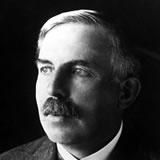
Rutherford's discoveries about the nature of atoms shaped modern science and paved the way for nuclear physics. Einstein referred to him as the 'second Newton' who ‘tunneled into the very material of God’.
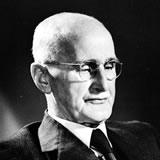
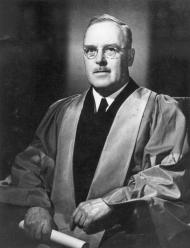
'Hello My Dearie' became one of the first songs ever to hit the New Zealand airwaves when physics professor Robert Jack broadcast New Zealand’s first radio programme on 17 November 1921.
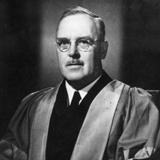
Ernest Marsden assisted with research leading to the nuclear model of the atom, and became a lecturer and a leading science administrator in 20th-century New Zealand.

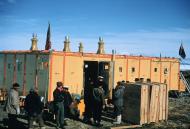
Main image: Ed Hillary describes geological surveys
1958 clip of Edmund Hillary discussing the geological surveys undertaken by the Ross Sea Party.