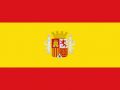
In April 1931 King Alfonso XIII left Spain after republican candidates won the most seats in local and municipal elections. A republican-socialist government was formed under the leadership of Manuel Azaña. A new constitution introduced sweeping social reforms and reduced the power of the nobility and the Roman Catholic Church. Land, banks and railways were nationalised.
War of isms
Fascism is a political belief or movement that emphases the nation (and often race) above the individual. It stands for a centralised autocratic government headed by a dictatorial leader. There is an acceptance of strict social and economic regimentation. To protect the state it can be necessary to forcibly suppress any opposition.
Republicanism seeks government where leadership is not based on hereditary rights, as is the case with a monarchy, but is determined by democratic elections. Constitutional law is an important means of limiting the state's power over its citizens.
These weren't the only isms at play in Spain as adherents of communism, anarcho-syndicalism and various other political ideologies fought among themselves, severely hampering the republican cause.
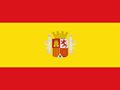
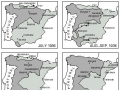
The powerful conservative right opposed the new constitution. On 17 July 1936 a pro-fascist military group led by Generals José Sanjurjo, Francisco Franco and Emilio Mola attempted to overthrow the democratically elected government. While the initial coup failed to seize power, the nationalists quickly secured control of much of the rural heartland and smaller cities. The republican government continued to enjoy strong support in the main industrial regions and largest cities. A vicious civil war erupted.
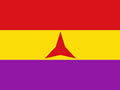
Franco soon became the leader of the nationalists. He received strong moral and practical support from the fascist leaders Adolf Hitler and Benito Mussolini. Germany and Italy eventually sent in troops, artillery and aircraft. The republican government received official support and war materiel from the Soviet Union. In addition, 60,000 anti-fascist volunteers from all over the world joined the International Brigades that came to fight for the republican cause.
The League of Nations (of which New Zealand was a member) chose to remain neutral during the war. A Non-Intervention Committee was set up to stop personnel and materiel reaching the warring parties. This was a joint British-French initiative designed to prevent the conflict escalating into a wider European war. It achieved virtually nothing, as Germany, Italy and the Soviet Union continued to pour resources into the war. In an attempt to enforce its non-interventionist position the League placed a ban on foreign nationals serving in Spain as ‘volunteers’.
Over the next three years hundreds of thousands died as the two sides fought bitterly for control of Spain. The republican war effort was often hamstrung by bitter internal disputes between the various political factions that were supposed to be supporting it – in May 1937 communist and anarchist militias fought each other in a week-long battle in Barcelona. In the end this chronic instability on the republican side proved fatal as by contrast, Franco's forces continued to gain in strength, confidence and military effectiveness as the war went on.
Franco proclaimed final victory in a radio speech on 1 April 1939, when the last Republican forces surrendered. He fused all right-wing parties into the state party and established a dictatorship which survived until his death in 1975.