Māori language in Parliament
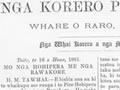
Te reo (the Māori language) came into Parliament with the first Māori members of Parliament (MPs), who were elected in 1868. Speaking in Māori has been a vexed issue for both those who speak the language and those who do not. Many of the early Māori MPs had little English. Some of them preferred to speak in Māori, and some wanted to make a point by doing so. One mid-20th-century MP, Tāpihana (Dobson) Paraire Paikea, spoke in Māori to send messages to his wife, who was listening on the radio.
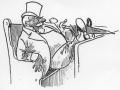
Providing interpreters was one answer. There were three by the 1880s, and they were kept more than busy: translating the Māori members' speeches in the chamber, translating hundreds of petitions from Māori and all bills and parliamentary papers into Māori, attending the Native Affairs and other committees and acting as interpreters when Pākehā members dealt with Māori. The job was tough, especially when the MPs used colourful language and the interpreters had to try to soften the words in the English version. One Māori MP refused to have his words changed, so he repeated the offending words several times and then knocked the interpreter over the adjacent seat.
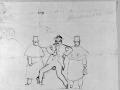
Things came to a head in 1913, when Apirana Ngata (initially as a joke) obstructed business by speaking in Māori without an interpreter present. Fellow MP Māui Pōmare told him not to be silly, while Prime Minister Bill Massey asserted that Māori who were fluent in English should be compelled to use it in the House. The Speaker ruled that Ngata had the right to ask for an interpreter, but should not speak in Māori in the absence of one.
Te reo became more of an issue when the Māori MPs associated with the Rātana movement who were elected in the 1930s wanted to speak in Māori. They were allowed to do so, provided they spoke briefly and gave an immediate translation.
After Parliament made Māori an official language in 1987, and MPs could speak in English or Māori. In 1990 Koro Wetere caused an uproar by replying to questions in the House in Māori and refusing to supply an immediate translation. The greater use of Māori at formal occasions during the 1990s increased the need for a translation service, and from 1997, for the first time in many decades, an interpreter was made available.