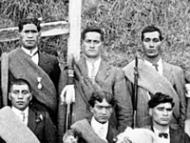
Ngāti Porou leader and politician Apirana Ngata is one of New Zealand's best-known figures. Working through traditional tribal structures and as MP for Eastern Māori, he worked to strengthen Māori communities and revive Māori culture.
Apirana Ngata
Personal details
Full Name:
Apirana Turupa Ngata
Lifetime:
3 Jul 1874 – 14 Jul 1950
Biography
Events In History
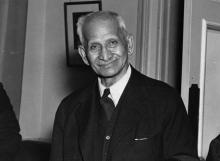
14 July 1950
Ngata had contributed hugely to the revival of the Māori people in the early 20th century. His intelligence, tact, persistence and political skill helped him promote Māori culture and identity.
Articles
Scenery preservation 1903-1953
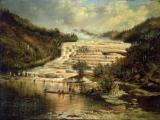
Premier Richard Seddon outlined his vision for 'God's own country' in 1903 as he steered the Scenery Preservation Act through Parliament. This act was an important landmark in preserving New Zealand's natural and historic heritage. Read the full article
Page 7 - Māori and scenic reserves
Initially Māori had mixed feelings about the Scenery Preservation Act. The Member of Parliament for Northern Maori, Hōne Heke Ngāpua, welcomed it as a way to protect tōtara and
Waitangi Day
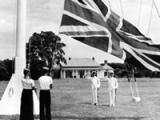
Every year on 6 February, New Zealand marks the signing of the Treaty of Waitangi in 1840. For most people, Waitangi Day is a holiday; for many, and especially for Māori, it is a time for reflecting on the Treaty and its place in modern New Zealand. Read the full article
Page 3 - Waitangi Day 1940s–1950s
From the 1940s the Treaty and Waitangi began to find a place in the national consciousness. For most New Zealanders, they were of historical interest
Māori and the First World War

Māori reactions to serving in the First World War largely reflected iwi experiences of British actions in the 19th century. Read the full article
Page 2 - White man's war?
Imperial policy initially doubted the wisdom of 'native' troops fighting a 'white man's
The Treaty in practice
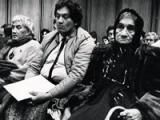
Amalgamating Māori into colonial settler society was a key part of British policy in New Zealand after 1840. Economic and social change, along with land-purchase programmes, were central to this process. Read the full article
Page 4 - Shared issues and approaches
Prospects for Māori looked bleak at the beginning of the 20th century. A shared sense of grievance emerged, and new leaders paved the way for new approaches to the
Treaty timeline
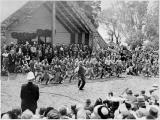
See some of the key events between 1800 and 1849 relating to the Treaty of Waitangi. Read the full article
Page 3 - Treaty events 1900-49
Discover some of the key events between 1900 and 1949 relating to the Treaty of
Parliament's people
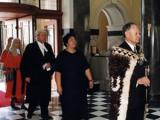
Today there are usually between 120 and 123 MPs in New Zealand's Parliament, which is a far cry from the 37 who met for the first time in Auckland in 1854. Read the full article
Page 3 - Māori MPs
Leaders of Māori society have represented their people in the House, including Māui Pōmare, James Carroll, Matiu Rata and, most famously, Apirana
Parliament's culture and traditions
Explore Parliament's rich history and its colourful culture and traditions. Read the full article
Page 6 - Parliament in te reo
Te reo (the Māori language) came into Parliament with the first Māori MPs, who were elected in
Māori and the Second World War

Despite some opposition, nearly 16,000 Māori enlisted for service during the Second World War. By 1945, 28 (Maori) Battalion had became one of New Zealand's most celebrated and decorated units. But Māori contributed to the war effort in many different ways, at home and overseas. Read the full article
Page 1 - Māori and the Second World War
Despite some opposition, nearly 16,000 Māori enlisted for service during the Second World War. By 1945, 28 (Maori) Battalion had became one of New Zealand's most celebrated and
Māori in the NZEF
More than 2000 Maori served in the Māori Contingent and Pioneer Battalion during the First World War Read the full article
Page 2 - Maori Contingent at Gallipoli
The first Maori Contingent sailed from Wellington aboard the SS Warrimoo in February 1915. The contingent served on the Gallipoli
Page 3 - Pioneer Battalion
In early 1916 the Maori Contingent ceased to exist and was replaced by the New Zealand Pioneer
Related Biographies
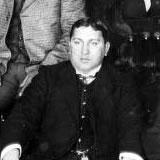
Hēnare Balneavis became private secretary to Apirana Ngata, and continued in this role when Ngata became Native Minister. He went on to serve as private secretary to a number of Native Ministers, including W.H. Herries, Gordon Coates, George Forbes and M.J. Savage.
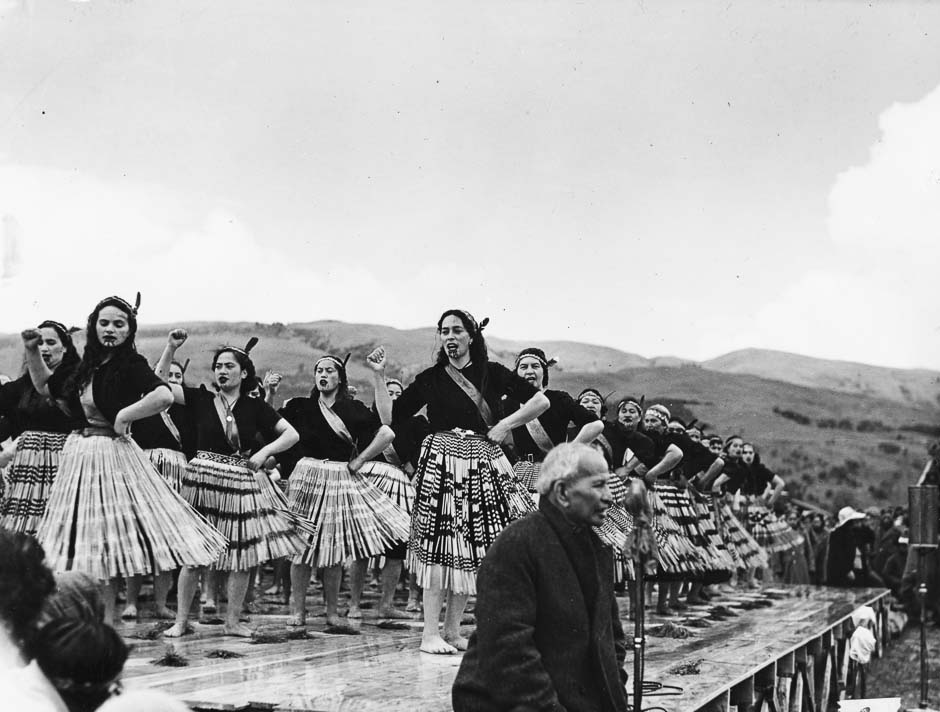
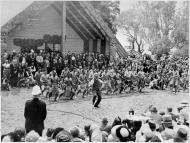
Women perform a waiata during the hui in Ruatoria to award the Victoria Cross to Te Moananui-a-Kiwa Ngārimu, October 1943.