The government announced that it had agreed to the Waitangi Tribunal’s recommendation that Takaparawhā (Bastion Point) on the southern shore of Auckland’s Waitematā Harbour be returned to local iwi Ngāti Whātua.
Bastion Point
Events In History
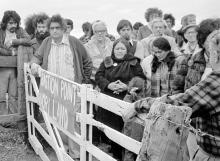
25 May 1978
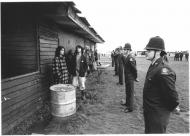
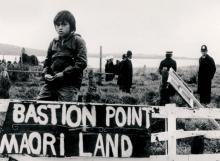
Police and army personal removed 222 people from Bastion Point, Auckland, ending an occupation that had begun in January 1977. Ngāti Whātua were protesting against the loss of land in the Ōrakei Block, which had once been declared ‘absolutely inalienable’.
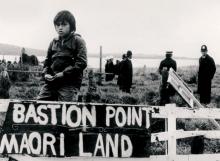
5 January 1977
Led by Joe Hawke, the Ōrākei Māori Action Committee occupied Takaparawhā (Bastion Point reserve), a promontory overlooking Auckland’s Waitematā Harbour.
Articles
The Treaty in practice
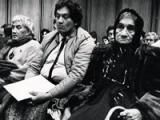
Amalgamating Māori into colonial settler society was a key part of British policy in New Zealand after 1840. Economic and social change, along with land-purchase programmes, were central to this process. Read the full article
Page 6 - The Treaty debated
Modern New Zealand has debated the Treaty of Waitangi as never before. Understanding, reconciliation, protest and confrontation have been part of this
Treaty timeline
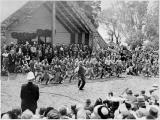
See some of the key events between 1800 and 1849 relating to the Treaty of Waitangi. Read the full article
Page 4 - Treaty events since 1950
Learn about some of the key events from 1950 onwards relating to the Treaty of
Biographies

Michael Joseph Savage, New Zealand’s first Labour PM, was probably also it's best-loved. His avuncular image hung in the homes of the Labour faithful for decades.
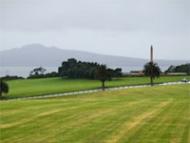
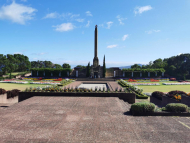
This promontory above Tāmaki Drive has come to symbolise Māori land issues. It was given to the Crown by Ngāti Whātua as a defence site during the Russian scare of 1885. In 1977–78 a 506-day protest against a proposed Crown sale was held there. The obelisk in Savage Memorial Park on Bastion Point commemorates the burial place of Michael Joseph Savage, first Labour prime minister, who died in 1940.
Meaning of place name
Earlier known as Fort Bastion (named in 1840 by the surveyor Owen Stanley), which once guarded the entrance to Waitematā Harbour. Māori name: Takaparawhau