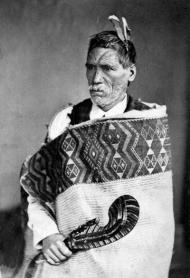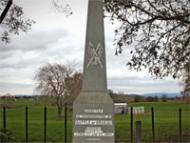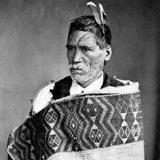
A famous Ngāti Maniapoto warrior, leader and supporter of the King Movement who's exploits in the Waikato War have been immortalised in book and film.
Rewi Maniapoto
Personal details
Full Name:
Rewi Manga Maniapoto
Lifetime:
? – 29 Jun 1894
Biography
Events In History
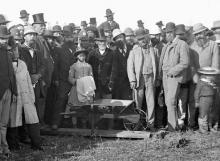
15 April 1885
Politicians and Māori leaders ceremonially turned the ‘first sod’ of the central section of the main trunk line – a project that would take 23 years to complete.
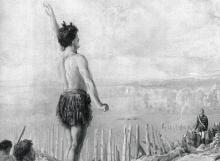
31 March 1864
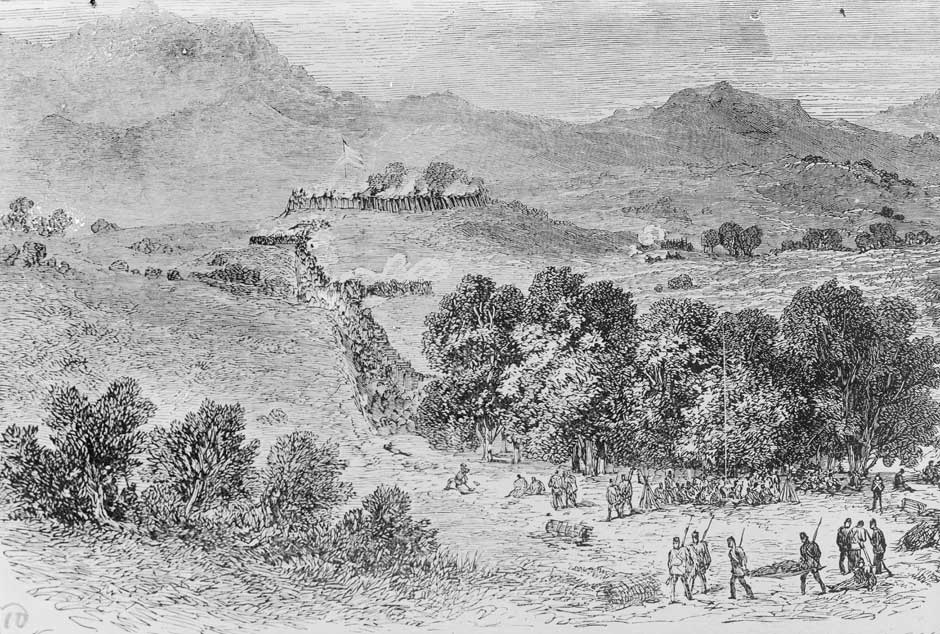
The last battle of the Waikato War began when the spearhead of a strong British force charged an apparently weak Māori position at Ōrākau, south-east of Te Awamutu. After two frontal assaults failed, the British besieged the pā.
Articles
Māori King movement - 1860-94

The reign of King Tāwhiao was dominated by the Waikato War and the fallout from it. Read the full article
Page 3 - Response to war
The invasion of Waikato unified the factions within the Kīngitanga, whose forces won some victories despite being at an overwhelming disadvantage in terms of manpower and
The 1920s

The 1920s was the decade that modern New Zealand came of age. Despite political and economic uncertainty, the country shrugged off the gloom of war to embrace the Jazz Age - an era of speed, power and glamour. Explore an overview of the decade and a year-by-year breakdown of key events. Read the full article
Page 8 - 1925 - key events
A selection of key New Zealand events from
War in Waikato

After fighting broke out again in Taranaki in early 1863, Governor George Grey turned his attention to the region he saw as the root of his problems with Māori: Waikato, the heartland of the anti-landselling King Movement. Grey vowed to ‘dig around’ the Kīngitanga until it fell. Read the full article
Page 6 - The Battle of Ōrākau
James Belich argues that the British victory at Ōrākau was also their ‘cruellest disappointment of the entire war’. Chris Pugsley, on the other hand, sees Ōrākau as the ‘decisive