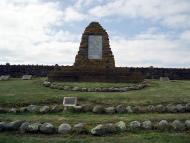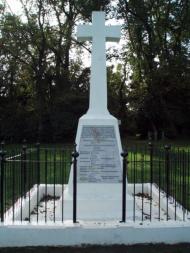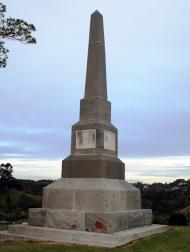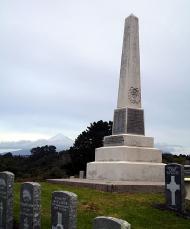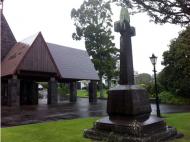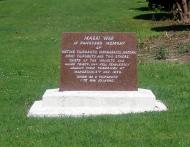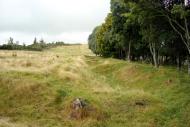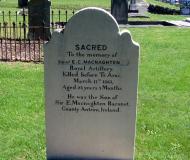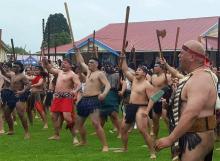
The pōwhiri for Te Pūtake o Te Riri, He Rā Maumahara, an annual commemoration of Ngā Pakanga o Aotearoa (the New Zealand Wars), was hosted by Taranaki iwi at Ōwae Marae in Waitara.
Taranaki
Events In History
18 March 1983
In a landmark ruling, the Waitangi Tribunal found that the Crown’s obligations under Te Tiriti o Waitangi included a duty to protect Māori fishing grounds.
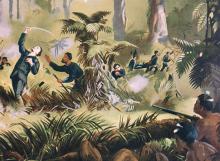
7 September 1868
Gustavus von Tempsky was killed during an assault on Tītokowaru's south Taranaki pā. His exploits during the New Zealand Wars had made the Prussian soldier of fortune a folk hero for many European settlers.
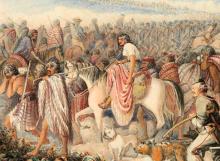
24 January 1865
Lieutenant-General Duncan Cameron set out on what was to prove to be his final campaign in New Zealand with more than a thousand troops under his command.
Articles
New Zealand's 19th-century wars

War changed the face of New Zealand in the 19th century. Many thousands of Māori died in the intertribal Musket Wars between the 1810s and the 1830s. There were more deaths during the New Zealand Wars of the 1840s to 1870s between some Māori and the Crown, which for many tribes had dire consequences. Read the full article
Page 5 - End of the New Zealand Wars
The New Zealand Wars ended in 1872. European settlers prevailed through weight of numbers and economic power. By 1900, New Zealand was a settler society, with Māori pushed out to
A frontier of chaos?

In the years before the signing of the Treaty of Waitangi, relations between Māori and Europeans were marred by a number of high-profile incidents. Read the full article
Page 6 - The Harriet affair
The rescue of Betty Guard and her two children from Ngāti Ruanui in the spring of 1834 involved the first use of British troops on New Zealand soil.
War in Taranaki 1860-63

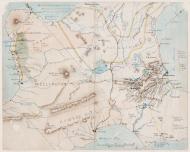
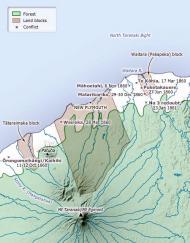
In March 1860 war broke out between Europeans and Māori in Taranaki following a dispute over the sale of land at Waitara. It was the beginning of a series of conflicts that would dog Taranaki for 21 years, claiming the lives of hundreds of people and leaving deep scars that persist to the present day. Read the full article
Page 1 - War in Taranaki 1860-63
In March 1860 war broke out between Europeans and Māori in Taranaki following a dispute over the sale of land at Waitara. It was the beginning of a series of conflicts that would
Page 2 - Pressure on Māori land
As the Pākehā population of New Zealand increased during the 1850s, Māori faced growing pressure to sell their
Page 3 - The Waitara offer
Wiremu Kingi's opposition to the Crown's attempts to purchase land near the mouth of the Waitara River in north Taranaki in 1859 led to the outbreak of war in March
Page 4 - Fighting begins
The opening shots of the Taranaki War were fired at Kīngi's new pā, Te Kohia – also known as the ‘L’ pa because of its shape – on 17 March
Page 5 - Puketakauere
On 27 June 1860 the British suffered a heavy defeat near Waitara. The Te Ātiawa chief Hapurona had strengthened the defences on the twin pā sites of Puketakauere and Onukukaitara,
Page 6 - A change in tactics
The arrival in August 1860 of Major-General Thomas Pratt heralded the development of a new strategy to break the cordon that encircled New
Page 7 - Stalemate
After a year of war, Governor Thomas Gore Browne saw little likelihood of victory in the near future. A truce was arranged on 18 March
Page 8 - The second Taranaki war
On 12 March 1863, 300 men of the 57th Regiment evicted Māori from the land they had occupied at Tataraimaka, 20 km south-west of New
Page 9 - Further information
Links and books for further reading about the Taranaki
Regional rugby
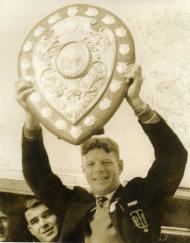
The passion and parochialism of provincial rugby helped give the game a special place in New Zealand’s social and sporting history. Read brief histories, highlights and quirky facts about each of New Zealand's 26 regional rugby teams. Read the full article
Page 12 - Taranaki rugby
History and highlights of rugby in the Taranaki
Tītokowaru's war
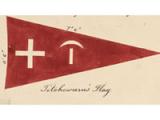
In the 1980s James Belich argued that Tītokowaru’s war had become a ‘dark secret’ of New Zealand history, ‘forgotten by the Pākehā as a child forgets a nightmare’. For Belich, Tītokowaru was ‘arguably the best general New Zealand has ever produced’. Read the full article
Page 1 - Tītokowaru's war
In the 1980s James Belich argued that Tītokowaru’s war had become a ‘dark secret’ of New Zealand history, ‘forgotten by the Pākehā as a child forgets a nightmare’. For Belich,
Page 2 - Early years
Tītokowaru’s commitment to missionary Christianity was showing signs of strain by the 1850s as a Māori nationalist movement
Page 3 - The year of the lamb
Tītokowaru proclaimed 1867 as ‘the year of the daughters … the year of the lamb’. His efforts for ‘reconciliation and peace’ were remarkable, given the events of the previous two
Page 4 - The war begins
In March 1868 Tītokowaru authorised a muru (punitive plunder) against Pākehā involved in the confiscation of land at Ketemarae
Page 5 - Turuturumōkai to Moturoa
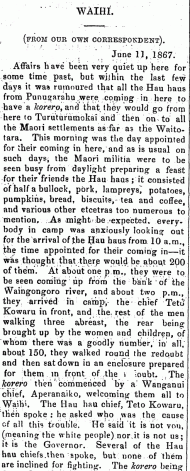
Before dawn on Sunday 12 July 1868, 60 of Tītokowaru’s men led by Haowhenua bypassed the large colonial force in Waihī Redoubt and attacked nearby Turuturumōkai, which was
Page 6 - Crisis of confidence
News of Te Kooti’s assault on Matawhero in Poverty Bay a few days after the defeat at Moturoa raised serious questions about the Armed Constabulary’s ability to protect settlers
Page 7 - Taurangaika
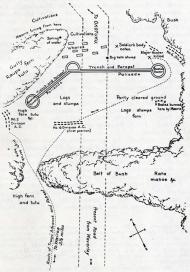
Taurangaika measured 140 m across at its widest point and was without doubt Tītokowaru’s ‘most formidable
Page 8 - A return to peace
In late 1869 Tītokowaru had his third conversion to peace, after which his relationship with Te Whiti-o-Rongomai and Tohu Kākahi of Parihaka
Biographies
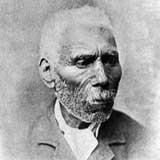
Te Ati Awa leader Wiremu Kīngi Te Rangitāke's refusal to give up his land at Waitara led to the outbreak of the Taranaki War. In later life joined the pacifist community at Parihaka.
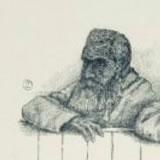
Ngā Ruahine prophet, military leader, master tactician, peacemaker and Parihaka supporter, Tītokowaru was one of New Zealand's most important nineteenth-century figures.
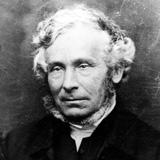
Anglican priest Richard Taylor had a great influence on Māori in the Whanganui region, and by the early 1850s as many as two-thirds of the Māori population in his district.
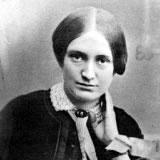
Pioneer, writer, and the first Pākehā woman to climb Taranaki Maunga (Mt Taranaki).
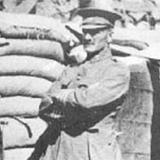
William George Malone, commander of the Wellington Battalion, was one of New Zealand's outstanding soldiers of the Gallipoli campaign.